 how-to
What Happens If a Locksmith Cannot Open Your Door?
Table of Contents
- What Happens If a Locksmith Cannot Open Your Door?
- The Three Outcomes of a Failed Unlock Attempt
- What to Do If Locked Out: Your First 10 Minutes
- Jammed Door Lock: Why the Door Will Not Open
- Can a Locksmith Open a Lock Without Breaking It?
- How Long Does It Take a Locksmith to Unlock a Door?
- What to Ask Before Booking a Locksmith
- When Drilling or Lock Replacement Becomes Necessary
- If the Locksmith Cannot Open the Door: Charges, Escalation and Damage Trade-Offs
- Conclusion
- Frequently Asked Questions
Last Updated: October 7, 2026
What Happens If a Locksmith Cannot Open Your Door?
A locksmith who cannot open your door will usually explain why, then offer you a choice: escalate to a more invasive method or stop and leave the door secure. It is rare, but it does happen. At N&G Locksmiths Service Ltd, we would rather tell you the truth than force a door and hand you a repair bill.
Most call-outs end with the door open and the lock intact. When they do not, the reason is almost always the door or the lock itself, not the skill of the person standing in front of it.
The sections below explain the three outcomes of a failed attempt, what to try in your first ten minutes, and what you should ask before you book anyone. We also cover the awkward part most guides skip: what you pay if the door still will not open.
The Three Outcomes of a Failed Unlock Attempt
When a locksmith cannot open a door, the result falls into one of three buckets. Knowing them in advance stops a stressful evening turning into an argument on the doorstep.
- Non-destructive entry works. The door opens, the lock still works, and you pay the agreed price.
- Escalation is needed. The lock must be drilled or the door eased, and you approve the extra work first.
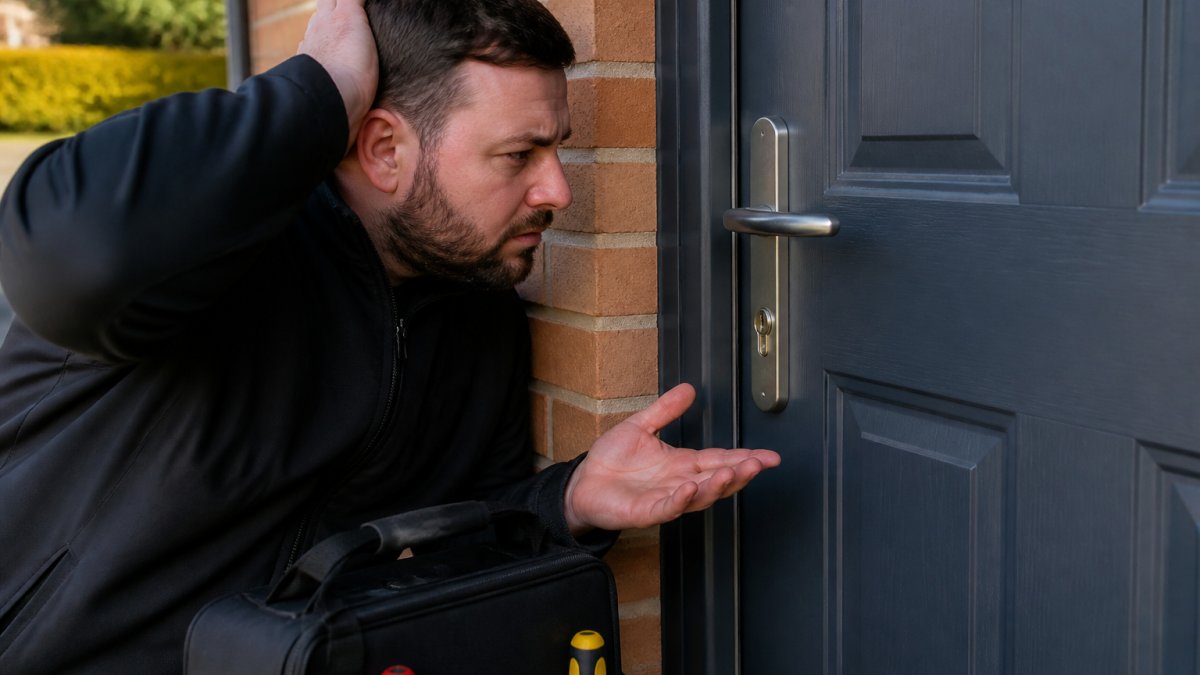
- Entry is not possible tonight. The lock is seized, the door has dropped, or the mechanism has failed internally. The door stays shut and you plan the next step.
The third outcome is the one nobody prepares for. It is also the one where a clear head matters most, because you still need to secure the property and get back inside safely.
What to Do If Locked Out: Your First 10 Minutes
If you are locked out, stay calm, check every other door and window, and call a locksmith only after you have tried the simple fixes. Ten minutes of checking can save you a call-out altogether.
Work through this list before you dial anyone.
- Check the back door, side gate, and any patio doors. One of them is often unlocked.
- Try a spare key with a neighbour, family member, or landlord.
- Test the key in the lock again. Push the door gently towards the frame as you turn it.
- Look for a key safe. Many homes have one fitted near the front door.
- Check whether a window is open enough to reach the latch, but never force one.
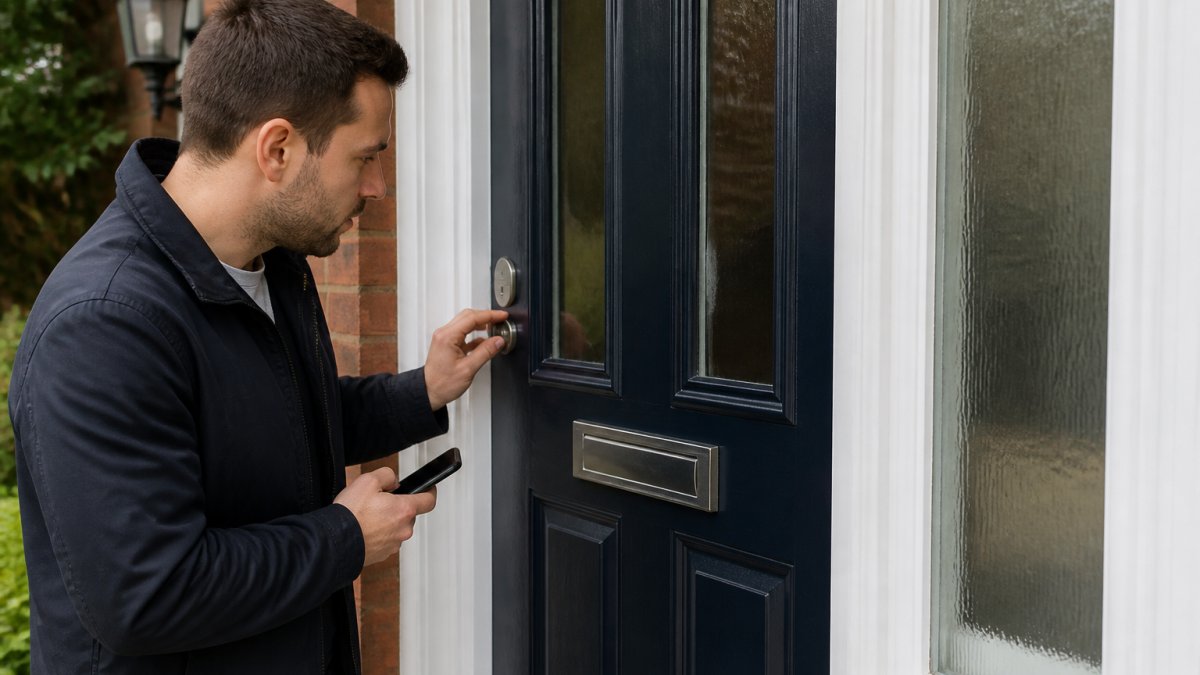
If none of that works, call for help. The official guidance on home security from the National Police Chiefs' Council is clear that you should be able to prove you live there before anyone works on your lock.
Checks to Try Before Calling Anyone
Two quick checks catch a surprising number of lockouts. First, try turning the key while lifting the door slightly by the handle. A dropped door can jam the latch, and a small lift frees it. Second, check the key itself for wear or a bend.
If the key turns halfway and stops, the issue is usually inside the lock cylinder, not the door. Stop there. Forcing it further is how keys snap off.
Jammed Door Lock: Why the Door Will Not Open
A jammed lock usually comes down to the door moving out of line with the frame, not the lock failing. Wood swells in damp weather, hinges loosen, and the latch stops meeting the strike plate cleanly.
Here are the common culprits:
- Swollen doors. Damp air makes timber expand, so the door rubs against the frame.
- Misaligned strike plates. The latch no longer slots into the hole in the frame.
- Worn keys. A key worn thin can turn in the cylinder but fail to move the mechanism.
- Dropped hinges. A heavy door sags over time, pulling the lock out of line.
- Internal lock failure. Springs or pins inside the cylinder break, and the lock seizes.
Understanding which one you have matters, because it changes what the locksmith does next.
Swollen Doors, Misaligned Strike Plates and Worn Keys
A swollen door is a seasonal problem. It sticks in wet months and frees up in dry ones. The fix is usually to ease the door or adjust the strike plate, not to replace the lock.
A misaligned strike plate is a fitting issue. The plate sits slightly too high, low, or deep, so the latch cannot catch. A locksmith can realign it in minutes.
A worn key is the easiest to miss. Compare it with a spare. If the ridges look rounded rather than sharp, that is your problem.
Can a Locksmith Open a Lock Without Breaking It?
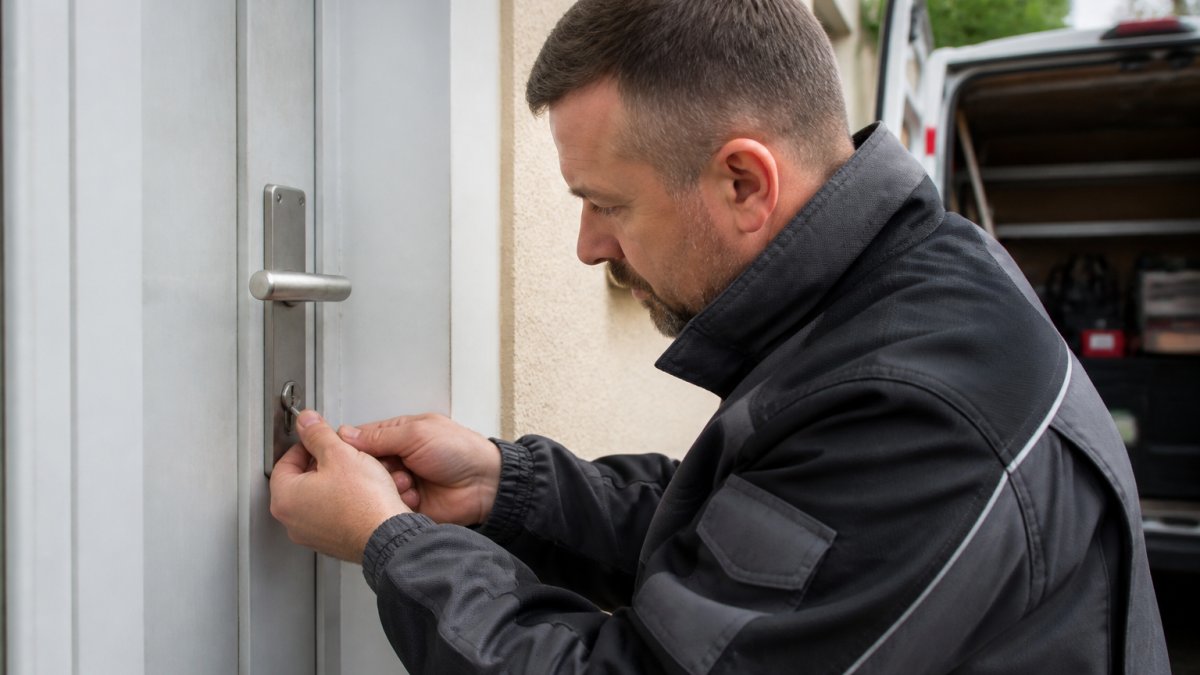
Yes. Most locks can be opened without damage using non-destructive entry. This is the standard approach, and it is what a professional will try first.
Non-destructive entry covers a few methods:
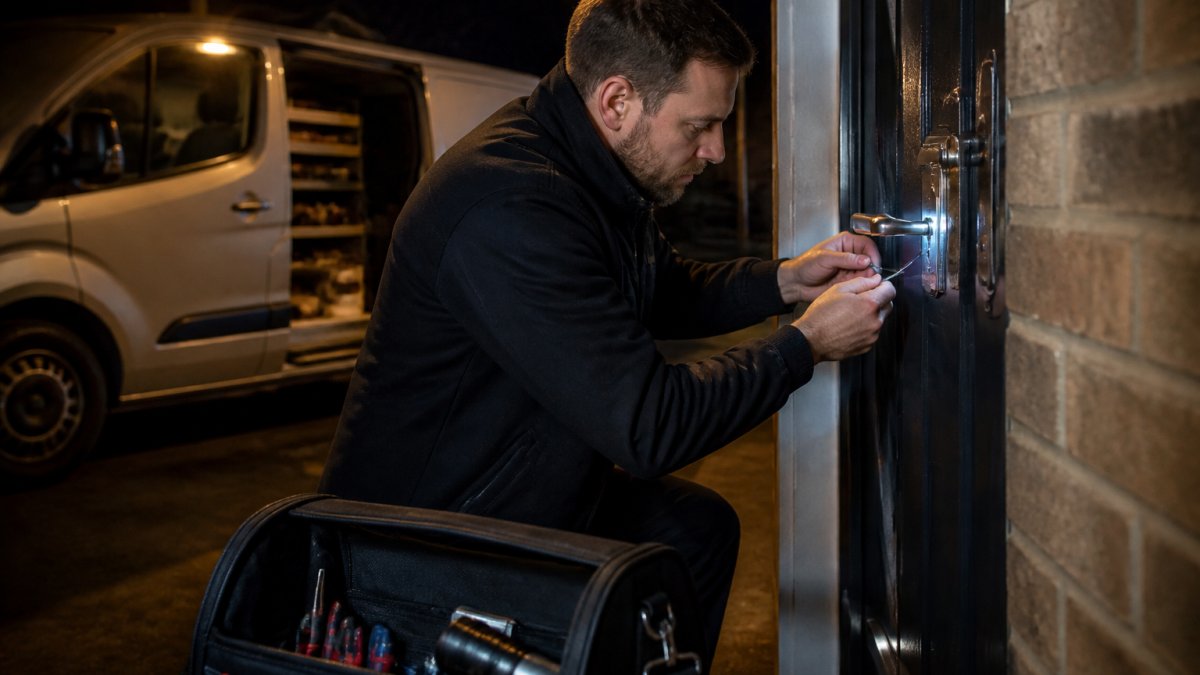
- Lock picking. Fine tools manipulate the pins inside the cylinder until it turns.
- Bypass methods. Some locks can be opened by working the latch rather than the cylinder.
- Specialised tools. Certain lock types have dedicated tools that release them cleanly.
- Key extraction. If a key has snapped off inside, extraction tools pull it out.
The technique depends on the lock. A standard night latch is quick work. A high-security cylinder with anti-pick pins takes longer, and some cannot be picked at all.
That is not a flaw in the locksmith. It is the lock doing its job.
How Long Does It Take a Locksmith to Unlock a Door?
Most standard door locks open in five to fifteen minutes once the locksmith is on site. Simple night latches can take under five. High-security cylinders, multiple locks, or a jammed mechanism can take thirty minutes or more.
Response time is a separate number from unlocking time. Getting to you depends on traffic, distance, and how busy the night is.
| Situation | Typical unlocking time | What affects it |
|---|---|---|
| Standard night latch | Under 5 minutes | Lock age, wear |
| Deadbolt or cylinder lock | 5-15 minutes | Pin count, security rating |
| Jammed or seized lock | 15-30 minutes | Door alignment, internal damage |
| Multiple locks or damaged door | 30 minutes plus | Number of locks, frame condition |
A locksmith who quotes a fixed unlocking time before seeing the door is guessing. The honest answer is that it depends on the lock.
What to Ask Before Booking a Locksmith
Ask four questions before you agree to anything. The answers tell you whether you are dealing with a professional or a chancer.
- What is the total price, including any call-out charge? Get a figure, not a range.
- Are you insured, and can you show proof? A legitimate locksmith carries cover and will confirm it.
- What happens if you cannot open the door? You want to know the charge before they arrive, not after.
- How will you prove I live here? A professional will ask for ID and proof of address, and that is a good sign.
At N&G Locksmiths Service Ltd, we charge no call-out fee and give you the price upfront. We are fully insured and happy to show it before we start. If you are unsure how to check a locksmith is genuine, our team will walk you through it on the phone.
When Drilling or Lock Replacement Becomes Necessary
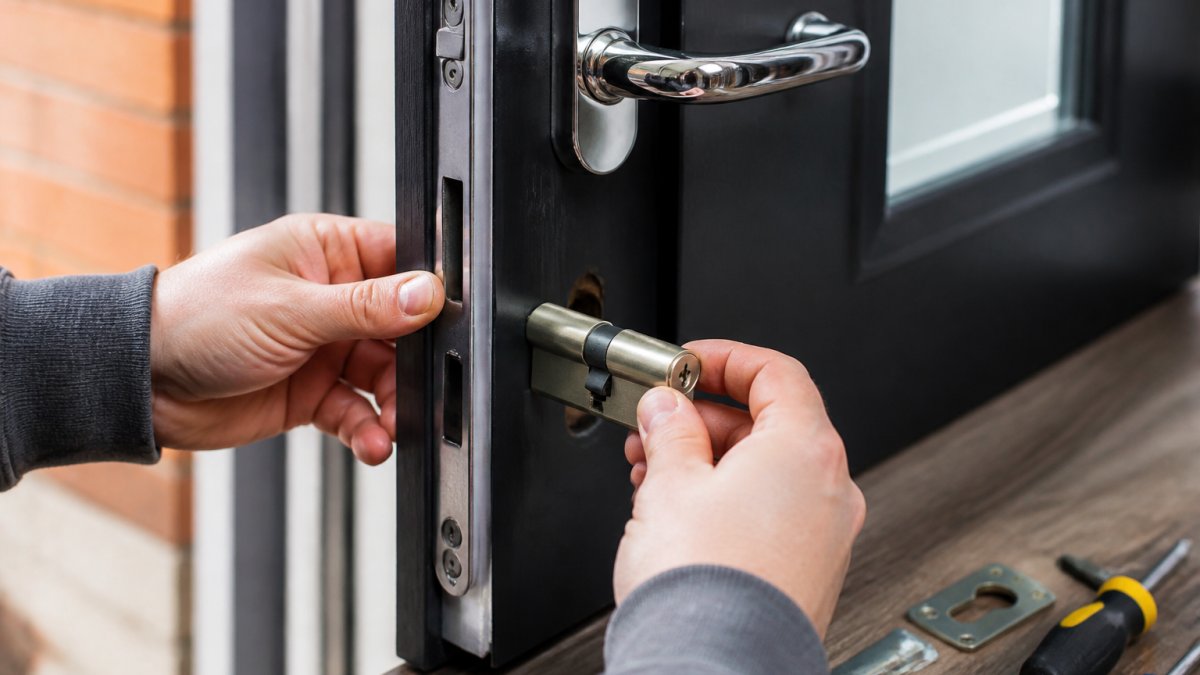
Drilling is a last resort, but sometimes it is the only way in. It happens when the lock cannot be picked, the cylinder has seized, or the key has broken inside and cannot be extracted.
A locksmith will normally ask your permission before drilling. Once drilled, the lock is destroyed and must be replaced. That means the cost of the visit goes up, and you should be told by how much.
Replacement is also the right call when:
- The lock is old and parts are no longer made.
- The cylinder has been damaged by force.
- You have just moved in and cannot confirm who holds keys.
- The lock no longer meets your insurance requirements.
Drilling a lock is quick. Replacing it takes longer, but you end up with a working lock and a fresh set of keys.
If the Locksmith Cannot Open the Door: Charges, Escalation and Damage Trade-Offs
If the locksmith cannot open the door, the awkward question is what you owe. Most firms charge for the visit even when entry fails, because travel, time, and skill were spent on the attempt. But the amount, and whether it is fair, depends entirely on what you agreed before the van arrived.
This is the part most guides skip. Here is how it actually works.
How UK Locksmith Charges Are Usually Structured
A locksmith quote is normally built from three parts, and you should be able to separate them on the phone:
- Call-out fee. A fixed charge for attending, whether or not the door opens. Some firms waive it and fold the cost into the labour rate instead. Ask which model applies.
- Labour or unlocking charge. The fee for the work itself. This is usually quoted as a single figure for a standard lock, with a higher rate for high-security cylinders, multiple locks, or out-of-hours attendance.
- Parts and materials. Only relevant if a lock is drilled and replaced. A new cylinder or night latch is charged on top, plus a small fitting charge.
A reputable firm will give you a total figure, not a range, before you confirm the booking. If the person on the phone will not commit to a number, treat that as a warning sign.
What You Should Confirm Before Work Begins
Before you let anyone touch the lock, get four things confirmed, ideally by text or email so there is a record:
- The total price if entry succeeds. A single figure, inclusive of VAT where the firm is VAT-registered.
- The price if entry fails. This is the number most customers never ask for. It might be the full call-out fee, a reduced diagnostic charge, or nothing at all if the firm operates a no-fix-no-fee policy.
- The cost of drilling and a replacement lock. Ask for the cylinder or lock price separately from the labour, so you can see what you are paying for.
- Whether the price changes out of hours. Evening, weekend, and bank holiday rates are commonly higher. Confirm the rate that applies to your call.
If Entry Fails: Your Realistic Options
When the door stays shut, you are not out of choices. Work through them in this order:
- Authorise drilling. You get in tonight, but the lock is destroyed and must be replaced. You pay for the visit plus the new lock. This is usually the fastest route and often cheaper than forcing the door.
- Stop and reschedule. The door stays locked and secure. You arrange a daytime repair, often at a lower rate, and possibly with a specialist who carries the right parts.
- Call a specialist. Some doors, certain composite, upvc, and multipoint-locking systems, need a different approach or specific replacement parts. A general locksmith may not carry them, and a specialist may charge more but solve it in one visit.
- Consider a different entry point. If a rear or side door has a simpler lock, entry there may be quicker and cheaper than fighting the front door.
Each option has a damage trade-off. Drilling the cylinder is contained: the cylinder is sacrificed, the door and frame are untouched. Forcing the door is not contained: it can split the frame, bend the hinges, damage the strike plate, and turn a lock replacement into a joiner's job. A good locksmith will always choose the least damaging route that works, and will tell you the cost of each before starting.
Payment, Receipts and Disputes
Pay by a traceable method, card or bank transfer, rather than cash where you can. Ask for a receipt or invoice showing the firm's name, the work carried out, and the amount charged. If a lock was replaced, keep the receipt: it is useful for insurance and for proving the work if a fault appears later.
If you believe you have been overcharged, the first step is to raise it in writing with the firm and ask for a breakdown against the quote you were given. If that fails, and the firm is a member of a trade body, you can escalate through that body's complaints process. For consumer disputes in general, Citizens Advice can point you to the right route. The key is having the original quote in writing, without it, a dispute becomes your word against theirs.
Conclusion
A locked door is stressful, and a locksmith who cannot open it makes it worse. The key is knowing what to expect: a clear price, a non-destructive attempt first, and an honest answer if the door will not budge.
N&G Locksmiths Service Ltd offers 24/7 emergency cover with no call-out fee, a 30-minute response target, and a 12-month guarantee on our work. We are a family-run team, fully insured, and we tell you the price before we start.
Call now and get back inside with no hidden fees and no surprises.
Frequently Asked Questions
What happens if a locksmith cannot open a door?
If a locksmith cannot open the door using non-destructive methods, they will explain why and offer alternatives. These usually involve drilling the lock cylinder, removing the lock, or forcing entry, which may damage the lock or door. You decide whether to proceed. Some locksmiths charge for the visit even if entry fails, so ask about this before booking. If the door still cannot be opened, you may need a door repair specialist or emergency glazier.
Can a locksmith open a lock without breaking it?
In most cases, yes. A locksmith can open a lock without breaking it using lock picking, bypass methods, or specialized tools. Success depends on the lock type, its condition, and whether the key is stuck or broken inside. A jammed door lock caused by a misaligned strike plate or swollen door may need the door adjusted rather than the lock forced. If non-destructive entry fails, drilling the lock cylinder may be the next step.
How long does it take a locksmith to unlock a door?
A straightforward lockout usually takes 5 to 20 minutes once the locksmith arrives. Complex locks, damaged mechanisms, or a jammed door lock can take longer. Response time depends on your location and the time of day. N&G Locksmiths Service Ltd aims for a 30-minute response across Norfolk, Suffolk, and Cambridgeshire, with no call-out fee and a 12-month guarantee on workmanship.
What should I do if locked out and the locksmith cannot open the door?
If the locksmith cannot open the door, ask them to explain the problem clearly. They should tell you whether drilling or replacement is needed and what damage that involves. Get a quote before authorising any work. If you decline, you may still owe a fee for the visit. Otherwise, contact a door repair specialist or consider a locksmith who specialises in your lock type.