 how-to
Are 24 Hour Locksmith Services Reliable?
Table of Contents
- What Makes a 24 Hour Locksmith Service Reliable
- Locksmith Scam Warning Signs to Recognise
- Average Response Time for Emergency Locksmith Services
- What to Ask an Emergency Locksmith Before They Arrive
- Verifying Credentials and Professional Accreditation
- Understanding Pricing and Out-of-Hours Surcharges
- Insurance, Guarantees, and Workmanship Protection
- How to Verify a Locksmith's Identity in Real-Time
- Frequently Asked Questions
Last Updated: October 4, 2026
What Makes a 24 Hour Locksmith Service Reliable
A reliable 24 hour locksmith service combines speed, professionalism, and transparency. The best services answer their phones at 2 AM on a Sunday and actually arrive within the timeframe they promise. They don't charge surprise fees when they show up, they carry proper insurance, and they stand behind their work with a written guarantee.
A trustworthy emergency locksmith has several key characteristics: they're accredited by industry bodies, they provide upfront pricing before starting work, and they can verify their identity on the spot. Many people assume all locksmiths are the same. They're not.
The difference between a reliable service and a rogue trader often comes down to three things. First, they answer quickly and give honest time estimates. Second, they explain what they're doing and why it costs what it costs. Third, they leave you with proof of work and a guarantee that covers what they've done.
Reliability also means consistency. A good emergency locksmith service doesn't have "good days" and "bad days." They maintain the same standard whether you call at noon or midnight. This is harder than it sounds, especially when running a 24/7 operation. It requires proper staffing, training, and systems to manage demand without cutting corners.
Locksmith Scam Warning Signs to Recognise
Not every locksmith offering 24/7 service is legitimate. Scammers prey on people in distress. When you're locked out of your home or car, you're vulnerable to pressure tactics and inflated pricing.
Watch for these red flags before you let anyone near your locks:
- No upfront pricing. They refuse to quote a price until they've arrived and assessed the job. This is a classic setup for price gouging.
- Pressure to pay cash only. Legitimate businesses accept card payments and provide receipts. Cash-only operators are harder to trace if something goes wrong.
- Vague credentials. They can't name their accreditation or won't show you proof. Real professionals carry certification from recognised bodies.
- Unsolicited contact. They call you offering locksmith services you didn't ask for. This is a common scam tactic.
- Damage-first approach. They suggest drilling out your lock immediately without exploring non-destructive options. Good locksmiths try to preserve your locks whenever possible.
- No business address or phone number. They only have a mobile number and won't give you a physical location. This makes them impossible to pursue if something goes wrong.
- Extremely low prices. If the quote sounds too good to be true, it is. They'll either overcharge you at the door or do shoddy work.
- No insurance or guarantee. They can't show proof of public liability insurance or won't offer any warranty on their work.
The Master Locksmiths Association maintains a directory of vetted locksmiths where you can verify credentials. If someone claims to be accredited, check the directory. If they're not listed, ask why.
Average Response Time for Emergency Locksmith Services
Response time is one of the most important measures of reliability for 24 hour locksmith services. When you're locked out, waiting feels endless.
A good emergency locksmith aims for a 30-minute response time in urban and suburban areas. Some can do better. Rural areas naturally take longer due to distance. What matters is that they give you an honest estimate upfront, not a vague "we'll be there soon."
Response time depends on several factors:
- Call volume. A busy locksmith might have multiple jobs ahead of yours. A reliable service manages this by having enough staff to handle demand.
- Your location. Central areas get faster response than outlying suburbs or villages.
- Time of day. A 2 AM call-out might take longer than a 2 PM one, simply because there's less traffic and fewer available locksmiths.
- Job complexity. A simple lockout takes 15 minutes. A complex lock replacement might take an hour or more.
Many locksmiths quote 30 minutes but arrive in 45 or 60. This isn't always their fault. Traffic, sat nav errors, or a previous job running over can cause delays. The key is communication. A reliable service calls you if they're running late. They don't just leave you guessing.
What to Ask an Emergency Locksmith Before They Arrive
Before you let a locksmith through your door, ask these questions. Their answers tell you a lot about whether they're professional and trustworthy.
Ask about their approach:
- "What method will you use to gain entry?" A good locksmith explains whether they'll pick the lock, use a bump key, or use another non-destructive method. If they jump straight to drilling, question why.
- "Will this damage my lock?" They should be honest about whether the lock will still work afterward or if it needs replacing.
- "How long will this take?" Get a realistic time estimate, not a guess.
Ask about credentials:
- "Can you show me your certification?" They should have proof of accreditation on them.
- "Are you insured?" Ask to see their public liability insurance certificate. This covers damage they cause.
- "Do you offer a guarantee on your work?" A professional stands behind what they do.
Ask about pricing:
- "What's your call-out fee?" Some charge this upfront, others include it in the final bill.
- "What's the total cost for this job?" Push for a fixed price, not an hourly rate with unknowns.
- "Do you charge extra for out-of-hours work?" Many do. Knowing this upfront prevents shock when the bill arrives.
- "What payment methods do you accept?" Confirm they take card as well as cash.
Ask about the lock itself:
- "Is this lock salvageable?" If the lock is damaged, can they repair it or does it need replacing?
- "What type of lock do you recommend?" If you need a new lock, ask what they suggest and why.
These questions do two things. They give you the information you need to make a decision. They also test whether the locksmith is willing to communicate openly. A professional answers these without hesitation. Someone with something to hide will get defensive or evasive.
Verifying Credentials and Professional Accreditation
Professional accreditation is your main protection against rogue traders. It means someone has checked the locksmith's background, training, and insurance.
The main accreditation bodies in the UK are:
- Master Locksmiths Association (MLA). This is the gold standard. MLA-accredited locksmiths pass vetting including DBS checks (Are Locksmiths DBS / Security Checked?). They follow a code of conduct and their work is covered by a guarantee scheme.
- Checkatrade. This directory vets locksmiths and collects independent customer reviews. A high rating here is a good sign, though it's not as rigorous as MLA accreditation.
- British Locksmiths Institute. Another recognised body that sets standards for the profession.
When a locksmith claims to be accredited, verify it. Don't take their word. Ask for their accreditation number and check it on the relevant website. This takes two minutes and could save you from a scam.
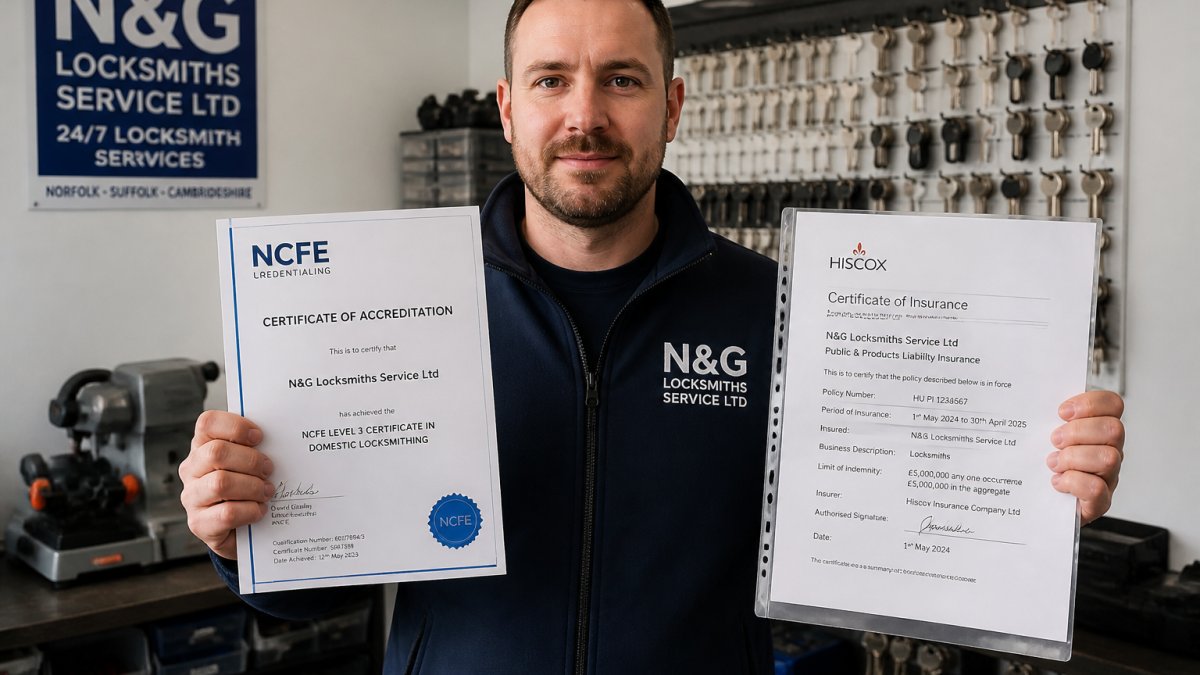
N&G Locksmiths Service Ltd maintains full professional certification and public liability insurance. It's a baseline requirement for any legitimate business.
Understanding Pricing and Out-of-Hours Surcharges
Pricing for emergency locksmith services varies widely. The difference between a £100 job and a £300 job often comes down to transparency, not the actual work. A reliable locksmith gives you a fixed price upfront. This is called a fixed-price quote. It covers the call-out, the labour, and any parts needed. You know exactly what you're paying before they start work.
Many locksmiths charge an out-of-hours surcharge. This is an extra fee for calls outside normal business hours. This is legitimate. Late-night work is harder to staff and less efficient. What matters is that they tell you about the surcharge before you agree.
Typical pricing breakdown:
Most locksmiths structure their charges as follows:
- Call-out fee. A fixed amount just for attending.
- Labour charge. Time spent on the job. This is either a fixed rate for the specific job or an hourly rate. Fixed rates protect you; hourly rates can escalate if the job takes longer than expected.
- Parts cost. Any locks, keys, or hardware that need replacing.
- Out-of-hours surcharge. Extra cost for nights, weekends, or bank holidays.
Emergency versus non-emergency pricing comparison:
What to watch for, pricing red flags:
- No upfront pricing. They refuse to quote a price until they've arrived and assessed the job. This is a classic setup for price gouging. A professional can give you a fixed quote over the phone for most common jobs.
- Extremely low prices. If the quote sounds too good to be true, it is. They'll either overcharge you at the door or do shoddy work that fails within weeks.
- Hourly rates with no cap. "" This gives them no incentive to work efficiently. You could end up paying £200 for a 30-minute job.
- Hidden surcharges. Ask upfront: "Is this the total price, or are there additional charges?"
- Pressure to pay cash. "" This is a pressure tactic. Legitimate businesses accept card at the same price.
How to get a fair quote:
When you call, provide as much detail as possible:
- What type of lock (mortice, euro cylinder, multi-point, padlock)?
- Is the lock damaged or just locked?
- Do you need the lock replaced or just unlocked?
- What time of day and what day of the week?
A professional locksmith can then give you a fixed price. If they can't, ask why. If they say "I need to see it first," that's fair for complex jobs, but they should still give you a price range.
Before you agree, confirm:
- "Is this the total price, including all surcharges?"
- "What happens if the job takes longer than expected?"
- "Do you offer a guarantee on the work?"
Payment and receipts:
Insist on a receipt that breaks down the charges:
- Call-out fee: £X
- Labour: £X
- Parts: £X
- Out-of-hours surcharge: £X
- Total: £X
This protects you if there's a dispute later. You can show the receipt to your home insurance company if you're claiming the cost back, or to a trading standards officer if you believe you've been overcharged.
Insurance, Guarantees, and Workmanship Protection
Insurance and guarantees separate professional locksmiths from cowboys.
Public liability insurance protects you if the locksmith damages your property. If they scratch your door frame, break a window, or damage the lock mechanism, their insurance covers the repair cost. Always ask to see the certificate. Check the coverage amount.
A workmanship guarantee means the locksmith stands behind their work. If the lock they install fails within the guarantee period, they fix it for free. A typical guarantee runs for 12 months.
This is important because locks can be installed incorrectly. A poor installation might work fine for a few weeks, then start sticking or jamming. A guarantee means you're not stuck paying for a fix.
When a locksmith offers a guarantee, get it in writing. You should receive a receipt or certificate that lists what's covered and for how long. Keep this. You'll need it if something goes wrong.
Without insurance and a guarantee, you have no recourse if something goes wrong. You're relying entirely on the locksmith's goodwill. With both in place, you're protected.
How to Verify a Locksmith's Identity in Real-Time
When a locksmith arrives at your door late at night, you're naturally cautious. You don't know this person. How do you confirm they're actually the locksmith you called? This is where most people are vulnerable to impersonation scams. A scammer can arrive in a van with a magnetic sign, carry a fake ID, and talk their way into your home. Here's how to verify legitimacy before you unlock your door.
Before they arrive, the phone call:
When you book the locksmith, write down these details:
- Full name of the locksmith (first and surname)
- Company name and landline number (not just a mobile)
- Vehicle registration number
- Estimated arrival time
- Their accreditation body (MLA, Checkatrade, or British Locksmiths Institute)
Ask them to text or email a photo of their ID badge before they leave. This gives you a reference image to compare when they arrive. If they refuse or say they'll show it in person, that's a warning sign. Legitimate locksmiths have nothing to hide.
When they arrive, the visual check:
Before you open the door, examine them through the peephole or window:
- Do they match the photo you received? Look at facial features, not just clothing (clothing can be borrowed).
- Is their ID badge visible and clearly readable? It should show their name, photo, and company name. The photo should match their face.
- Is the vehicle outside clearly branded with the company name and logo? Check the registration number against what they told you.
- Are they alone or with a colleague? Legitimate locksmiths sometimes work in pairs, but they should have mentioned this when you booked.
If anything looks off, do not open the door. Tell them you're not comfortable and end the call. You can always call another locksmith.
The independent verification call:
This is the most important step and most people skip it. Before you let them touch your locks, call the locksmith company back using the number on their van or from their website (not a number they give you). Ask:
- "I have someone at my door claiming to be [name]. Can you confirm they're dispatched to my address?"
- "What's their employee ID number?"
- "Can you describe what they're wearing?"
The company should be able to confirm the person's name, their current job location, and basic details about their appearance. If the company can't confirm, or if there's any hesitation, send the person away immediately. This single step stops most impersonation scams cold.
What to check on their documentation:
Once you've verified their identity, ask to see:
-
Public liability insurance certificate. This should show:
- The locksmith's or company's name
- A policy number
- Coverage amount (typically £1 million to £6 million)
- The insurer's name and contact details
- Expiry date (must be current)
Take a photo of it with your phone. If something goes wrong later, you'll have proof of their insurance details.
-
Accreditation certificate or membership card. If they claim to be MLA-accredited, ask for their membership number. You can verify this on the Master Locksmiths Association website after they leave.
-
DBS check certificate (if applicable). Some locksmiths carry proof of a Disclosure and Barring Service check, which shows they've passed a background check. This is a good sign but not mandatory.
If they can't produce these documents, or if the documents look homemade or poorly printed, do not proceed. Professional locksmiths carry originals or certified copies.
Red flags that mean "do not proceed":
- They arrive earlier or later than the window you agreed, with no phone call to explain.
- Their ID photo doesn't match their face.
- The vehicle registration doesn't match what they told you.
- They can't be verified by calling the company back.
- They pressure you to let them in before you've finished checking.
- They refuse to show insurance or accreditation documents.
- They ask you to pay in cash upfront before starting work.
- They suggest you don't need to verify anything because "it'll take too long."
After they've finished:
Before you pay, ask for:
- A receipt with the company name, date, time, work completed, and cost breakdown
- A copy of the workmanship guarantee (should be in writing, not verbal)
- Their contact details for follow-up questions
Keep these documents. If the lock fails or you have a dispute, you'll need them.
Frequently Asked Questions
How do I know if a 24 hour locksmith service is reputable?
Check whether they're listed on the Master Locksmiths Association (MLA) directory or Checkatrade, both of which vet professionals and verify insurance. Ask for their DBS check status, public liability insurance certificate, and professional qualifications before they arrive. Legitimate 24 hour locksmith services will provide this information without hesitation and should have consistent customer reviews across independent platforms. Avoid anyone who refuses to provide proof or quotes a price over the phone without an on-site assessment.
What is the average response time for emergency locksmith services?
Professional emergency locksmiths typically respond within 30 to 60 minutes in urban areas, though rural locations may take longer. Response time depends on their current workload, traffic conditions, and distance from your location. When you call, ask for a specific time window rather than accepting vague promises. Reputable services will give you a realistic estimate and may offer compensation if they exceed it. Out-of-hours calls (late night or early morning) may have slightly longer response times due to lower availability.
How can I avoid being scammed by a locksmith?
Request a fixed-price quote before work begins and get it in writing. Watch for red flags: refusing to show ID, pressure to pay cash only, arriving in unmarked vehicles, or quoting unusually high prices. Verify their business name matches their ID and vehicle. Never let them start work until you've confirmed their credentials. Check whether they're insured and ask about their workmanship guarantee. Legitimate professionals will provide transparent pricing upfront and won't charge hidden fees. If something feels wrong, don't hesitate to ask for another locksmith.
What qualifications should a professional emergency locksmith have?
Look for locksmiths certified by the Master Locksmiths Association (MLA), which requires DBS checks, professional training, and adherence to a strict code of conduct. They should hold public liability insurance (minimum £1 million cover) and provide proof on request. Many accredited locksmiths also hold City & Guilds or equivalent locksmithing qualifications. Ask whether they're registered with a trade body and whether their work carries a warranty. Professional certification ensures they've met industry standards for safety, security protocols, and workmanship.