 comparison
Are High Security Deadbolts Worth It? A UK Comparison
Table of Contents
- High Security Deadbolts vs Standard Locks: The Core Difference
- When Are High Security Deadbolts Worth the Extra Cost?
- Deadbolt vs Standard Lock: What You Actually Get for the Money
- Anti-Snap Door Locks: The Feature That Decides the Verdict
- BS3621 Locks and Insurance: What UK Homeowners Need to Know
- Door Lock Replacement Signs: When Upgrading Stops Being Optional
- Cost-Benefit Analysis: What You Pay and What You Prevent
- Pros and Cons of High Security Deadbolt Features
- Conclusion
- Frequently Asked Questions
Last Updated: October 17, 2026
High Security Deadbolts vs Standard Locks: The Core Difference
A high security deadbolt is a lock built to resist forced entry, picking, drilling and cylinder extraction far beyond what a standard night latch can handle. At N&G Locksmiths Service Ltd, we fit and repair both types across Thetford, Norfolk and the surrounding counties, and the gap between them shows the moment you take the door apart.
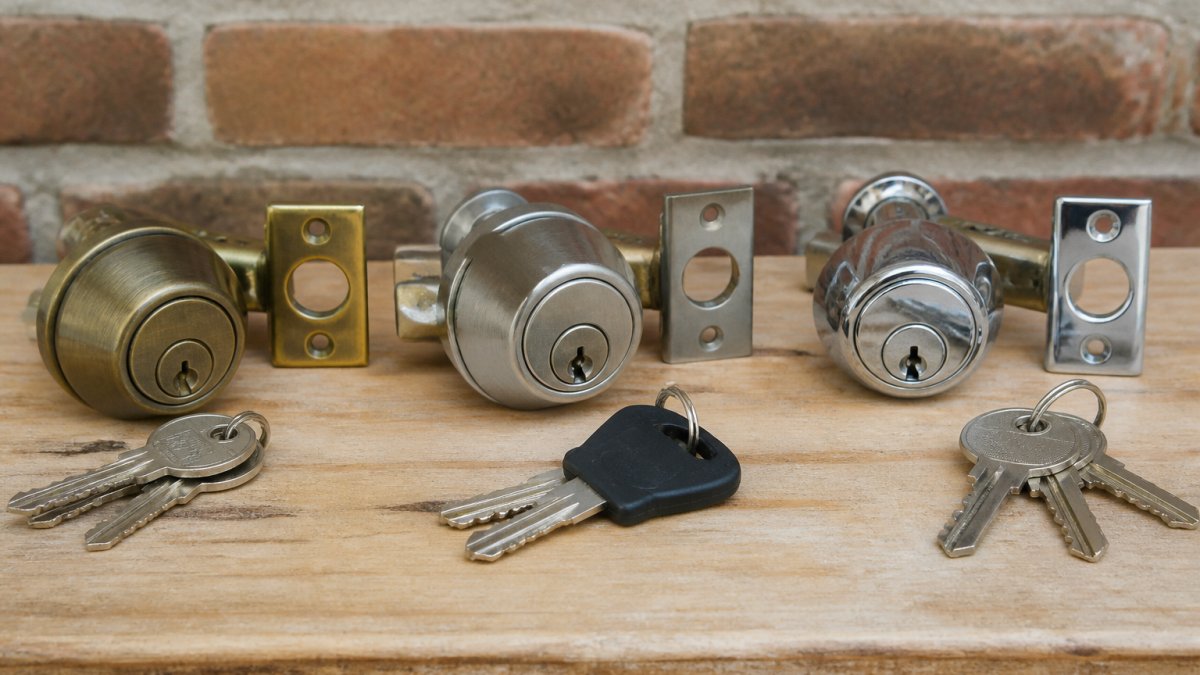
The core difference sits in the cylinder. Standard euro cylinders are often made from soft metal with basic pin tumbler mechanisms, which is why they fail so readily under attack. High security deadbolts add hardened steel inserts, anti-drill plates, anti-pick pin stacks and sacrificial break points. They also come with key control: keys are cut only against a registered card, so nobody can copy yours without authorisation.
That matters because most UK burglaries are not sophisticated. They are quick, noisy and opportunistic, and a lock that resists for two minutes usually sends the intruder elsewhere.
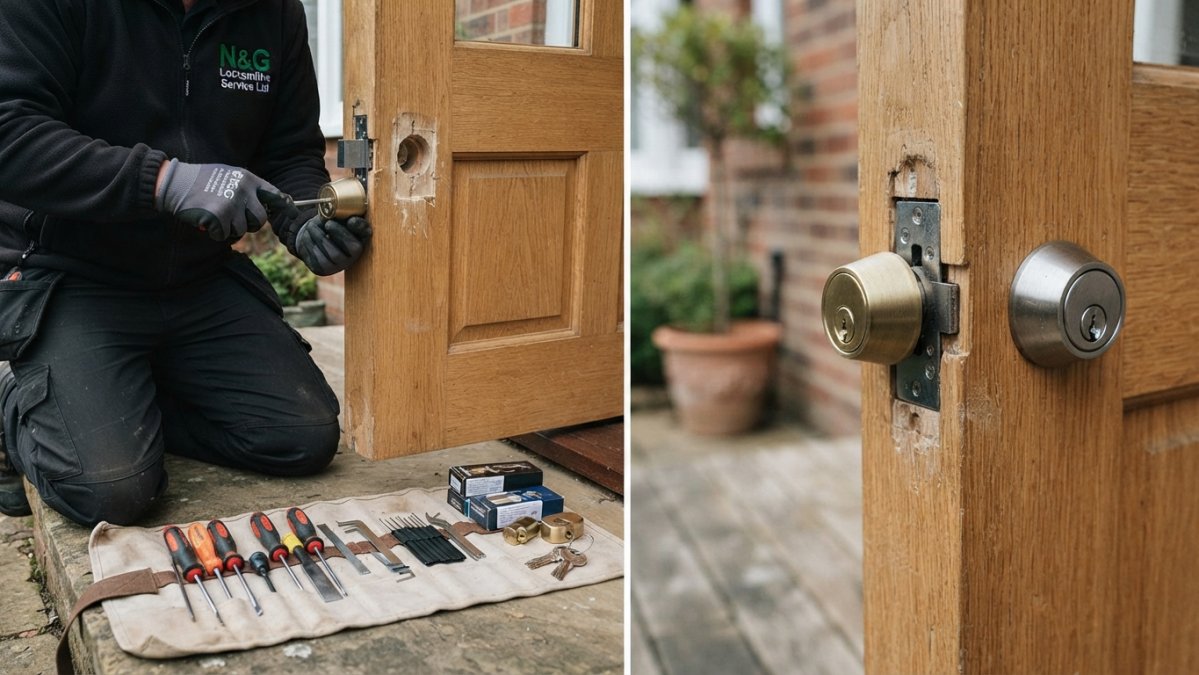
When Are High Security Deadbolts Worth the Extra Cost?
High security deadbolts are worth the money when your door is the weakest point on the property, and they are not worth it when the door frame or glazing will fail first. That is the honest answer, and it is the one most guides avoid.
We would recommend the upgrade in these situations:
- Your front door is solid timber or composite and sits on a busy road or a poorly lit footpath.
- You have recently moved in and have no idea who holds keys to the old locks.
- The property is a rental or a managed building where key control matters.
- You have already been burgled once, or a neighbour has.
- Your insurance policy names a specific lock standard as a condition of cover.
Where it is not worth it: a hollow uPVC door with a weak frame, a door with large decorative glass panels, or a flat in a building with a shared and well-monitored entrance. Fix the frame and the glazing first. A good lock on a bad door is money spent on the wrong problem.
Deadbolt vs Standard Lock: What You Actually Get for the Money
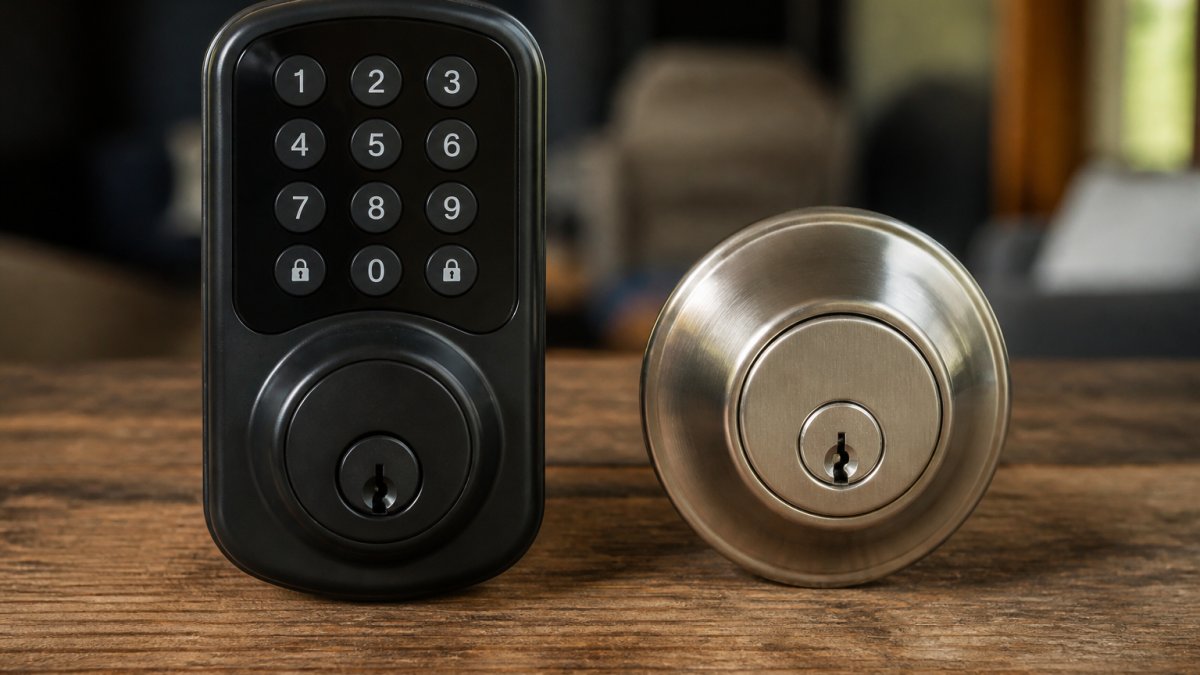
The deadbolt versus standard lock question comes down to how the bolt engages. A standard night latch throws a spring-loaded latch that can be slipped with a plastic card in seconds. A deadbolt throws a solid steel bolt that has to be physically destroyed or the cylinder defeated.
Here is what changes in practice:
| Feature | Standard Lock | High Security Deadbolt |
|---|---|---|
| Bolt type | Spring latch, card-slippable | Solid deadbolt, key-turned |
| Cylinder material | Soft metal, basic pins | Hardened steel, anti-drill inserts |
| Pick resistance | Low to moderate | High, with security pin stacks |
| Key copying | Anyone with the key | Registered key control |
| Snap resistance | Often none | Anti-snap sacrificial section |
| Typical lifespan | Shorter under attack | Designed to survive sustained attack |
The practical difference is time. A standard lock gives an intruder a fast, quiet entry. A high security deadbolt turns a 20-second job into a several-minute fight with noise, and that is the point at which most walk away.
Anti-Snap Door Locks: The Feature That Decides the Verdict
Anti-snap door locks are the single most important feature to check on any euro cylinder, and their absence is the reason many "high security" claims do not hold up. Snapping is the most common method used against UK euro cylinders: the attacker grips the protruding barrel, breaks it at a designed weak point, and reaches the mechanism behind it.
Anti-snap cylinders are built so the barrel breaks away outside the locking mechanism, leaving nothing to turn. Combined with anti-bump pins and anti-drill plates, they close off the three routes attackers use most.
When you are comparing products, ask three questions:
- Does the cylinder carry a genuine anti-snap rating, not just the word "secure" on the packaging?
- Is the cylinder no more than 3mm proud of the door handle on the outside?
- Has the door furniture been checked, since a weak handle or escutcheon undoes a good cylinder?
If the answer to any of these is no, the lock is not doing the job you paid for. Our team measures cylinder protrusion on every security visit because it is the detail that quietly decides whether an anti-snap lock performs as designed.
BS3621 Locks and Insurance: What UK Homeowners Need to Know
BS3621 locks are the British Standard for thief-resistant locks, and they matter because many UK home insurance policies require them on final exit doors. The standard covers the lock's resistance to drilling, picking, forcing and cutting, and it is the benchmark insurers and surveyors ask about.
If your policy states that final exit doors must be fitted with a BS3621 lock, a lock without that marking can give an insurer grounds to reduce or refuse a claim. That is not a scare tactic; it is written into policy wordings. Check your schedule before you buy hardware, and keep the receipt and any fitting certificate.
The British Standards Institution guidance on lock standards sets out what the marking covers, and the Association of British Insurers guidance on home security explains how security requirements feed into policy conditions. If you are unsure whether your current lock meets the standard, a locksmith can identify the marking in minutes.
Door Lock Replacement Signs: When Upgrading Stops Being Optional
Door lock replacement signs are easy to miss because locks fail gradually. The upgrade stops being optional when any of the following appear:
- The key sticks, grinds or needs jiggling before the lock turns.
- The key can be removed while the lock is in the unlocked position.
- The cylinder wobbles or protrudes noticeably from the door face.
- There are visible scratch marks or fresh damage around the lock.
- The door no longer sits flush, so the bolt does not fully engage.
- You have lost a key, or a previous occupant or tradesperson still holds one.
- The lock is old enough that you cannot identify its standard.
Any one of these is a prompt to have the lock assessed. Two or more together mean the lock should be replaced rather than repaired. We see this constantly in Thetford rentals where the same cylinder has been in place for a decade and the tenant has no record of the keys.
Cost-Benefit Analysis: What You Pay and What You Prevent
The cost-benefit case for high security deadbolts rests on two numbers: what the hardware and fitting cost, and what a single break-in costs in excess, lost items, and inflated premiums. We do not publish fixed prices because every door is different, and quoting a figure before seeing the door would be guesswork. Our pricing page sets out how we quote, and the assessment itself is free of charge.
What we can say is how the maths usually works out. A high security cylinder plus deadbolt, professionally fitted, is a one-off cost. A burglary claim brings an excess payment, a likely premium rise at renewal, replacement of damaged doors and frames, and the disruption of losing items that cannot be replaced. Add the cost of emergency boarding and a temporary lock, and the single upgrade looks small.
The calculation changes if the lock is fitted badly. A high security cylinder installed with the wrong length, or without checking the door's alignment, will fail early and waste the money. That is why fitting quality matters as much as the product.
Pros and Cons of High Security Deadbolt Features
Each feature carries a trade-off, and knowing them stops you paying for protection you do not need.
Anti-snap cylinder
- Pros: defeats the most common UK attack method; keeps the mechanism intact after an attack.
- Cons: adds cost; must be correctly sized to the door.
Registered key control
- Pros: stops unauthorised key copying; useful for landlords and shared buildings.
- Cons: replacement keys take longer and cost more; you must keep the registration card safe.
Anti-drill and anti-pick pin stacks
- Pros: slows determined attackers significantly; raises the skill needed to defeat the lock.
- Cons: adds nothing if the door frame or glazing is weak.
Thumb-turn internal operation
- Pros: fast exit in a fire; no key needed to leave.
- Cons: can be reached through a letterbox or glazing if badly positioned, so placement matters.
BS3621 certification
- Pros: satisfies most insurer requirements; independently tested.
- Cons: not every high security lock carries it, so check the marking rather than the marketing.
Conclusion
Choosing hardware is the easy part; getting it fitted correctly on a door that actually holds is where most homeowners come unstuck. If you are weighing up whether high security deadbolts are worth it for your property, the answer depends on your door, your insurance terms and your risk, and none of those can be judged from a photograph.
N&G Locksmiths Service Ltd is a family-run locksmith covering Thetford, Norfolk, Suffolk and Cambridgeshire, with 24/7 emergency service, no call-out fee, a 30-minute response target and a 12-month guarantee on our work. We will assess your door, identify the right BS3621 and anti-snap specification, and fit it properly. Call us to book an assessment or an emergency lock change, and get the lock question settled with certainty.
Frequently Asked Questions
Are high-security deadbolts worth the extra cost?
It depends on what your door already has and what you are protecting. A high-security deadbolt adds resistance to picking, drilling and key copying, which matters most on a front door that is visible from the street or on a property left empty for long periods. If your current lock is a basic cylinder without anti-snap or anti-bump features, the upgrade is usually money well spent. If you already have a BS3621 lock in good condition, the gain is smaller and a locksmith assessment is the sensible first step.
What is the difference between a deadbolt and a standard lock?
A standard night latch or basic cylinder lock typically relies on a spring-loaded latch that can be slipped with the right tool. A deadbolt throws a solid metal bolt into the frame and has no spring to manipulate, so it resists shimming and carding. Many UK front doors use a multipoint system rather than a separate deadbolt, so the comparison is often about bolt strength and cylinder quality rather than the presence of a bolt at all.
Do anti-snap door locks make a real difference in the UK?
Yes. Snap-off cylinder attacks are one of the most common ways burglars defeat euro cylinders, because the cylinder protrudes and can be gripped and broken. Anti-snap locks are designed to break at a sacrificial point without exposing the locking mechanism. When paired with a door handle and furniture that do not leave the cylinder proud of the door, they close off a well-known attack route. Look for a lock marked as snap-safe and fitted to the correct door thickness.
Are high-security deadbolts suitable for UK doors?
Many high-security deadbolt products are designed for North American door preparation and do not drop straight into a UK uPVC or composite door. UK doors usually take euro profile cylinders and multipoint locking, so the practical upgrade is a high-security BS3621 cylinder rather than a US-style deadbolt. A locksmith can confirm what your door is prepared for before you buy hardware, which avoids paying for a lock that will not fit.
Should I replace a deadbolt if I have lost a key?
If the key was lost with any identifying information, or if you cannot be sure who has it, replacing the cylinder is the safer choice. Rekeying is often cheaper than full replacement and gives you new keys while keeping the existing hardware. If the lock is old or shows wear, replacement is the better long-term option. A locksmith can rekey or replace on the same visit and confirm the new cylinder meets BS3621 if your insurance requires it.