 ultimate-guide
What Is the Benefit of Anti-Snap Locks? TS007 Guide
Table of Contents
- How Anti-Snap Locks Stop Cylinder Snapping
- The Real Benefits of Anti-Snap Locks for Home Protection
- Signs Your Door Locks Need Replacing
- TS007 3-Star Cylinder Locks and the Kitemark Scheme
- Secured by Design and Police-Preferred Standards
- How to Measure a Euro Cylinder Correctly
- Do Anti-Snap Locks Affect Home Insurance?
- Fitting Anti-Snap Locks: DIY or a Locksmith?
- Frequently Asked Questions
Last Updated: September 29, 2026
How Anti-Snap Locks Stop Cylinder Snapping
Anti-snap locks are door cylinders built to break in a controlled way when attacked, sacrificing a small outer section so the lock stays secure. This guide from N&G Locksmiths Service Ltd explains exactly how that works, what it protects against, and how to choose the right cylinder for your door.
Cylinder snapping is one of the most common forced-entry methods used against uPVC doors. A thief grips the part of the lock barrel that protrudes from the door, applies heavy downward pressure with a tool, and the cylinder snaps near the centre. The broken outer piece comes away, exposing the lock mechanism inside.
Once that happens, the door can often be opened in seconds with nothing more than a screwdriver. No drilling, no picking, no noise. That is why the benefit of anti-snap locks matters so much: they remove the single weakest point on an otherwise solid door.
What Cylinder Snapping Actually Is
Cylinder snapping is the practice of applying use to the exposed face of a euro cylinder until it fractures, exposing the internal locking mechanism. The technique targets the lock barrel rather than the door itself, because the cylinder is usually the softest target on a modern uPVC door.
A standard euro cylinder sits flush or slightly proud of the door face. Attackers exploit that protrusion with grips or a purpose-built snapping tool. The cylinder cracks at its weakest point, which on cheap locks sits close to the door surface. The result is a clean break that leaves the cam and locking mechanism reachable.
The Sacrificial Cut Explained
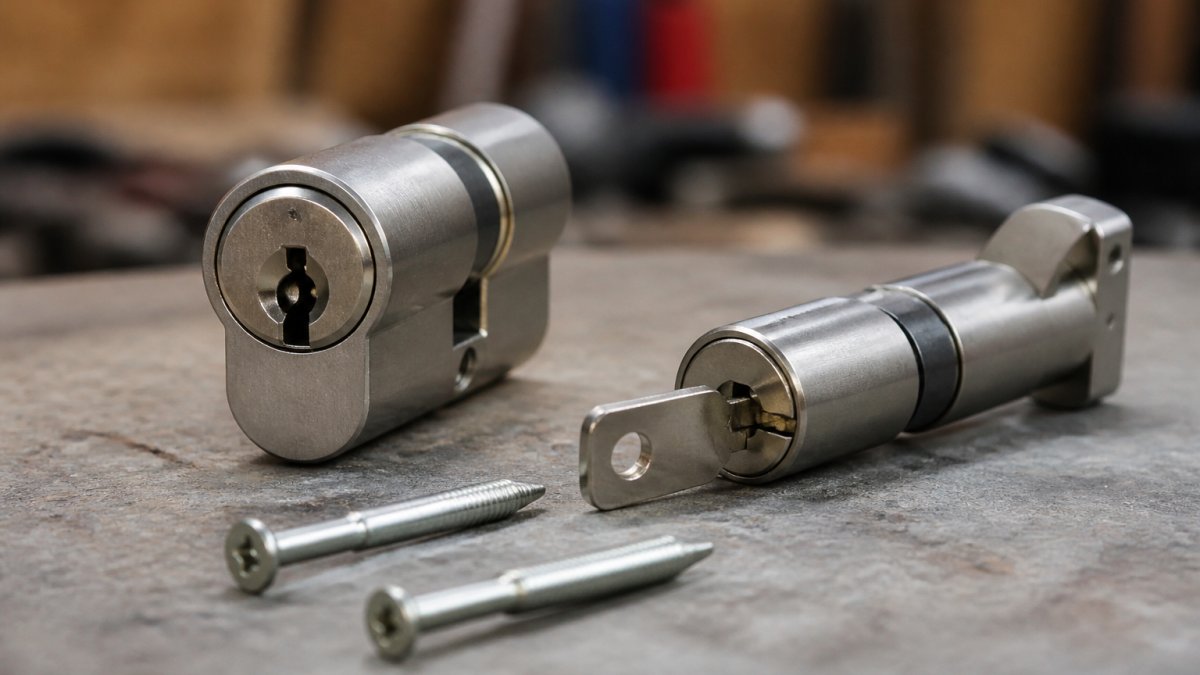
Anti-snap cylinders contain a deliberate weak point, known as a sacrificial cut, machined into the body of the lock. When force is applied, the cylinder snaps at that point instead of at the door line, leaving the majority of the locking mechanism intact inside the door.
The outer section is designed to be expendable. What remains is a hardened, tamper-resistant core that still holds the door shut. Attackers end up with a broken piece of metal in their hand and a door that will not open.
This is the core engineering idea behind anti-snap locks: make failure predictable and harmless rather than catastrophic. A lock that breaks on your terms is far better than one that breaks on a burglar's.
The Real Benefits of Anti-Snap Locks for Home Protection
The main benefit of anti-snap locks is that they close off the fastest, quietest route into a home. Most burglars want speed and low risk. A door that resists snapping for even a minute or two is usually abandoned in favour of an easier target.
Beyond that single advantage, anti-snap cylinders bring several connected improvements:
- Forced-entry resistance at the weakest point. The cylinder is where most uPVC doors fail, so reinforcing it protects the whole door.
- Deterrent value. Visible high-security hardware and Kitemark branding signal that a home is not an easy mark.
- Insurance compliance. Many policies expect a minimum standard of door security, and a certified cylinder helps you meet it.
- Long-term durability. Quality cylinders resist wear, sticking, and key breakage better than budget replacements.
- Peace of mind. Knowing the front door cannot be snapped open in seconds changes how secure a home feels day to day.
Anti-Bump, Anti-Pick and Anti-Drill Resistance
Snapping is only one attack method. A good anti-snap cylinder also resists the others. Anti-bump features use specially shaped pins to defeat bump keys, which are cut to jiggle the pins into alignment. Anti-pick designs make it far harder to manipulate the pins by hand.
Anti-drill protection typically involves hardened steel pins or plates inside the cylinder that blunt drill bits before they reach the locking mechanism. Together, these features mean an attacker has to work through several layers of defence rather than finding one easy opening.
Not every cylinder offers all four protections. When you shop, check that anti-snap is listed alongside anti-bump, anti-pick, and anti-drill. A cylinder with only one of these is a partial upgrade, not a full one.
Signs Your Door Locks Need Replacing
The clearest sign your locks need replacing is a cylinder that sits proud of the door face, because any protrusion gives an attacker use. Other warning signs include a lock that sticks, a key that no longer turns smoothly, or visible wear around the keyway.
Work through this quick check:
- The cylinder protrudes more than a few millimetres from the door face
- The lock has no Kitemark or TS007 marking
- The key sticks, jams, or needs wiggling to turn
- The door has been in place for many years with the original builder-grade lock
- You have recently moved in and do not know the lock's history
- There is play or wobble when you push the cylinder
If two or more of these apply, replacement is worth considering. A common mistake is assuming a solid-looking door is secure. The door itself is rarely the problem; the cylinder usually is.
TS007 3-Star Cylinder Locks and the Kitemark Scheme
TS007 is the British standard that grades cylinder security from one to three stars, and the star rating is the fastest way to judge a lock's resistance to attack. A 3-star cylinder is tested to resist snapping, bumping, picking, and drilling on its own, without any additional hardware.
The rating system works like this:
| Rating | What It Means | Typical Use |
|---|---|---|
| 1-star | Cylinder resists basic attack but needs a 2-star security handle to reach 3-star equivalent | Budget upgrades, paired with reinforced handles |
| 2-star | Security handle or guard adds protection around the cylinder | Doors where the handle is also being replaced |
| 3-star | Cylinder alone meets the highest tested standard | Best choice for a single, complete upgrade |
For most homes, a 3-star cylinder is the simplest route. It delivers full protection in one component, so you do not need to coordinate a handle upgrade as well. The Kitemark scheme, run by BSI, is the certification mark that confirms a product has been independently tested against the relevant standard. Look for the Kitemark alongside the TS007 marking.
According to BSI's guidance on the Kitemark scheme, independent testing is what separates certified security products from unverified claims. A cylinder that carries the mark has been tested to a published standard, not just described as secure on the packaging.
Secured by Design and Police-Preferred Standards
Secured by Design is the official police initiative that sets security requirements for buildings and products, and locks that meet its standards are often described as police-preferred. The scheme exists to reduce burglary by encouraging hardware that has been tested against real attack methods.
Products approved under Secured by Design typically meet or exceed the requirements of the relevant British Standard, including TS007 for cylinders. For homeowners, the practical takeaway is simple: a cylinder that carries both a 3-star TS007 rating and Secured by Design approval sits at the top of the range for residential door security.
You can check the Secured by Design official product listings to confirm whether a specific lock meets the scheme's requirements. It is a useful step before buying, because packaging claims do not always match certification.
How to Measure a Euro Cylinder Correctly
Measuring a euro cylinder correctly means recording three dimensions: the total length, the distance from the outer edge to the centre screw hole, and the distance from the inner edge to the same screw hole. Getting these wrong is the most common reason a replacement lock does not fit.
Here is the process:
- Remove the cylinder by undoing the retaining screw on the door edge.
- Measure from the outside face of the cylinder to the centre of the fixing hole. Record this as the external measurement.
- Measure from the inside face to the centre of the same hole. Record this as the internal measurement.
- Add the two figures together to get the total length.
- Note the two measurements separately, because cylinders are sold as a pair (for example, 35/35 or 40/45).
The two numbers matter because the cylinder must sit flush on both sides of the door. If the external measurement is too long, the lock protrudes and becomes vulnerable. If it is too short, the lock will not operate correctly. Always measure with the door closed and the cylinder removed, and take the old cylinder with you when buying if you are unsure.
Do Anti-Snap Locks Affect Home Insurance?
Anti-snap locks can affect home insurance because most UK policies include a condition that external doors are kept in good repair and fitted with a lock of an appropriate standard. Meeting that condition matters at claim stage: if an insurer can show the door lock fell below the policy requirement, it may reduce or decline a theft claim.
What insurers actually look for varies by provider and policy tier. Common patterns include:
- A requirement that final exit doors are fitted with a mortice deadlock to BS 3621 or a cylinder meeting a recognised standard such as TS007.
- A clause requiring keys to be removed and the door double-locked when the property is unoccupied.
- For higher-value contents cover, a specified minimum star rating on cylinder locks, often 3-star TS007 or an equivalent Secured by Design approved product.
- For landlords and multi-property portfolios, the same standard applied across every let, not just the main residence.
A TS007 3-star cylinder is usually the simplest way to satisfy a modern policy condition because it meets the highest tested cylinder standard on its own, without needing a separate security handle. If your policy references BS 3621, that is a different standard covering mortice locks rather than euro cylinders, so check which type of lock your door actually has before buying.
Practical steps to protect a claim:
- Read the security conditions in your policy schedule, not just the summary. They are often in the general conditions section.
- Note any named standard or star rating. If none is named, ask the insurer in writing what they require for your door type.
- Keep the receipt, the product packaging showing the TS007 marking, and any Kitemark certificate that came with the cylinder.
- Photograph the fitted lock and the door edge so you have dated evidence of the installation.
- If you rent, check whether the tenancy agreement or landlord's insurance places the obligation on you or the landlord.
A common pattern is that homeowners only discover a policy gap after a break-in, when the loss adjuster asks for proof of the lock standard. Fitting a certified cylinder before that point removes the argument entirely.
Fitting Anti-Snap Locks: DIY or a Locksmith?
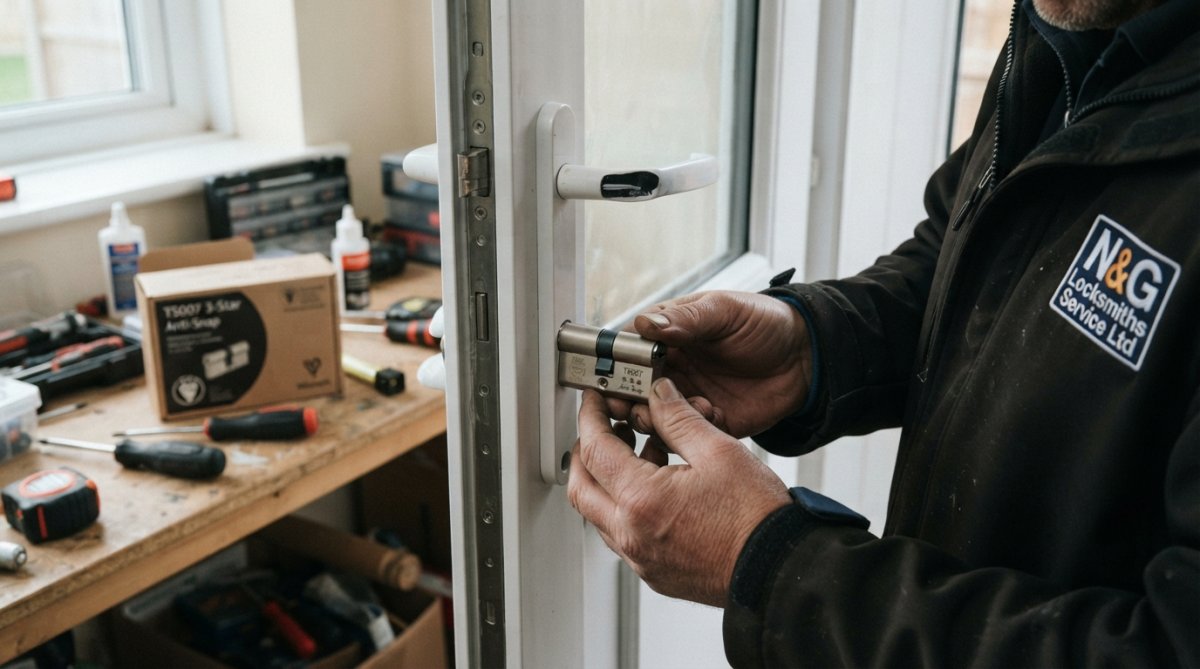
Fitting an anti-snap cylinder is one of the few security upgrades a confident DIYer can complete in under half an hour, but the job only stays simple when three conditions are met: the door is a standard uPVC or composite with a euro cylinder, the old cylinder slides out freely, and the replacement matches the existing measurements exactly.
What a straight swap involves
- Open the door and locate the cylinder retaining screw on the door edge, usually a single screw in the faceplate beside the lock case.
- Undo that screw. On some doors there is a second screw under a cap on the inner handle.
- With the key inserted and turned slightly to align the cam, pull the old cylinder out towards you.
- Slide the new cylinder in, keeping the cam aligned, and refit the retaining screw.
- Test the key from both sides, check the door locks and unlocks smoothly, and confirm the cylinder sits flush with the door face on both sides.
Tools that make it straightforward
A cross-head screwdriver that fits the retaining screw properly, a tape measure or steel rule for confirming the 35/35, 40/45 or similar size, and a little graphite or silicone lubricant for the new cylinder. No specialist locksmith tools are needed for a standard swap.
When it stops being a DIY job
- The old cylinder will not budge because it is seized, painted in, or the retaining screw is stripped.
- The door has a multipoint locking system where the cylinder must align precisely with the gearbox, or the door will not lock at all.
- The existing cylinder is a non-standard length and the door needs modification to accept a flush-fitting replacement.
- The door has dropped on its hinges, so the lock no longer lines up with the keep.
- You want the work covered by a guarantee that includes the lock and the labour.
Forcing a cylinder that does not fit can damage the multipoint gearbox, and replacing a gearbox costs several times more than the cylinder itself. That is the main reason a straightforward-looking job turns expensive.
The trade-off in practice
DIY: lower cost, you control the timing, but you carry the risk if the measurements are wrong or the door is damaged. A locksmith: higher upfront cost, but the cylinder is measured, supplied, fitted and guaranteed in one visit, and any alignment issue with the multipoint mechanism is dealt with on the spot.
A sensible middle path is to buy the correct TS007 3-star cylinder yourself after measuring carefully, then call a locksmith only if the old cylinder will not release or the door will not lock cleanly afterwards. That keeps the cost down while protecting the door.
At N&G Locksmiths Service Ltd, we fit TS007-rated anti-snap cylinders across residential and commercial properties, with a 12-month guarantee on the work and no call-out fee. If you are unsure whether your current lock meets the standard, we can assess it and advise before anything is replaced.
Frequently Asked Questions
Are anti-snap locks worth it?
They are, because cylinder snapping is one of the quickest ways a burglar gains forced entry through a uPVC door. A standard euro cylinder can be snapped in seconds with hand tools, while an anti-snap lock uses a sacrificial cut so the cylinder breaks at a weak point before the cam, leaving the locking mechanism intact. That means the door stays shut. Given the low cost of a replacement cylinder compared with the disruption of a break-in attempt, upgrading is a practical deterrent for most homes.
Are anti-snap locks police approved?
There is no single police-approved lock, but the Secured by Design scheme, which is supported by policing, recognises cylinders that meet TS007 3-star or carry a Sold Secure Diamond rating. If you want the closest thing to a police-preferred standard, look for a Kitemark or Sold Secure mark on the packaging. A locksmith can confirm which cylinders meet the current criteria and fit one that suits your door hardware.
How can I tell if my current door locks are anti-snap?
Take the cylinder out and check the face for a Kitemark or Sold Secure stamp, or look for a TS007 star rating printed on the plug. Many older euro cylinders carry no markings at all, which usually means they are not anti-snap. You can also check for a sacrificial cut line near the outer face. If you are unsure, a locksmith can identify the cylinder and confirm whether it meets the TS007 3-star standard.
Do insurance companies require anti-snap locks?
Some home insurance policies require a minimum standard of door security, and a few specify TS007 3-star or Sold Secure Diamond cylinders. Most policies do not name a brand, but they may reduce or refuse a claim if the lock was clearly below the standard stated in the policy. Check your schedule before you upgrade, and keep the receipt or fitting record so you can show the work was done.