 blog
blog
Keyless Entry vs Traditional Locks: 2026 Guide
Table of Contents
- Keyless Entry Systems vs Traditional Keyed Locks: What's the Difference
- Keyless Door Locks: Pros and Cons
- Traditional Keyed Locks: Advantages and Disadvantages
- Are Keyless Locks Secure Enough for Your Property
- Security Comparison: Keyless vs Traditional Locks
- Keyless Door Lock Installation Cost in the UK
- Signs Your Door Locks Need Replacing
- Which System Should You Choose
- Frequently Asked Questions
Last Updated: October 10, 2026
Keyless Entry Systems vs Traditional Keyed Locks: What's the Difference
Choosing between keyless entry systems traditional locks is one of the most important security decisions you'll make for your home or business. Both options have evolved significantly, and the right choice depends on your specific needs, budget, and how you prioritise convenience against reliability.
This guide breaks down the core differences, security implications, and practical considerations so you can make an informed choice.
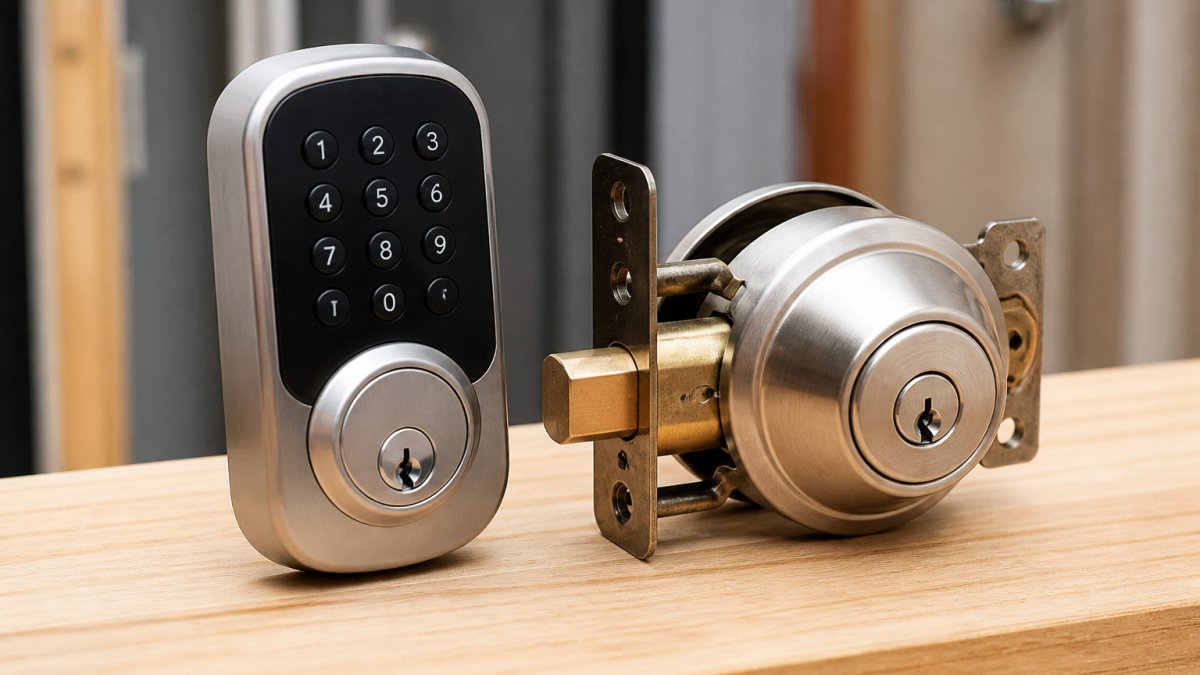
The fundamental distinction is straightforward: keyless entry systems eliminate the need for a physical key by using codes, biometrics, or wireless signals to unlock doors. Traditional keyed locks rely on a physical key inserted into a mechanical lock cylinder. But that surface-level difference masks deeper trade-offs in security, maintenance, cost, and user experience that matter far more than the marketing suggests.
Keyless Door Locks: Pros and Cons
Keyless entry systems offer genuine convenience that appeals to busy households and commercial properties. You'll never fumble for keys again. Multiple people can access the same door using different codes. You can grant temporary access to guests or service providers without handing over a physical key, and revoke it just as easily.
The real advantages:
- No lost keys means no emergency lockouts (or at least fewer of them)
- Audit trails show who entered when, which matters for rental properties and businesses
- Multiple access codes allow different permissions for different users
- Remote access via smartphone for some models adds flexibility
- No wear on the lock mechanism from key insertion and removal
However, keyless systems introduce vulnerabilities that traditional locks don't have. They require batteries or power, which creates a single point of failure. If the battery dies, you're locked out unless you have a backup entry method. Some models can be hacked or spoofed, codes can be intercepted, and cheaper systems sometimes use encryption that's weaker than it should be. Installation is more complex and often requires professional setup, which increases initial cost.
The genuine drawbacks:
- Battery dependency and replacement costs
- Higher upfront investment than basic mechanical locks
- Technical failures can be harder to diagnose and repair
- Some models have been vulnerable to wireless attacks (though better systems address this)
- Requires regular software updates for security patches
Traditional Keyed Locks: Advantages and Disadvantages
Traditional locks have stood the test of time for good reason. They're mechanically simple, which means they're incredibly reliable. A quality deadbolt will function for decades with minimal maintenance. There's no battery to replace, no code to forget, no software to update.
What makes them dependable:
- Mechanical simplicity means fewer things can fail
- No power requirements, they work regardless of circumstances
- Lower upfront cost compared to most keyless systems
- Proven security track record over centuries
- Easy for any locksmith to repair or replace
The downside is equally clear: lost or stolen keys create genuine security problems. You can't easily change access permissions without rekeying the entire lock. There's no audit trail showing who entered when. If you're a landlord or property manager, collecting keys from departing tenants is a hassle. Keys can be duplicated without your knowledge.
The real limitations:
- Lost keys require emergency locksmith callouts
- Rekeying or changing locks is expensive if you need multiple properties updated
- No visibility into who accessed the property and when
- Keys can wear out, jam, or break over time
- Duplicate keys are easy to make without your permission
Are Keyless Locks Secure Enough for Your Property
This is where most guides get vague. The honest answer is: it depends on the specific model and how it's installed.
Quality keyless systems are genuinely secure. They use encryption, rolling codes, and multi-factor authentication that make them harder to breach than many people assume. Quality keyless systems use industry-standard security protocols that have withstood professional testing. But not all keyless systems are created equal. Cheaper models sometimes cut corners on encryption or use outdated wireless protocols.
Traditional locks have a different security profile. They're immune to electronic attacks because there's nothing electronic to attack. However, they're vulnerable to physical attacks, lock picking, bumping, or forced entry. A skilled thief can bypass a traditional lock faster than many people realise.
The real security difference comes down to implementation. A high-quality keyless system installed properly by a certified professional will be more secure than a budget traditional lock. Conversely, a premium traditional lock from a reputable manufacturer will outlast and outperform a poorly chosen keyless system.
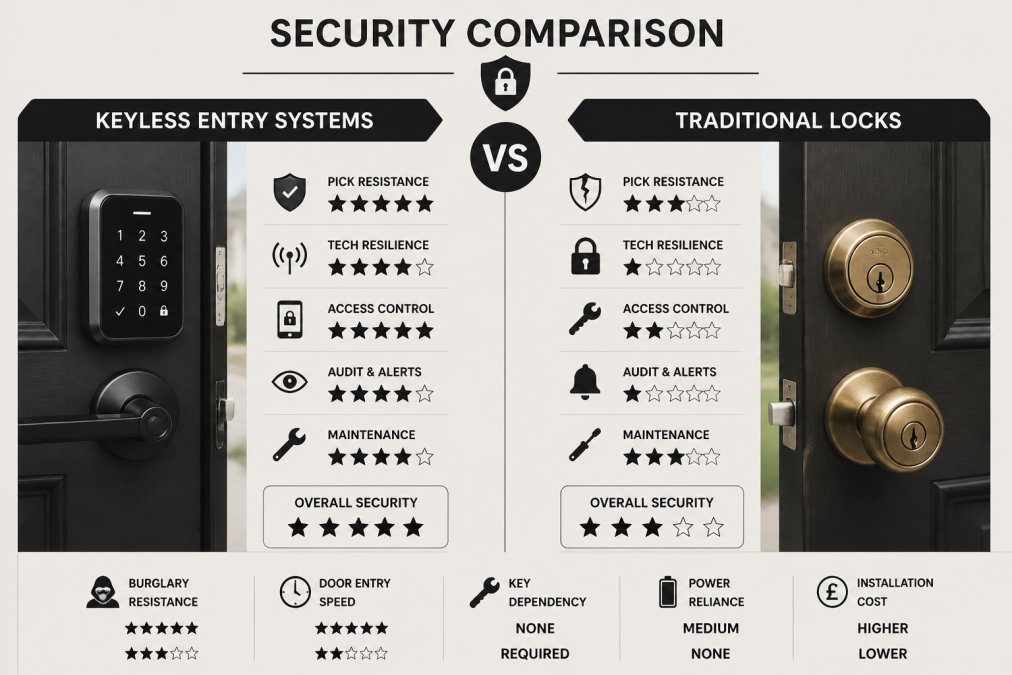
Security Comparison: Keyless vs Traditional Locks
| Feature | Keyless Systems | Traditional Locks |
|---|---|---|
| Vulnerability to electronic attacks | Possible (depends on model) | None |
| Vulnerability to physical attacks | Lower (no key to pick) | Higher (lock picking possible) |
| Audit trail | Yes (code logs) | No |
| Power dependency | Yes (battery) | No |
| Installation complexity | High (professional recommended) | Low (DIY possible) |
| Long-term reliability | Good (if maintained) | Excellent (mechanical) |
| Cost of compromise | Lock replacement | Rekeying or replacement |
The security comparison reveals something important: neither system is objectively "more secure." They're secure against different threats. Keyless systems protect against physical lock picking and key duplication. Traditional locks protect against electronic attacks and battery failure.
For critical applications, high-security commercial properties, safes, or sensitive areas, traditional locks or hybrid systems often make more sense.
Keyless Door Lock Installation Cost in the UK
Installation cost is where many property owners get surprised. A keyless entry system isn't just the device itself. You're paying for professional installation, which involves assessing your door, ensuring proper alignment, and integrating the system with your existing security setup.
The total cost depends on several factors: the complexity of your door, whether you need backup power systems, integration with existing security, and whether you want smart home connectivity.
Rather than guessing at figures, we recommend getting a quote from a certified locksmith in your area. At N&G Locksmiths Service Ltd, we provide upfront pricing with no hidden fees, and our 30-minute response time means you can get an assessment quickly. We can walk you through the actual costs for your specific situation, whether you're upgrading a single door or securing multiple properties.
Traditional lock installation is simpler and faster, which is reflected in lower labour costs.
Signs Your Door Locks Need Replacing
Your locks might be working, but that doesn't mean they're secure or reliable. Certain warning signs indicate it's time for replacement rather than repair.
If your key sticks, requires jiggling, or doesn't turn smoothly, the lock mechanism is wearing out. This isn't just inconvenient, it's a sign the internal pins and springs are degrading. A lock in this condition is easier to manipulate and may fail completely soon.
Visible rust, corrosion, or damage to the lock body suggests moisture has compromised the internal mechanism. Rust doesn't just look bad; it creates friction that can jam the lock or make it unreliable in an emergency.
If you've lost keys, had them stolen, or given keys to people you no longer trust, rekeying or replacing the lock is the only way to guarantee security. A lost key is a genuine security vulnerability, not just an inconvenience.
Locks that have been forced, picked, or tampered with should be replaced immediately. Even if the lock still functions, its security integrity is compromised.
If your lock shows any of these signs, replacement is usually more cost-effective than ongoing repairs. Older locks are more prone to failure and less resistant to modern attack methods.
Which System Should You Choose
The decision between keyless entry systems traditional locks comes down to your priorities and circumstances.
Choose keyless systems if you value convenience, need multiple people to have access, want audit trails of who entered when, or prefer not to manage physical keys. They're ideal for rental properties, businesses with staff turnover, and properties where you want remote access capability. They work best when you're willing to invest in quality and professional installation.
Choose traditional locks if you prioritise simplicity, want zero power dependency, prefer proven mechanical reliability, or have a limited budget. They're excellent for secondary doors, backup security, or properties where convenience takes a back seat to dependability. They're also the right choice if you live in an area with unreliable power or prefer not to manage battery replacements.
Many property owners in Thetford and the surrounding areas find that a hybrid approach works best: keyless entry on the main door for daily convenience, with a traditional deadbolt as a mechanical backup. This gives you the best of both systems, modern convenience with mechanical reliability.
At N&G Locksmiths Service Ltd, we help you assess your specific situation and recommend the system that actually fits your needs rather than what's trendy. Our 12-month guarantee means you're protected if something goes wrong, and our 24/7 emergency service means help is just a phone call away if you ever get locked out.
Whether you're upgrading your home security, managing a rental property, or securing a commercial space, the right lock system depends on balancing security, reliability, and convenience. A professional locksmith can assess your specific doors, your security needs, and your budget to recommend the best solution. Contact N&G Locksmiths Service Ltd today for a consultation, we'll help you make the decision that keeps your property secure without compromising on practicality. Our fully licensed and certified professionals are available 24/7 across Norfolk, Suffolk, and Cambridgeshire, with no call-out fee and a 30-minute response time guarantee.
Frequently Asked Questions
Are keyless entry systems more secure than traditional keyed locks?
Both offer security, but in different ways. Keyless entry systems eliminate key duplication risks and allow access control without physical keys. Traditional locks have no electronics to hack but can be picked or bumped by experienced intruders. Security depends on the specific model, installation quality, and how you manage access codes. Many homeowners use both systems together for layered protection.
What are the main disadvantages of keyless door locks?
Keyless locks require battery power and fail if batteries drain or power cuts occur, though most include mechanical override options. They cost more to install than traditional locks. Electronics can malfunction, and some models are vulnerable to hacking if not properly secured. Installation may require professional help, adding to expenses. They also require code management rather than simple key management.
How much does keyless door lock installation cost in the UK?
Installation costs vary depending on the lock model, your door type, and whether you need professional fitting. Contact N&G Locksmiths Service Ltd for a quote tailored to your specific needs. Our certified professionals provide upfront pricing with no hidden fees, and we offer a 12-month guarantee on all work. Visit our pricing page for current rates.
When should you replace a traditional door lock?
Replace your lock if the key sticks or doesn't turn smoothly, the lock mechanism feels loose or rattles, you've lost keys and can't locate spares, the lock shows visible rust or corrosion, or the door has been forced or damaged. If you've recently moved into a property, replacing locks ensures only you have access. Regular inspection helps identify wear before security is compromised. Professional locksmiths can assess your locks and recommend replacement timing.