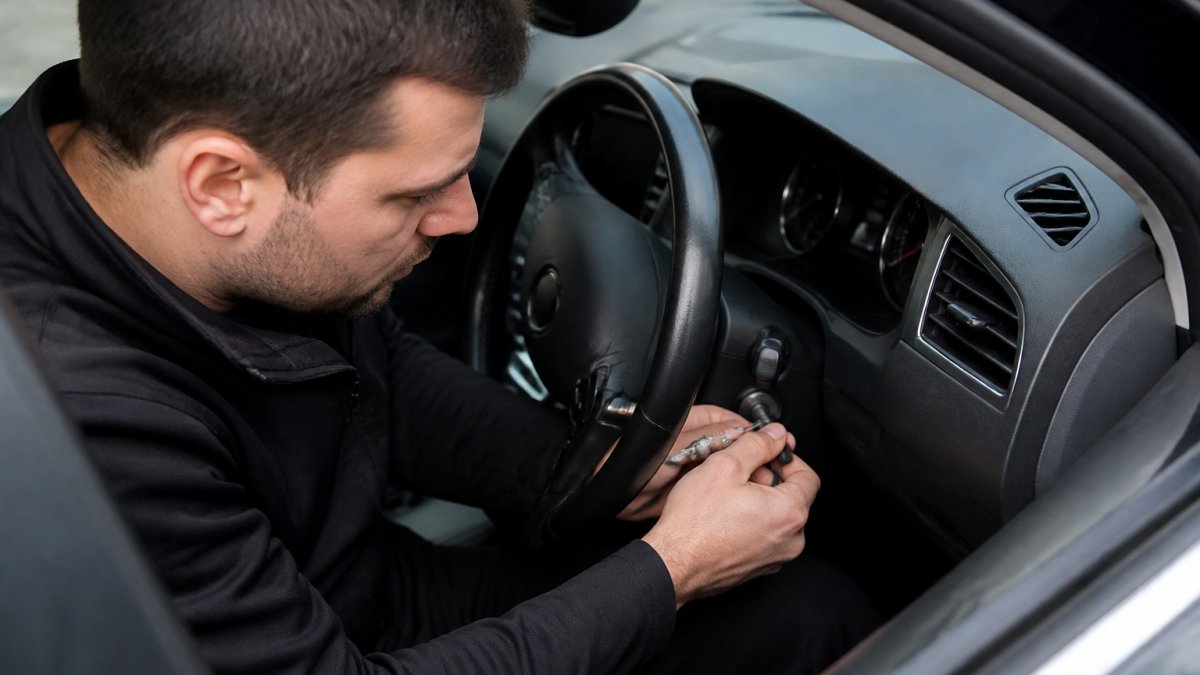
 blog
blog
Fast Emergency Key Replacement: Response Times
Table of Contents
- What Counts as a Genuine Emergency Key Replacement
- Emergency Locksmith Response Time Expectations
- Step-by-Step: What to Do When You're Locked Out
- Mobile Locksmith Services vs Dealership Key Replacement
- How Much Does Emergency Car Key Replacement Cost?
- DBS Checked Locksmith Requirements: How to Verify
- Insurance and Warranty: What You Need to Know
- DIY vs Professional: Risk Assessment
- Frequently Asked Questions
Last Updated: October 1, 2026
What Counts as a Genuine Emergency Key Replacement
A genuine emergency key replacement is any situation where you cannot access your home, business, or vehicle and no spare key is available to solve the problem quickly. It is that simple. The distinction matters because not every lockout carries the same urgency, and understanding the difference helps you get the right help faster.
At N&G Locksmiths Service Ltd, we handle calls ranging from a snapped key in an ignition at midnight to a homeowner locked out in the rain with shopping bags on the doorstep. The situations that qualify as true emergencies share three traits:
- You are locked out right now and cannot enter your property or vehicle
- No spare key exists or it is too far away to be useful
- Waiting until morning creates real risk, whether that means exposure to weather, missing work, or leaving your vehicle vulnerable
Situations that are not emergencies include wanting a spare key cut, replacing a worn lock, or upgrading your home security. Those matter, but they can wait for a scheduled visit.
A common mistake is calling an emergency line for a non-urgent job and paying emergency rates unnecessarily. If you can wait until normal working hours, do so. You will have more options and often a lower bill.
Emergency Locksmith Response Time Expectations
Response time expectations for emergency locksmiths vary widely, but a genuine 24/7 provider should reach you within 30 to 60 minutes in urban and suburban areas. Rural locations typically take longer. Any company quoting a flat "15 minutes anywhere" is either exaggerating or operating so locally that their coverage is minimal.
When you call, ask three questions before booking:
- Where is your nearest engineer right now? A specific answer beats a vague promise.
- Is there a call-out fee on top of the labour? Some providers advertise low rates but add charges on arrival.
- What is the total estimated cost? Get a figure before you agree.
The Citizens Advice guidance on hiring tradespeople recommends confirming the total price upfront and asking for the engineer's credentials before work begins. That applies to locksmiths as much as any trade.
What a 30-Minute Response Actually Means
A 30-minute response means the engineer arrives at your location within half an hour of confirming the job, not that they answer the phone in 30 minutes. The clock starts when you agree to the booking and provide your address.
Geography is the biggest variable. A provider covering a large region cannot guarantee 30 minutes to every postcode. The honest ones will tell you if your location sits at the edge of their coverage area.
How Providers Actually Hit a 30-Minute Window
A realistic 30-minute arrival depends on three things the dispatcher controls, not just distance:
- Engineer positioning: Providers with vans parked across multiple postcodes at any hour can genuinely hit 30 minutes. A single-van operation cannot cover a county in that time.
- Job triage: A snapped key in an ignition takes longer than a simple lockout. A good dispatcher tells you the realistic window for your specific job, not a blanket figure.
- Parts on board: If the engineer carries the right blank and programming kit, the visit is one trip. If not, you wait for a second visit, which doubles the effective response time.
Ask the dispatcher: "Does the engineer already have the key blank and programming equipment for my vehicle on board?" A yes means a single visit. A hesitation usually means a parts run.
Verifying the Arrival Window Before You Commit
A common pattern among reputable providers is to give you a named engineer and a live arrival estimate when you book. If a company will only say "someone will be with you soon", treat that as a warning sign.
Before you agree to the booking:
- Get the engineer's first name and vehicle description. This lets you confirm the right person has arrived.
- Ask for the arrival window in writing by text or email. If they cannot put it in writing, the promise is not worth much.
- Note the time of the call. If the engineer is late beyond the quoted window, you have a factual basis to renegotiate the price or cancel without a fee.
What to Do While You Wait
Once the booking is confirmed, the wait is the risky part. A short, safe protocol protects you and speeds up the job when the engineer arrives:
- Stay in a safe, well-lit place. If you are locked out of a vehicle at night, wait inside a nearby shop, café or petrol station forecourt rather than standing on the roadside.
- Do not attempt to force the lock yourself. Amateur attempts frequently damage the cylinder or immobiliser, turning a straightforward job into a replacement.
- Gather your documentation. Have photo ID and proof of address or vehicle ownership ready. A reputable locksmith will ask before opening anything, and having it ready saves time.
- Keep your phone charged and the line free. The engineer may call to confirm your exact position, especially in a car park or residential block.
- Note the vehicle or property details. Make, model and year for a car; lock type and door for a property. This lets the engineer confirm they have the right kit before they set off.
When a Longer Wait Is the Better Choice
If the quoted arrival is more than two hours, weigh the alternatives. A dealership may open in the morning and charge less for a non-urgent key, and some home insurance policies reimburse emergency locksmith costs if you can show the call-out was necessary. If you are not in immediate danger and the property is secure, waiting for a scheduled visit can be the cheaper and lower-risk option.
Step-by-Step: What to Do When You're Locked Out
Staying calm and following a clear sequence saves time and money. Here is the protocol we recommend to every caller, whether they are locked out of a house, a car, or a business premises.
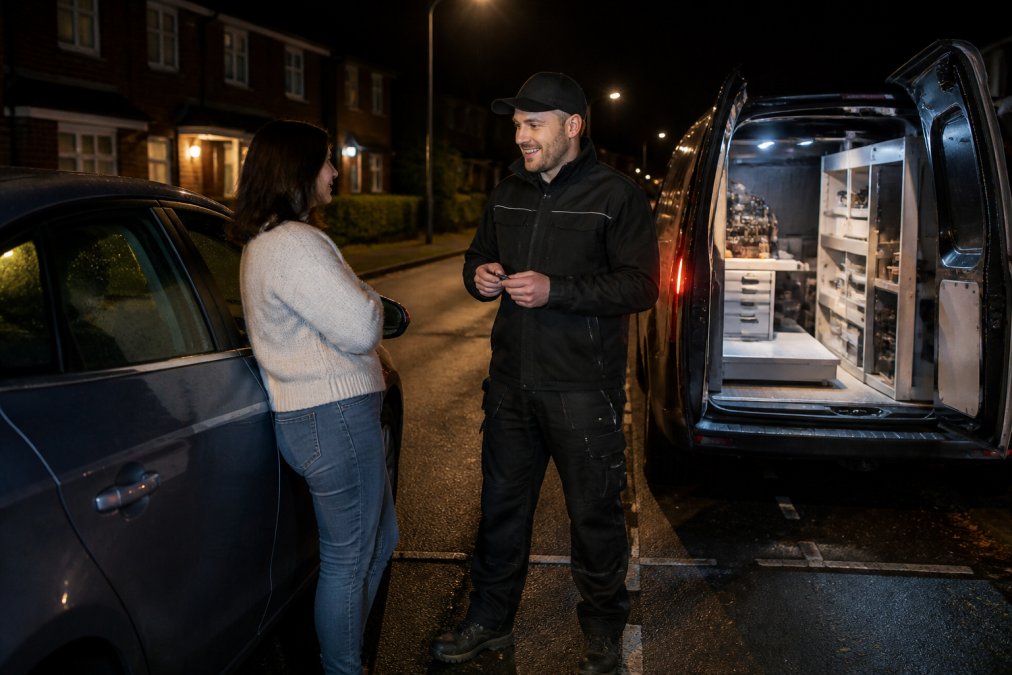
Step 1: Check every entry point. Try all doors and windows before calling anyone. A back door left unlocked or a window on a latch has saved many people an unnecessary call-out.
Step 2: Call a locksmith and describe the situation precisely. Tell them what type of lock or vehicle you have, whether the key is lost, broken, or locked inside, and your exact location.
Step 3: Confirm the price and arrival window. Ask for a total figure and a realistic time. If either sounds evasive, call someone else.
Step 4: Have proof of residency or ownership ready. A reputable locksmith will ask for identification before opening a property or vehicle. This protects you as much as them.
Step 5: Stay where you are. Do not leave the location. The engineer is coming to you, and moving wastes everyone's time.
Step 6: Inspect the work before paying. Test the lock or key yourself. Ask about the guarantee, which should be at least 12 months on parts and labour for a quality provider.
Step 7: Keep the receipt. You may need it for insurance or warranty claims later.
Mobile Locksmith Services vs Dealership Key Replacement
Mobile locksmith services come to you and can cut, program, and supply keys on the spot for most vehicle makes. Dealerships require you to bring the vehicle to them, often need to order the key in advance, and charge significantly more for the same result.
The practical differences matter when you are standing in a car park at 11pm:
| Factor | Mobile Locksmith | Dealership |
|---|---|---|
| Where the work happens | Your location | Their premises |
| Typical wait time | 30-60 minutes | Same day to several days |
| Key programming | On-site diagnostics | Workshop equipment |
| Spare key cutting | Often available immediately | Usually ordered in |
| Emergency availability | 24/7 | Business hours only |
| Cost | Generally lower | Generally higher |
For lost car keys, a mobile auto locksmith can often retrieve the key code, cut a replacement, and reset the immobiliser in a single visit. Dealerships may need to order the key from a central depot, which adds days to the process.
Where dealerships win is on brand-new vehicles with the latest security systems. Some manufacturers restrict key programming to franchised dealers for the first year or two after launch. If your car is very new, check whether an independent locksmith can access the required software before booking.
How Much Does Emergency Car Key Replacement Cost?
Emergency car key replacement cost depends on the vehicle make, the type of key, and whether programming is required. Transponder keys and key fobs cost more than a basic cut key because they contain electronic chips that must be coded to your vehicle's immobiliser.
Factors that affect the price:
- Key type: A simple metal key costs far less than a transponder or smart fob
- Programming needs: Keys with immobiliser chips require on-site diagnostics
- Time of day: Genuine 24/7 providers may charge a premium for unsociable hours
- Vehicle make: Some manufacturers use more complex security systems than others
A trustworthy locksmith will quote you a total price before travelling. If a provider refuses to give a figure over the phone, treat that as a warning sign.
At N&G Locksmiths Service Ltd, we offer upfront pricing so you know what to expect before you call. We have no call-out fee, no hidden extras, and a 12-month guarantee on all work.
Why Dealer Prices Are Higher
Dealerships carry overheads that independent locksmiths do not: large premises, manufacturer licensing, and administrative layers. Those costs appear in your bill. A dealer may also insist on using only their branded keys, which limits your options.
Independent locksmiths source compatible keys from multiple suppliers, which keeps costs down without sacrificing quality. The key still meets the same security standards, and you still get a guarantee.
DBS Checked Locksmith Requirements: How to Verify
DBS checked locksmith requirements refer to the Disclosure and Barring Service check that confirms an individual has no relevant criminal convictions. It is not a legal requirement for locksmiths, but many reputable providers hold one voluntarily because it reassures customers, particularly when entering homes.
What a DBS Check Actually Covers
The Disclosure and Barring Service runs three levels of check, and the level matters when you are deciding who to let into your home:
- Basic check: Confirms unspent convictions and conditional cautions. This is the minimum most locksmiths hold.
- Standard check: Adds spent convictions, cautions, reprimands and warnings that are not protected. Relevant for roles working with vulnerable people.
- Enhanced check: Adds a check of the barred lists and any relevant local police intelligence. This is the level used for roles working regularly with children or vulnerable adults.
For a locksmith entering your home, a basic or standard check is the realistic expectation. An enhanced check is a strong signal but is not standard across the trade. Ask which level the engineer holds, not just whether they are "DBS checked".
How the Update Service Works
The DBS update service is a subscription that lets a certificate holder keep their check current and lets employers or customers verify it online. It is the fastest way to confirm a certificate has not been superseded.
To use it, you need the certificate holder's consent and their certificate number or date of birth. The check is instant and free for the person verifying. If a locksmith claims to be on the update service but cannot give you the details to check, treat the claim with caution.
Step-by-Step Verification Before You Book
- Ask for their DBS certificate number. They should be able to provide it on request.
- Check the update service. The DBS update service allows you to confirm a certificate is still current.
- Ask about MLA approval. Membership of the Master Locksmiths Association shows the engineer has met industry standards for competence and conduct.
- Request identification on arrival. A photo ID and a business card should match the company you booked.
The Disclosure and Barring Service official guidance explains how DBS checks work and what they cover. Understanding the process helps you ask the right questions.
Other Credentials Worth Checking
A DBS check confirms background, not competence. Pair it with at least one trade credential:
- Master Locksmiths Association (MLA) membership: The main trade body. Members agree to a code of conduct and are inspected.
- Public liability insurance: Ask for the certificate. A reputable provider carries at least £1 million in cover, often more.
- Company registration: Check the company number on the Companies House register to confirm the business is real and active.
- Fixed business address: A landline and a registered address are stronger signals than a mobile number alone.
Red Flags to Walk Away From
If a locksmith cannot or will not provide credentials, do not let them work on your property. The risk of damage or theft is too high, and you have no recourse if something goes wrong.
Specific warning signs:
- No company name on the van or paperwork
- Cash-only payment demanded before work starts
- Pressure to sign up for a subscription or maintenance plan on the spot
- A price quoted on the phone that rises significantly on arrival
- No written receipt or guarantee offered
If any of these appear, you are within your rights to cancel before work begins. A genuine emergency provider will not object.
Insurance and Warranty: What You Need to Know
Insurance and warranty implications are the part most people overlook until something goes wrong. Your home insurance may cover lock replacement after a break-in, but only if you can prove the work was necessary and carried out by a qualified tradesperson.
Check your policy for:
- Emergency access cover: Some policies reimburse locksmith costs if you are locked out
- Lock replacement after theft: Usually covered, but you may need a crime reference number
- Warranty on workmanship: Your locksmith's guarantee is separate from your insurance
A 12-month guarantee from your locksmith covers defects in parts and labour. If a lock fails within that period, the provider should repair or replace it at no cost. Keep your receipt and any paperwork.
For vehicle keys, your car warranty may be affected if an unauthorised third party programs the immobiliser. Check with your manufacturer before booking if your car is still under warranty.
Photograph the completed work and keep your receipt in a safe place. If you need to claim on insurance later, having dated evidence of professional installation speeds up the process.
DIY vs Professional: Risk Assessment
DIY lock and key work carries real risks that outweigh the savings in most emergency situations. The tools required for key programming and lock extraction are expensive, and using them incorrectly can cause damage that costs more to repair than the original call-out.
Risks of DIY attempts:
- Damaged locks: Forcing a lock can bend the cylinder, requiring full replacement
- Broken keys: A snapped key inside an ignition or door lock is harder to remove than the original problem
- Immobiliser lockout: Incorrect programming attempts can disable your vehicle's security system
- No guarantee: If you damage something, you pay for the repair yourself
When DIY makes sense:
- You have a spare key and just need to retrieve it
- The lock is accessible and you have the correct tools
- You are not dealing with electronic systems or immobilisers
For anything involving transponder keys, immobiliser resets, or broken key extraction, call a professional. The Master Locksmiths Association guidance for consumers recommends using an MLA-approved locksmith for any work that affects your property's security.
N&G Locksmiths Service Ltd is a family-run business serving Norfolk, Suffolk, and Cambridgeshire with 24/7 emergency cover. We aim to carry the tools and parts to handle most jobs on the first visit, which means you are not waiting for a second appointment.
Frequently Asked Questions
How long does emergency key replacement take?
A mobile locksmith can typically complete key replacement in 20 to 45 minutes on site, depending on the vehicle and key type. This includes cutting and programming the new key. Dealerships often require you to tow the car to them and may take several days to order and program a replacement. For a fast emergency response, a mobile locksmith is usually quicker.
How can I verify a locksmith is DBS checked and reputable?
Ask to see their DBS certificate and check for MLA (Master Locksmiths Association) approval. A legitimate locksmith will happily provide these. You can also check online reviews and confirm they have a fixed business address. N&G Locksmiths Service Ltd is fully licensed and insured, with DBS checked engineers. Never let an unverified stranger work on your home or car.
Does my insurance cover emergency key replacement?
Some comprehensive car insurance policies include key replacement cover, but many do not. Check your policy documents or call your insurer. Home insurance may cover lock replacement after a break-in. If you have breakdown cover, it often includes lockout assistance but not key replacement. Always confirm what is covered before calling a locksmith to avoid unexpected costs.
What factors influence the cost of an emergency locksmith call-out?
Costs depend on the time of day (nights and weekends may cost more), the type of key (transponder, remote fob, or standard), and the vehicle make. Some locksmiths charge a call-out fee, while others like N&G Locksmiths Service Ltd have no call-out charge. Always ask for a quote upfront and confirm there are no hidden fees before work begins.
Locked out at an awkward hour or facing a key problem you cannot solve alone? N&G Locksmiths Service Ltd offers 24/7 emergency response with no call-out fee, a 30-minute target arrival, and a 12-month guarantee on every job. Our DBS-checked engineers arrive fully equipped for lockouts, key replacement, and on-site programming. Call now and get back inside without the runaround.