 ultimate-guide
Why Choose Local Certified Locksmiths: 2026 Guide
Table of Contents
- What Local Certified Locksmiths Actually Offer
- MLA Approved Locksmith Benefits Explained
- How to Verify Locksmith Credentials Before You Open the Door
- Locksmith Pricing Transparency: Upfront Quotes vs Hidden Charges
- Rogue Traders and Scams: How to Spot and Avoid Them
- Smart Locks, Insurance Compliance, and Modern Security
- Why Local Certified Locksmiths Beat National Call Centres
- Frequently Asked Questions
Last Updated: August 29, 2026
What Local Certified Locksmiths Actually Offer
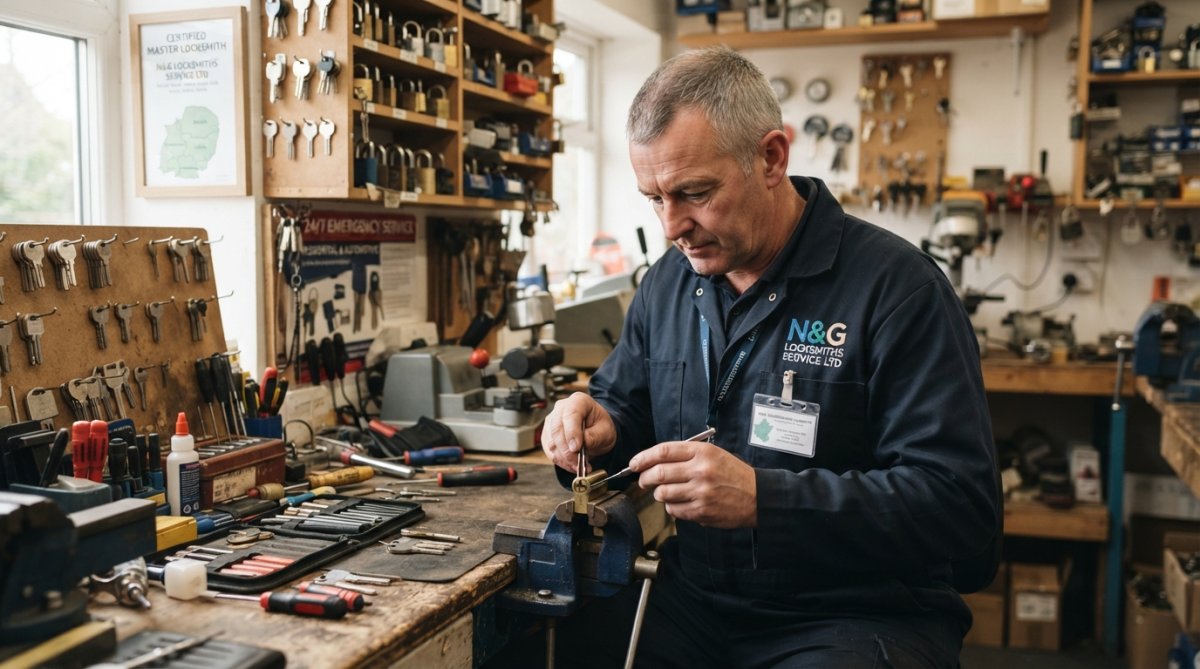
Local certified locksmiths are qualified security professionals who hold verified trade credentials, carry appropriate insurance, and operate within a defined service area. They reach you faster, know the local housing stock, and have a reputation to protect in the community they serve. A locksmith working locally cannot afford to cut corners, their next job might be a neighbour's referral.
The practical advantages are immediate: faster arrival (often within 30 minutes), familiarity with common door types and lock brands in the area, a fixed local address with verifiable business history, and accountability to the local community rather than a distant head office.
Emergency Response Times and Why They Matter
Emergency response time is the interval between your call and a technician arriving at your door. For a lockout at midnight or a broken lock after a burglary attempt, that gap determines whether you wait 20 minutes or two hours.
National call centres often subcontract jobs to whoever is available, meaning the technician may travel considerable distances. A genuine local locksmith has a physical base nearby and routes their own calls. A 30-minute response time is achievable when the technician is genuinely local, rarely so when a call centre dispatches from a regional pool.
Repair First Approach and Non-Destructive Entry
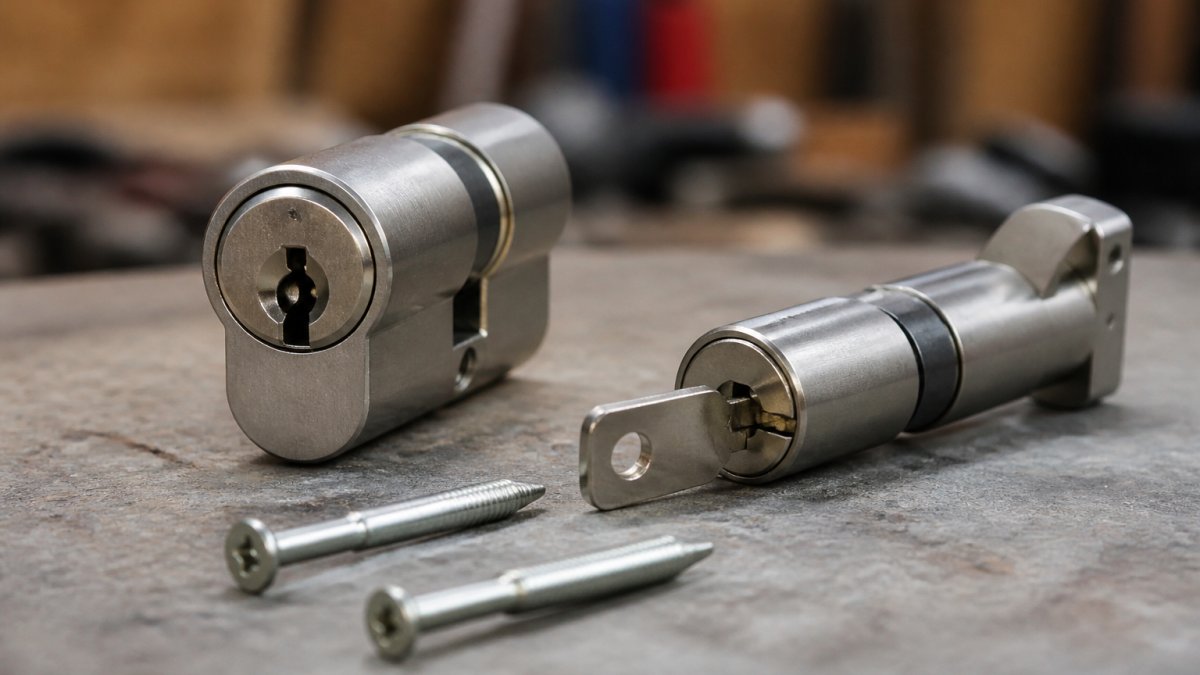
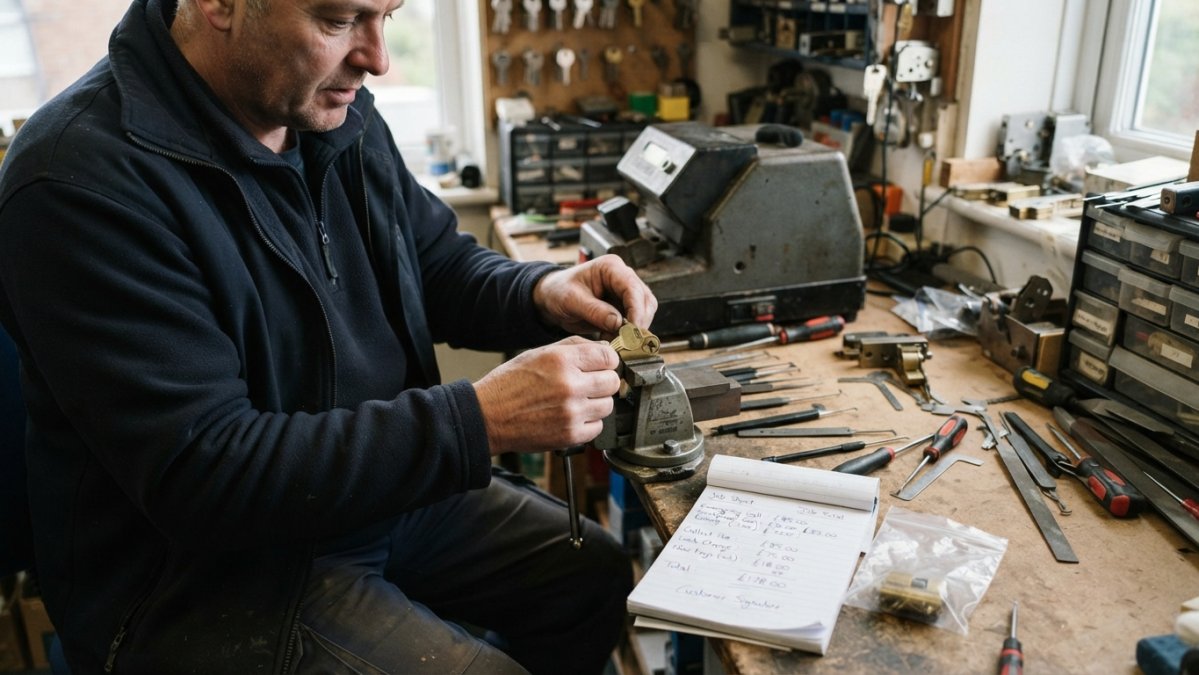
A qualified locksmith's default position should be non-destructive entry: opening a lock without drilling, replacing, or damaging it. This approach requires skill, the right tools, and genuine training. It also saves you money, because a repaired or picked lock costs far less than full replacement.
Rogue traders often drill immediately because it is faster and generates a larger parts invoice. A certified technician will attempt to pick or manipulate the lock first, and will only recommend replacement when the lock is genuinely beyond saving or below the security standard your insurer requires.
MLA Approved Locksmith Benefits Explained
The Master Locksmiths Association is the primary trade body for the locksmith industry in the UK. MLA membership requires technicians to pass rigorous vetting, including a criminal record check, practical skills assessment, and ongoing compliance with the association's code of practice. According to Master Locksmiths Association, approved members must maintain their standards to retain membership.
Choosing an MLA-approved locksmith gives you a formal complaints and arbitration route if something goes wrong. That accountability structure simply does not exist with an unvetted trader.
DBS Checks, Insurance, and Verified Credentials
A DBS check is a Disclosure and Barring Service criminal record check that confirms the technician has no relevant criminal history before being given access to your home or business. This matters because locksmiths occupy a position of significant trust.
Beyond background checks, look for:
- Public liability insurance: Covers damage to your property caused during the job
- Professional indemnity insurance: Covers errors in advice or workmanship
- Workmanship guarantee: A written commitment to fix problems arising from the work, typically for 12 months
Insurance-approved locksmiths carry documentation you can request before work begins.
City and Guilds, NCFE, and Trade Association Standards
City and Guilds and NCFE certification are the two most recognised formal qualifications in the locksmith trade. City and Guilds Level 2 and Level 3 qualifications cover lock mechanisms, security standards, key cutting, safe work, and security system design.
These qualifications are not mandatory by law, which is precisely why they matter as a selection signal. Because anyone can legally call themselves a locksmith in the UK, the presence of a City and Guilds or NCFE qualification immediately distinguishes a trained professional from an unqualified opportunist.
How to Verify Locksmith Credentials Before You Open the Door
Verifying locksmith credentials before you open the door is straightforward if you know what to ask and where to check. The process takes under five minutes and can prevent a costly or dangerous encounter with a rogue trader.
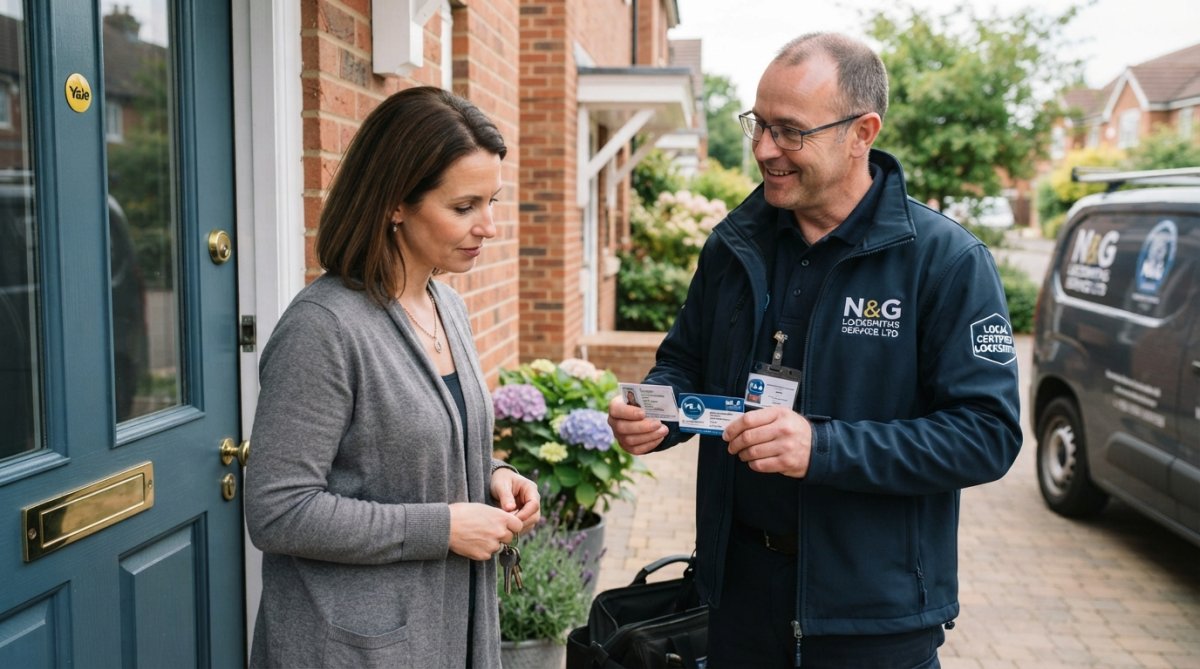
Step-by-Step Verification Checklist
Use this checklist before any locksmith enters your property:
- Search the MLA directory online before booking. The MLA approved locksmith finder lets you search by postcode for vetted, approved members.
- Ask for the company name and trading address when you call.
- Request proof of DBS check before the technician enters.
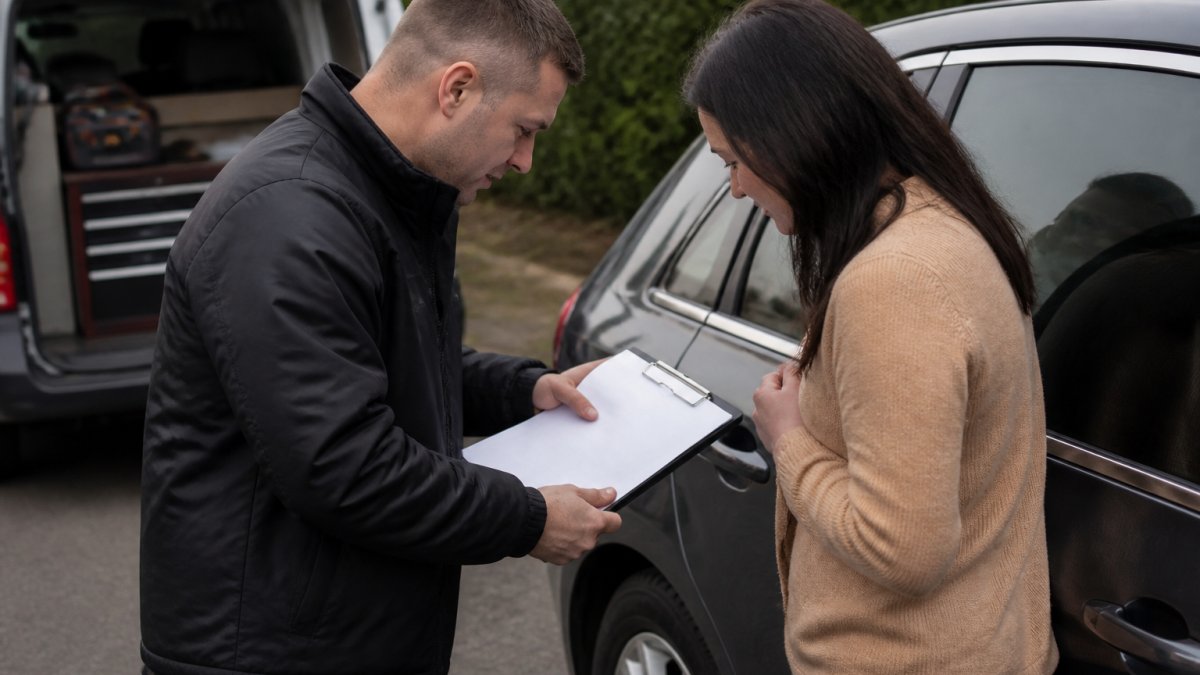
- Ask for an upfront quote before any work begins. Get the total price confirmed, including call-out fee (or confirmation there is none), labour, and parts.
- Check the van and ID on arrival. The company name on the van should match the business you called.
- Verify insurance. Ask to see a certificate of public liability insurance.
- Check online reviews. Look for consistent, verified reviews on Google or Trustpilot.
- Confirm the guarantee. Ask specifically: "What is covered under your workmanship guarantee, and for how long?"
| Verification Step | What It Confirms | Time Required |
|---|---|---|
| MLA directory search | Approved, vetted status | 2 minutes |
| Upfront quote request | No hidden charges | 1 minute on the phone |
| ID and van check on arrival | Correct company, legitimate technician | 2 minutes at the door |
| Insurance documentation | Public liability cover in place | 1 minute |
| Workmanship guarantee confirmation | Recourse if work fails | 1 minute |
Locksmith Pricing Transparency: Upfront Quotes vs Hidden Charges
Locksmith pricing transparency separates professional operators from rogue traders. The pattern is consistent: a low advertised call-out fee attracts the booking, then inflated labour rates or unnecessary parts push the final bill far higher than expected.
Legitimate locksmith pricing covers three components: call-out (if applicable), labour, and parts. A transparent locksmith will quote all three before starting work. The questions to ask before any locksmith begins work:
- Is there a call-out fee, and is it included in the quote?
- What is the labour rate, and is it time-based or fixed per job?
- If parts are needed, will you confirm the cost before fitting them?
- Is VAT included in the figure you have given me?
A locksmith who cannot answer these questions clearly before arriving is unlikely to be transparent once the job is underway.
Rogue Traders and Scams: How to Spot and Avoid Them
Rogue locksmith traders are a documented problem across the UK. The typical operation involves advertising with a local-looking phone number and a low headline price, then arriving and quoting a dramatically higher figure once the customer is already locked out.
The Citizens Advice consumer guidance on rogue traders outlines your rights when a trader charges significantly more than an agreed price, including the right to challenge the charge and seek redress.
Common warning signs of a rogue trader:
- No physical address given when you call
- Reluctance to quote a price before arriving
- Immediate drilling without attempting non-destructive entry
- Pressure to pay cash only
- No company name visible on the van or uniform
- Invoice that does not match the initial quote
The most effective protection is to book a locksmith before you need one urgently. Identify a local certified locksmith in your area, verify their credentials, and save their number.
Smart Locks, Insurance Compliance, and Modern Security
Smart locks and digital security systems have changed what it means to secure a property, and local certified locksmiths are increasingly the professionals best placed to advise on them. The question is no longer just "what lock do I need?" but "how does this lock interact with my insurance policy, my existing door hardware, and my wider security setup?"
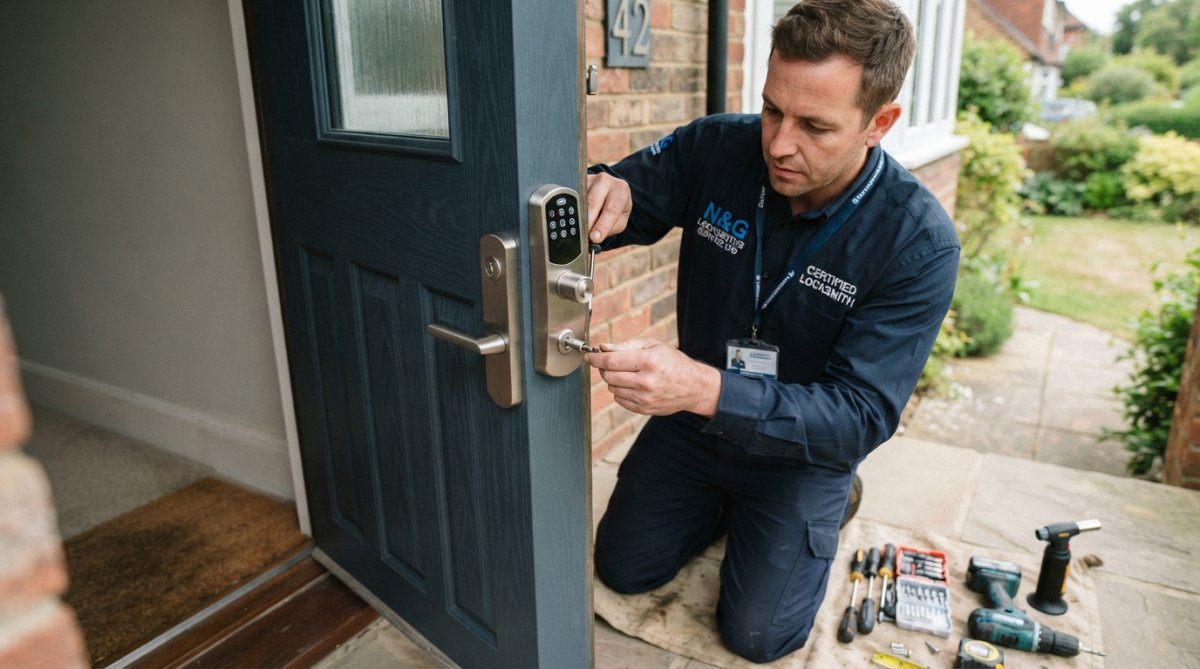
Insurance Policy Implications of Lock Choices
Many home insurance policies specify a minimum lock standard, often referencing British Standard BS 3621 for mortice locks. Fitting a lock that does not meet your policy's requirements can invalidate a burglary claim.
Before upgrading or replacing any lock, check your home insurance policy documents for lock specifications. A qualified locksmith can advise on insurance-approved locks that meet both your insurer's requirements and your preference for modern technology. Some smart locks now carry BS 3621 certification or equivalent Sold Secure ratings, making them both technologically current and insurance compliant.
Smart Lock Integration and Digital Security
Smart lock integration covers keypad entry, app-controlled deadbolts, biometric access, and integration with wider home security systems. A certified locksmith with experience in security system design can assess whether a smart lock is appropriate for your door type, whether the existing door hardware supports it, and how to configure it securely.
A local certified locksmith will advise on burglary prevention as a whole: door reinforcement, hinge security, frame condition, and how a smart lock fits into a layered security approach.
Why Local Certified Locksmiths Beat National Call Centres
The case for choosing local certified locksmiths over national call centres comes down to four concrete differences: response time, accountability, local knowledge, and cost transparency.
National call centres operate as intermediaries. They take your booking, pass it to an available subcontractor, and add a margin. The technician who arrives may have no relationship with the company you called and no particular incentive to do the job well beyond completing it quickly.
A local certified locksmith is the business. They answer the phone, they drive to your door, and they put their name and local reputation behind the work. If something goes wrong, you know exactly who to call and where to find them.
The independent locksmith model, when the technician is also MLA-approved, DBS checked, and carries full insurance, combines the trust signals of a large organisation with the responsiveness and accountability of a local business.
For further guidance on consumer rights when hiring tradespeople, the Which? guide to hiring a tradesperson provides practical advice on contracts, quotes, and dispute resolution.
Frequently Asked Questions
How do I know if a locksmith is reputable?
Check whether the locksmith is a member of a recognised trade association such as the Master Locksmiths Association (MLA). MLA-approved locksmiths must pass technical assessments, hold public liability insurance, and agree to a code of conduct. Ask to see their credentials before they begin work, request an upfront quote, and confirm they carry a DBS check. A reputable local certified locksmith will provide all of this without hesitation.
How do I avoid being scammed by a locksmith?
Avoid locksmiths found only through generic online adverts with no verifiable address or trade association membership. Always ask for a fixed price before work starts and confirm there is no hidden call-out fee. Rogue traders often quote a low figure on the phone, then inflate the bill on arrival. Choosing a local certified locksmith with verified credentials, a workmanship guarantee, and transparent pricing significantly reduces this risk.
What qualifications should a professional locksmith have?
There is currently no single mandatory licence for locksmiths in the UK, which makes checking qualifications essential. Look for City and Guilds or NCFE certification in locksmithing, membership of the Master Locksmiths Association, and a valid DBS (Disclosure and Barring Service) check. Qualified technicians should also carry public liability insurance and, where relevant, professional indemnity cover. These credentials confirm both technical competence and accountability.
Why is it safer to use a local locksmith rather than a national call centre?
National call centres often subcontract work to unvetted third parties, meaning the person who arrives may not hold the credentials advertised. A local certified locksmith operates under their own name, carries their own insurance, and depends on local reputation. Response times are also faster because they are genuinely nearby. For emergency lockout services, that combination of speed, accountability, and verified credentials makes a meaningful practical difference.
Choosing the right locksmith under pressure is genuinely difficult, and rogue traders count on that pressure to take advantage. N&G Locksmiths Service Ltd provides 24/7 emergency locksmith services with no call-out fee, a 30-minute response time, and a 12-month workmanship guarantee, every job backed by certified professionals who are fully licensed and insured. Call N&G Locksmiths Service Ltd now and get a transparent upfront quote before any work begins.
This article was written using GrandRanker