 ultimate-guide
What Is a No Callout Fee? A Clear Guide
Table of Contents
- What Is a No Callout Fee?
- Is a No Callout Fee the Same as a Free Job?
- Hidden Locksmith Charges to Watch Out For
- Emergency Locksmith Pricing Structure Explained
- Fixed Price vs Hourly Rate Locksmith: Which Is Better?
- Your Consumer Rights and How to Dispute Unfair Charges
- What Honest No Callout Fee Pricing Looks Like
- Frequently Asked Questions
Last Updated: August 28, 2026
What Is a No Callout Fee?
A no callout fee is a pricing commitment from a tradesperson or service provider meaning they will not charge you simply for turning up. Many locksmiths, plumbers, and electricians historically added a fixed charge just for making the site visit, regardless of whether any work was carried out. A no callout fee removes that charge entirely, so you only pay for the labour, parts, and any diagnostic work actually performed.
This guide from N&G Locksmiths Service Ltd breaks down exactly what that promise means in practice, where the confusion tends to creep in, and how to protect yourself from billing surprises before you ever open the door.
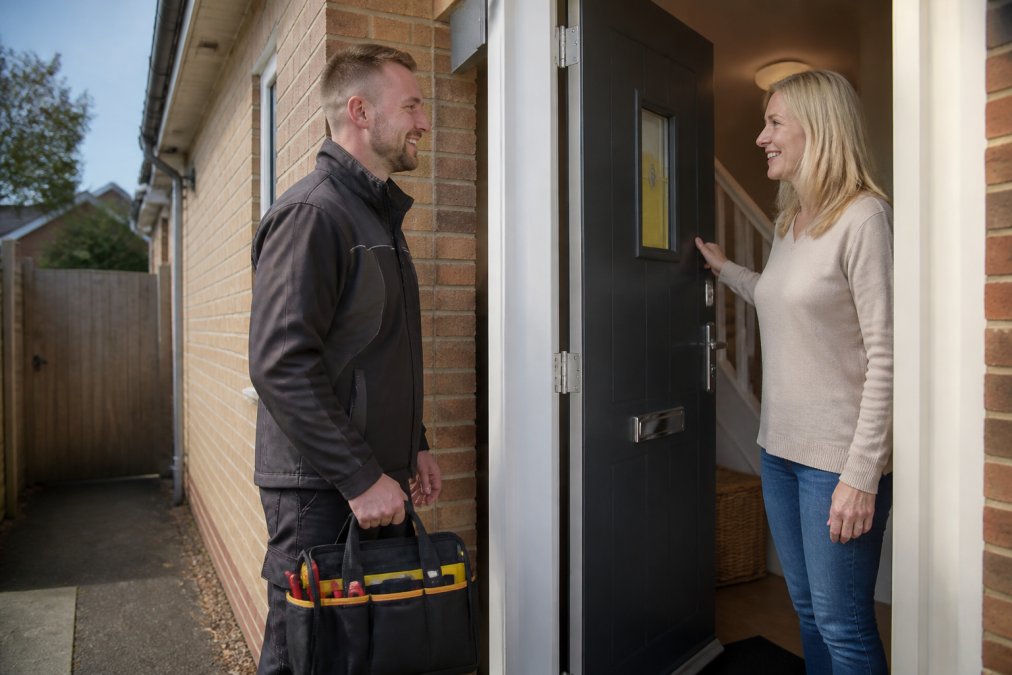
The distinction matters more than most people realise. A genuine no callout fee policy means your invoice starts at zero the moment the technician arrives. A misleading one simply bundles the travel cost into a different line item and calls it something else. Knowing the difference is the first step to getting a fair deal.
What a Standard Call-Out Fee Covers
A standard call-out fee is a fixed charge a service provider applies to cover the costs of responding to your booking. It typically accounts for travel time, transit expenses, vehicle running costs, and the administrative overhead of scheduling and dispatching a technician. Some providers also include a portion of their overhead expenses, such as insurance and tool maintenance, within this charge.
The fee exists because a tradesperson's time begins the moment they leave their previous job, not when they knock on your door. Labour costs start accumulating during transit, and a call-out fee is the mechanism used to recover that cost. For the business, it also acts as a minimum charge, ensuring a short job or a cancelled appointment does not leave them out of pocket.
The Diagnostic Fee vs Call-Out Fee Distinction
Here is where most consumers get caught out, and where most guides on this topic fall short.
A call-out fee covers the act of travelling to your property and arriving on site. A diagnostic fee, by contrast, covers the time a technician spends assessing the problem once they are there: examining the lock, testing mechanisms, identifying the fault, and forming a plan of action.
These are two separate charges, and a provider can legitimately advertise "no call-out fee" while still billing you a diagnostic fee. The two are not the same, and conflating them is one of the most common sources of dispute between customers and tradespeople.
Before you book, ask explicitly: "Do you charge a diagnostic fee or an assessment fee on top of the job cost?" A reputable locksmith will answer that question clearly and include the answer in any written quote or estimate they provide.
Is a No Callout Fee the Same as a Free Job?
No. A no callout fee is not a free job, and treating it as one leads to genuine disappointment.
What the policy removes is the fixed charge for turning up. You still pay for the work itself: the labour time, any replacement parts, and any specialist equipment used on site. Think of it this way: a no callout fee means the meter starts when the technician begins working, not when they leave their depot.
For a lockout job, that means you pay for the time it takes to open the door and, if needed, replace or repair the lock. For a lock change, you pay for labour and the cost of the new hardware. The no callout fee policy simply ensures you are not paying an additional, separate charge on top of all of that just because someone made the journey.
This is an important distinction when comparing quotes. A provider with a no callout fee and a higher hourly rate may cost more overall than one who charges a small call-out fee but works more quickly. Always ask for a total fixed price or a clear estimate before authorising any work.
Hidden Locksmith Charges to Watch Out For
The locksmith industry has a well-documented history of pricing opacity, and the Citizens Advice guidance on rogue traders and unexpected charges consistently lists unexpected service charges as one of the most common consumer complaints in the home services sector.
Here are the charges that catch people out most often:
- Minimum charge clauses: Some providers apply a minimum labour charge equivalent to one or two hours, even if the job takes fifteen minutes.
- Out-of-hours surcharges: Emergency call-outs at night, on weekends, or on bank holidays often carry a premium that is not always disclosed upfront.
- Parts markup: The cost of replacement locks or cylinders may be marked up significantly beyond retail price. Ask for the parts cost to be itemised separately.
- VAT not included: A quoted price that excludes VAT can look considerably lower than the final invoice. Always confirm whether the price quoted is inclusive.
- "Anti-snap" or "high-security" upselling: Some technicians push premium lock upgrades on arrival, at a price far above what was discussed. This is not always unreasonable, but you should not feel pressured.
- Second visit fees: If a part needs to be ordered and the technician returns, some providers charge a second call-out fee for that return visit.
Questions to Ask Before You Book
A short script can save you a significant amount of money and frustration. Before confirming any locksmith booking, ask these questions directly:
- "Is there a call-out fee, diagnostic fee, or minimum charge on top of the job cost?"
- "Can you give me a fixed price for the job, or is it charged by the hour?"
- "Will parts be charged separately, and can you confirm the price before fitting them?"
- "Does the quoted price include VAT?"
- "Is there a surcharge for the time of day or day of the week?"
- "Do you provide a written invoice at the end of the job?"
- "What is your guarantee on the work carried out?"
A provider who hesitates or gives vague answers to any of these questions is worth treating with caution. Billing transparency is not a high bar; it is the baseline expectation for any professional service.
Emergency Locksmith Pricing Structure Explained
Emergency locksmith pricing typically follows one of two structures: a fixed price per job, or a time-and-materials model combining an hourly rate with parts costs.
Fixed pricing is generally more consumer-friendly for straightforward jobs such as lockouts, lock changes, or cylinder replacements. You agree a price before work begins, and that is what you pay. There is no ambiguity around how long the job takes or what parts cost.
Time-and-materials pricing is more common for complex or unpredictable work, such as high-security installations, safe opening, or situations where the fault is not immediately clear. The risk is that a job that sounds simple can escalate in cost if complications arise.
For out-of-hours emergency call-outs specifically, many providers apply a tiered surcharge structure. Work carried out between standard business hours typically costs less than work carried out late at night or on a bank holiday. This is standard practice and broadly acceptable, provided the surcharge is disclosed before the booking is confirmed, not presented on the invoice afterwards.
The key question to ask is whether the provider offers a service agreement or a contractual obligation to honour the quoted price. A reputable locksmith will confirm the price in writing, either via text, email, or a signed job sheet, before starting work.
Fixed Price vs Hourly Rate Locksmith: Which Is Better?
For most residential locksmith jobs, a fixed price is the better option for the customer. It removes the incentive for a technician to work slowly, eliminates the risk of cost overruns, and makes it straightforward to compare quotes from different providers.
An hourly rate works in your favour only when the job is genuinely unpredictable in scope. If you are unsure what is wrong with a lock mechanism or you need a full security assessment across multiple entry points, an hourly rate with a clear cap may be more appropriate than a fixed price based on incomplete information.
| Pricing Model | Best For | Risk to Customer | Risk to Provider |
|---|---|---|---|
| Fixed price | Standard jobs: lockouts, lock changes | Overpaying if job is very quick | Undercharging on complex jobs |
| Hourly rate | Complex or unknown-scope work | Cost overruns if job takes longer | Underestimating time |
| Minimum charge | Short jobs or assessments | Paying for time not used | Short jobs uneconomical without it |
The honest answer is that the pricing model matters less than whether the provider discloses it clearly upfront. A fixed-price provider who adds surprise charges on the invoice is worse than an hourly-rate provider who gives you an accurate estimate. Transparency is the real differentiator.
Your Consumer Rights and How to Dispute Unfair Charges
Consumers in the UK have meaningful protections when it comes to unexpected or misleading service charges.
Under the Consumer Rights Act 2015 guidance from the Competition and Markets Authority, services must be performed with reasonable care and skill, within a reasonable time, and at a reasonable price if no price was agreed in advance. If a locksmith charges you significantly more than was quoted, or adds charges that were not disclosed before work began, you have grounds to dispute the invoice.
The practical steps for disputing an unfair charge are:
- Request an itemised invoice showing every charge broken down separately.
- Compare it against any written quote or confirmation you received before the work started.
- Write to the provider setting out the discrepancy and requesting a revised invoice. Keep a copy.
- If unresolved, escalate to Citizens Advice or the relevant Alternative Dispute Resolution scheme. Many trade associations operate their own dispute resolution processes.
- For misleading advertising claims, such as a provider who advertised "no call-out fee" but charged one anyway, you can raise a complaint with the Advertising Standards Authority.
Do not pay an invoice you believe is incorrect simply to end the situation. Paying in full is often interpreted as acceptance of the charge, which weakens any subsequent dispute. Pay the undisputed portion and put the contested amount in writing.
What Honest No Callout Fee Pricing Looks Like
Genuine no callout fee pricing is straightforward: the technician arrives, assesses the job, confirms the total cost before starting, and that price holds. No surprise line items on the invoice. No retroactive surcharges.
At N&G Locksmiths Service Ltd, the no callout fee commitment is exactly that: you are not charged for the technician's travel or arrival. Pricing is confirmed upfront, work comes with a 12-month guarantee, and the team is fully licensed and insured. For emergency lockouts, residential lock changes, or automotive work, the process is the same regardless of the time of day or day of the week.
What separates honest pricing from misleading advertising is consistency between what is promised and what appears on the invoice. A few markers of a trustworthy provider:
- They confirm the total price in writing before starting any work.
- Their invoice matches the quote.
- They itemise parts and labour separately so you can see what you are paying for.
- They do not add charges that were not discussed on the call.
- They hold a 12-month guarantee on workmanship, not just a verbal assurance.
The locksmith industry does not have a single mandatory licensing regime in the UK, which means quality and pricing standards vary considerably between providers. Choosing a provider who is a member of a recognised trade body, carries public liability insurance, and offers a written guarantee gives you a meaningful layer of protection that no-name operators cannot match.
Frequently Asked Questions
What does 'no callout fee' actually mean?
A no callout fee means the tradesperson does not charge a fixed fee simply for travelling to your property and arriving on site. You are not billed for their transit time or the administrative cost of booking the visit. However, you will still pay for the work carried out, any parts used, and the labour time on site. Always confirm what the total invoice will include before authorising any work, as some providers replace the callout fee with a diagnostic fee or minimum charge.
Is a callout fee different from an hourly labour rate?
Yes. A callout fee is a fixed charge applied before any work begins, covering travel time and overhead expenses for the site visit. An hourly rate is the labour cost charged for the time the technician spends working on your property. Some locksmiths charge both; others charge only labour. A no callout fee provider removes the first charge but still applies an hourly or fixed labour rate. Always ask for a full written quote so you can see exactly what each line on the invoice represents.
Are locksmiths allowed to charge a fee just for arriving?
Yes, it is entirely legal for a locksmith or any tradesperson to charge a callout or booking fee for attending your property. There is no UK law prohibiting it. However, under the Consumer Rights Act 2015, any charges must be clearly communicated before the service agreement is confirmed. If a provider advertises 'no callout fee' but then applies one on the invoice, that could constitute misleading advertising under the Consumer Protection from Unfair Trading Regulations 2008.
What should I ask before booking an emergency locksmith?
Ask these questions before confirming any booking: Is there a callout or booking fee? Is there a minimum charge or diagnostic fee? Will I receive a fixed price or be charged an hourly rate? Are parts and labour included in the quote? Is the price the same for out-of-hours or weekend call-outs? Can you confirm the total cost in writing before starting work? Getting clear answers to each of these protects you from unexpected charges on the final invoice and confirms the provider's billing transparency.
Unexpected charges from a locksmith are one of the most avoidable consumer frustrations, provided you know the right questions to ask before anyone picks up a tool. N&G Locksmiths Service Ltd offers 24/7 emergency response with no callout fee, upfront pricing confirmed before work begins, and a 12-month guarantee on all workmanship. Call now to get a clear, honest price for your job.
This article was written using GrandRanker