 ultimate-guide
Locksmith Warranty on New Locks: What's Covered
Table of Contents
- Locksmith Warranty on New Locks: What's Covered
- How Long Is a Locksmith Warranty?
- Lock Manufacturer Warranty vs Locksmith Guarantee
- What Voids a Locksmith Warranty?
- How to Claim a Warranty on New Locks
- Consumer Rights Act 2015 and Lock Installation
- Does Home Insurance Cover Lock Replacement?
- Smart Locks vs Mechanical Locks: Warranty Differences
- Questions to Ask Before You Agree to a Lock Installation
- Conclusion
- Frequently Asked Questions
Last Updated: September 6, 2026
Locksmith Warranty on New Locks: What's Covered
A locksmith warranty on new locks is a written promise from the installer that covers defects in workmanship and, in some cases, the hardware itself for a defined period. Understanding what this warranty actually covers before you agree to an installation is the difference between a smooth resolution and an unexpected bill. At N&G Locksmiths Service Ltd, we believe every customer should know exactly what protection they are getting, which is why we offer a 12-month guarantee on our workmanship across Norfolk, Suffolk, and Cambridgeshire.
Most homeowners assume a warranty covers everything, from a faulty keyway to a broken spring. In practice, the protection splits into two distinct categories: the parts and the labour. The parts warranty typically comes from the lock manufacturer, while the labour guarantee is the locksmith's promise that the installation was done correctly. Below, we'll show you exactly how these protections work, what voids them, and the questions you should ask before any lock is fitted.
How Long Is a Locksmith Warranty?
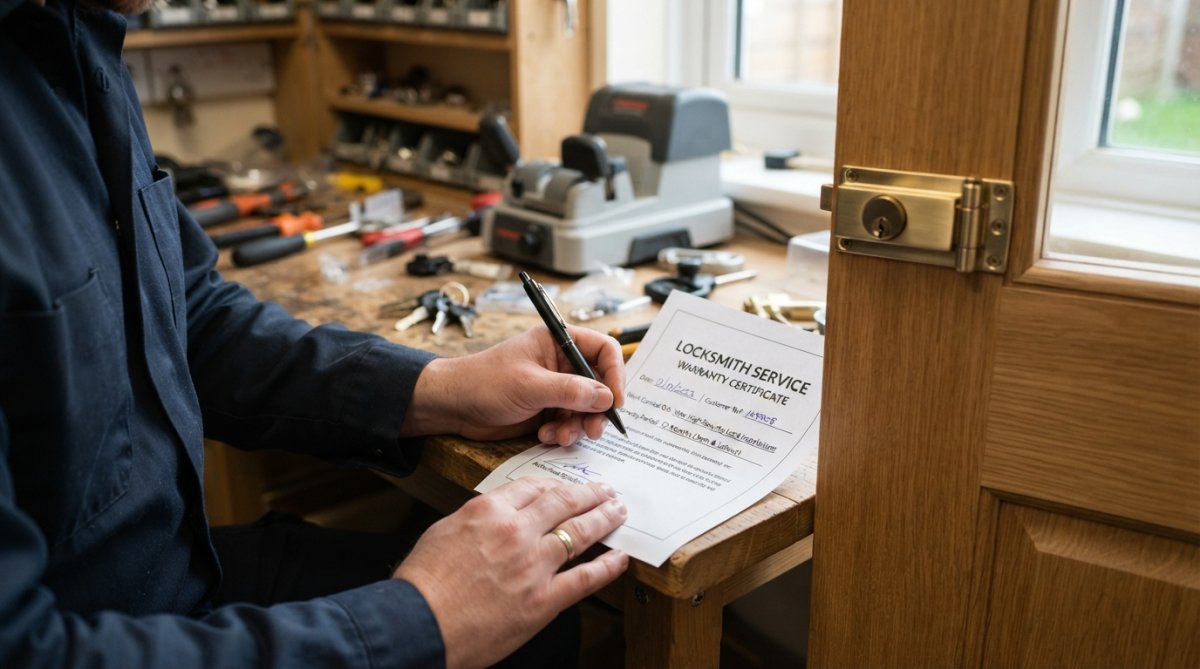
The typical locksmith warranty on new locks runs between 12 and 24 months for labour, though the exact duration depends on the company and the complexity of the installation. A 12-month guarantee is the industry standard for residential work, covering any issues that arise from the fitting process itself.
For commercial or high-security installations, some locksmiths extend their labour warranty to 24 months because the hardware is more expensive and the installation is more involved. The manufacturer's parts warranty often runs longer, frequently three to five years on mechanical cylinders and up to two years on electronic smart locks. The distinction matters because a locksmith warranty and a manufacturer warranty are separate agreements, and you need both to be fully protected.
A common mistake is assuming the locksmith's guarantee covers the lock mechanism itself. It usually does not. If the cylinder fails due to a manufacturing defect six months after installation, the replacement typically comes from the manufacturer, not the installer. Always ask for the written warranty terms before work begins so you know who to contact for each type of failure.
Lock Manufacturer Warranty vs Locksmith Guarantee
The lock manufacturer warranty protects against defects in the hardware itself, such as a faulty deadbolt mechanism or a cylinder that fails to operate smoothly. This warranty is administered by the brand that made the lock, and claiming it usually requires a proof of purchase and often involves returning the defective part for inspection. The locksmith guarantee, by contrast, covers the quality of the installation work, including correct alignment, proper fitting of the lock cylinder, and secure fixing to the door.
Many homeowners find the distinction confusing because the two warranties overlap in practice. If a new lock fails to engage properly, the cause could be a manufacturing fault or an installation error. The locksmith should diagnose which one it is. If the installation caused the problem, the locksmith's labour warranty covers the fix at no cost. If the hardware itself is defective, the claim goes through the manufacturer.
| Warranty Type | Covers | Typical Duration | Claim Process |
|---|---|---|---|
| Manufacturer Warranty | Defective hardware, lock mechanism faults | 3-5 years mechanical, 1-2 years smart | Proof of purchase, return part |
| Locksmith Labour Guarantee | Installation workmanship, alignment, fitting | 12-24 months | Contact installer directly |
| Service Agreement | Ongoing maintenance, call-outs | Varies by provider | Contract terms apply |
A reputable locksmith will be transparent about which warranty applies to which failure. If a company promises a guarantee but cannot explain whether it covers parts, labour, or both, that is a red flag. The guidance on guarantees from the Competition and Markets Authority sets out that any guarantee offered must be honoured, and you have the right to clear terms before you commit.
What Voids a Locksmith Warranty?
A locksmith warranty on new locks becomes void when the lock is tampered with, incorrectly maintained, or installed by someone other than the original fitter. Attempting to repair a faulty lock yourself is the fastest way to lose your protection, as is using lubricants or cleaning agents the manufacturer has not approved.
Common actions that void coverage include:
- Drilling, filing, or modifying the lock body or lock cylinder
- Using the wrong size screws or forcing components into place
- Applying excessive force to the deadbolt or handle mechanism
- Failing to address a minor fault before it causes major damage
- Having an unqualified third party service the lock
Environmental factors can also invalidate a claim. Locks exposed to severe weather without adequate protection, or doors that have warped and put pressure on the mechanism, may be excluded from coverage. The warranty terms and conditions will list these exclusions, and a professional installer will point them out before fitting the lock.
The DIY Installation Trap
One of the most overlooked warranty pitfalls is installing a new lock yourself. Most lock manufacturers, whether you buy a Yale, Ultion, or ERA product, state that their warranty applies only when the lock is installed by a certified professional. If you fit the lock yourself and something goes wrong, the manufacturer may reject your claim outright, arguing that improper installation caused the fault.
For example, a common DIY error is overtightening the fixing screws on a mortice lock, which can warp the lock case and cause the deadbolt to jam. Another frequent mistake is misaligning the strike plate, leading to excessive wear on the latch. These issues are not manufacturing defects, they are installation errors, and they fall outside the manufacturer's warranty. A professional locksmith, by contrast, is trained to avoid these problems and will typically offer a labour guarantee that covers any installation-related faults.
If you are tempted to save money by fitting the lock yourself, weigh the risk: a single mistake could void the warranty on a lock that costs £150 or more, and the cost of a professional repair visit could exceed the installation fee you avoided.
Emergency Call-Outs and Warranty Coverage
Another nuance that often voids coverage is the type of service call. Many locksmiths distinguish between a standard scheduled installation and an emergency call-out. If you request an emergency service, for example, after a break-in or a lockout, the warranty terms may differ. Some companies apply a shorter warranty period to emergency work because the installation is performed under time pressure, and the locksmith may not have the same opportunity to inspect the door and frame thoroughly.
Before agreeing to an emergency lock replacement, ask the locksmith whether the standard warranty applies. If they offer a reduced warranty for emergency work, get that in writing. A reputable locksmith, such as those accredited by the Master Locksmiths Association, will apply the same warranty standards regardless of the urgency, but you should always confirm.
The key to preserving your warranty is to document everything. Keep the original invoice, note the date of installation, and photograph the lock after fitting. If an issue develops, contact the installer before attempting any fix yourself. This simple step protects your consumer rights and ensures you do not accidentally void your cover.
How to Claim a Warranty on New Locks
Claiming a locksmith warranty on new locks follows a straightforward process, but the steps you take in the first 24 hours after noticing a fault determine how smoothly the claim goes. Contact the original installer first, not the manufacturer, because the locksmith can assess whether the issue is workmanship-related or a hardware defect.
The claim process typically involves:
- Contact the locksmith with your invoice number and a description of the fault
- Send clear photos of the lock showing the issue
- Allow the locksmith to inspect the lock on site
- Receive a diagnosis of whether the fault is workmanship or manufacturing
- Arrange a free repair visit if the fault falls under the labour warranty
- Obtain a manufacturer claim form if the hardware itself is defective
For manufacturer claims, you will need the proof of purchase, which is why keeping the original invoice is essential. Most manufacturers require the defective part to be returned before they ship a replacement, so expect some downtime while the claim is processed.
Test Your Lock Immediately After Installation
The best way to avoid a warranty claim is to catch installation faults before you sign off. Within 24 hours of installation, run through a simple checklist to ensure the lock is working correctly. This not only gives you confidence but also creates a record that the lock was functioning at handover, or highlights a problem while the installer is still fresh in your mind.
Here is a practical post-installation checklist:
- Operate the lock from both sides: Insert the key and turn it smoothly. If it sticks or requires extra force, note it.
- Check the deadbolt extends fully: When locked, the bolt should slide into the strike plate without rubbing against the frame.
- Test the handle and latch: The handle should return to its original position without sagging.
- Verify the lock aligns with the strike plate: Close the door and check that the bolt aligns with the hole. Misalignment is a common installation fault.
- Inspect the screws and fixings: Ensure all screws are flush and not stripped.
- For smart locks: Test the keypad or app connection, check battery installation, and ensure the motorised bolt operates smoothly.
If you spot any issue during this test, contact the locksmith immediately. Most labour warranties cover adjustments, such as realigning the strike plate, at no extra cost. Waiting weeks to report a problem may give the locksmith grounds to argue the fault was caused by wear or misuse.
Claiming for Emergency Call-Outs
If a lock fails outside normal business hours, the claim process can feel more stressful. Many locksmiths, including those offering 24/7 emergency services, will treat warranty failures as priority call-outs because an unsecured door is a safety risk. However, not all do. Some may charge a call-out fee for emergency visits, even if the lock is under warranty.
Before you call, check your warranty document for a clause about emergency call-outs. If the warranty does not explicitly cover emergency visits, ask the locksmith whether the fee will be waived when the fault is covered by the warranty. A locksmith who stands behind their work will typically waive the call-out fee for warranty repairs, but you should confirm this before they arrive.
If the locksmith refuses to honour a valid warranty claim, your next step is to pursue the matter through the manufacturer or, ultimately, through legal channels. A locksmith who is a member of a recognised trade body will have a complaints procedure you can escalate to, and the advice on resolving consumer disputes from Citizens Advice provides a clear path for escalating unresolved issues.
Consumer Rights Act 2015 and Lock Installation
The Consumer Rights Act 2015 provides statutory protection that sits alongside any locksmith warranty, covering the quality of both the lock and the installation service. Under this legislation, the lock must be of satisfactory quality, fit for purpose, and match the description given at the point of sale. The installation work must also be carried out with reasonable care and skill.
These rights apply regardless of what the locksmith's own warranty says. If a lock develops a fault within six months of installation, the law assumes the fault existed at the time of installation, and the burden is on the trader to prove otherwise. This six-month window is a powerful protection for consumers because it reverses the usual burden of proof.
The official guidance on the Consumer Rights Act 2015 confirms that you have the right to a repair, replacement, or price reduction if goods or services do not conform to the contract. For installation services specifically, if the work is not carried out with reasonable care and skill, you can require the trader to redo it or claim a price reduction.
What this means in practice is that your locksmith warranty is a baseline, not a ceiling. Even if a warranty has expired, your statutory rights under the Consumer Rights Act 2015 lock installation provisions may still offer protection. A professional locksmith will acknowledge these rights rather than trying to talk you out of them.
Does Home Insurance Cover Lock Replacement?
Home insurance policies typically cover lock replacement when the lock has been damaged during a burglary or attempted break-in, but they rarely cover replacement due to wear, age, or lost keys. If your home has been broken into, your policy will usually pay for new locks on all entry points as part of the claim, because leaving a compromised lock in place creates a security risk.
For lost keys, the situation is different. Many policies include lock replacement as an optional add-on, but the standard cover often excludes it. If you have lost your keys and need the locks changed for security, check your home insurance policy documents before calling a locksmith. Some insurers will cover the cost of replacement locks after a key loss, particularly if the keys were stolen along with your address.
The claim process for insurance-funded lock replacement requires documentation. You will need the locksmith's invoice, a crime reference number if the keys were stolen, and often a report from the locksmith confirming the old locks were compromised. Most insurers will only pay for like-for-like replacements, so if you want to upgrade to higher security hardware, you may need to cover the difference yourself.
Your home insurance policy and your locksmith warranty are separate protections. The insurance covers the cost of the replacement; the warranty covers the quality of the installation. Both are worth having, and a good locksmith will provide the documentation you need to satisfy your insurer.
Smart Locks vs Mechanical Locks: Warranty Differences
Smart locks carry shorter warranties than mechanical locks because their electronic components and connectivity features are more prone to failure. A mechanical deadbolt might carry a five-year manufacturer warranty, while the electronic smart lock version of the same product often comes with only one or two years of coverage on the motorised components.
The warranty difference reflects the nature of the hardware. Mechanical locks have few moving parts and fail gradually, making them easy to warranty for long periods. Smart locks contain circuit boards, motors, and wireless modules that can fail suddenly and are subject to software issues that no amount of installation care can prevent. A locksmith warranty on new locks covers the physical installation of a smart lock, but it does not cover software bugs or connectivity problems with your home network.
Battery life is another factor that affects smart lock warranties. Many manufacturers exclude battery-related issues from their warranty, and some require proof that the lock was used with the recommended battery type. If a smart lock drains batteries rapidly, the manufacturer may argue this is a usage issue rather than a defect.
For homeowners choosing between the two, the practical difference is this: mechanical locks are simpler to warranty and repair, while smart locks offer convenience but carry more exclusions. A professional installer should explain these differences before you commit, so you understand exactly what protection you are getting for the additional cost of a smart lock.
Questions to Ask Before You Agree to a Lock Installation
Asking the right questions before a lock installation prevents disputes later and ensures you understand exactly what your locksmith warranty covers. The answers you receive also tell you a lot about the quality of the locksmith you are dealing with.
The essential questions are:
- Is the warranty on parts, labour, or both?
- How long does the warranty last, and does it start on the day of installation?
- What specific faults are excluded from the warranty?
- Who do I contact if the lock fails, you or the manufacturer?
- Do you provide a written warranty document with the invoice?
- What happens if the lock fails outside of warranty hours?
- Are you insured and certified for this type of installation?
- What is the call-out fee if I need to claim the warranty?
A locksmith who hesitates or gives vague answers to these questions is not someone you want fitting your security hardware. The advice on choosing a trustworthy trader from the Chartered Trading Standards Institute recommends verifying credentials and getting written terms before any work proceeds.
The warranty terms should also address emergency scenarios. If a lock fails at 2 AM and you need to secure your property, does the warranty cover the emergency call-out, or only a standard daytime visit? Some locksmiths, including N&G Locksmiths Service Ltd with our 24/7 emergency service and no call-out fee, treat warranty failures as priority call-outs because an unsecured door is a safety risk.
Conclusion
Getting a locksmith warranty on new locks is about protecting your investment in home security, not just ticking a box on an invoice. The distinction between manufacturer warranties on parts and locksmith guarantees on labour is the foundation of that protection, and knowing what voids your cover, how to claim, and what your consumer rights add on top gives you complete peace of mind.
At N&G Locksmiths Service Ltd, we back our workmanship with a 12-month guarantee, provide upfront pricing with no hidden fees, and respond within 30 minutes across Norfolk, Suffolk, and Cambridgeshire. Our certified professionals fit quality security hardware and stand behind every installation with the written warranty terms you deserve. Get started with N&G Locksmiths Service Ltd and secure your property with a locksmith who honours their guarantee.
Frequently Asked Questions
What can I do if a company is not honouring my warranty?
First, review the written warranty terms and your proof of purchase. Contact the locksmith in writing, referencing the Consumer Rights Act 2015, and ask them to remedy the fault. If they still refuse, you can seek mediation through a trade body or consider a claim in the small claims court. Keep records of all communication, as this strengthens your case.
How long should a professional locksmith guarantee their work?
A professional installation guarantee for workmanship typically lasts 12 months. This covers the quality of the fitting, not the lock mechanism itself. The manufacturer's warranty on the lock's parts often runs for a longer period, sometimes up to 10 years. Always confirm the exact terms and duration of both warranties before agreeing to the installation.
Does home insurance cover locksmith services?
If you are locked out, your home insurance policy may cover the call-out fee, but this depends on your provider and specific policy terms. Many policies include home emergency cover as an optional add-on. Check your policy documents or contact your insurer to confirm coverage limits and any excess you would need to pay.
What is the difference between a workmanship guarantee and a product warranty?
A workmanship guarantee, offered by the locksmith, covers the quality of the installation. If the lock is fitted incorrectly and fails, the locksmith will return to fix it free of charge. A product warranty, from the manufacturer, covers defects in the lock mechanism itself, such as a faulty cylinder or keyway. Both are essential for complete protection.