 listicle
Best Residential Security Lock Upgrades 2026
Table of Contents
- Quick Comparison: Top Lock Upgrades at a Glance
- Smart Lock Installation Cost in the UK and What to Expect
- TS007 3-Star Cylinder Locks: The Mechanical Security Standard
- Smart Deadbolts: Remote Access and Biometric Authentication
- High-Security Mechanical Locks: Drill Resistance and Key Control
- Best Alternatives to Standard House Keys for Security
- Physical Security vs. Cyber Security: Finding Your Balance
- How to Choose the Right Lock Upgrade for Your Home
- Conclusion
- Frequently Asked Questions
Last Updated: September 4, 2026
Quick Comparison: Top Lock Upgrades at a Glance
Most break-ins happen through the front door in under 60 seconds (peer-reviewed research). Upgrading your door hardware is one of the most effective deterrents, combining mechanical strength with modern access control. At N&G Locksmiths Service Ltd, we fit these systems daily across Norfolk, Suffolk, and Cambridgeshire, so this guide reflects what actually survives attempted attacks.
The right upgrade depends on your door type, your budget, and whether you rent or own. A smart deadbolt offers convenience and remote monitoring, while a TS007 3-star cylinder addresses the physical weak point most burglars exploit: the lock itself.
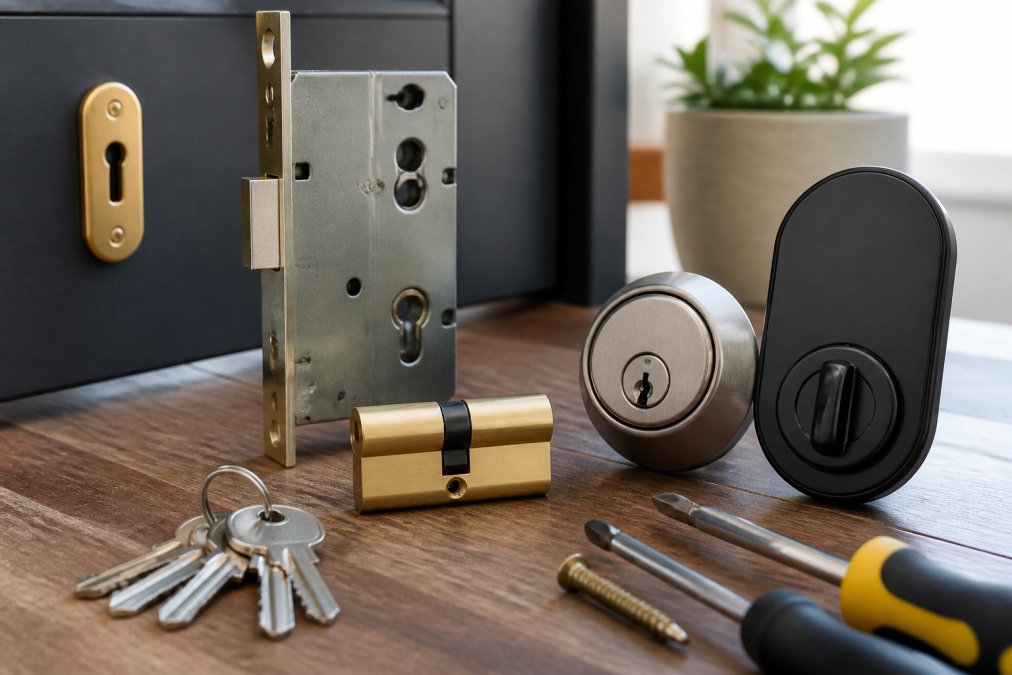
| Upgrade Type | Starting Price (Guide) | Key Security Benefit | Best For |
|---|---|---|---|
| TS007 3-Star Cylinder | £120+ | Anti-drill, anti-pick, anti-bump | Most UK uPVC and composite doors |
| Smart Deadbolt | £180+ | Remote access, access logs, auto-lock | Tech-savvy homeowners |
| High-Security Mechanical | £150+ | Drill resistance, key control | Maximum physical protection |
| Door Reinforcement Kit | £95+ | Prevents kick-in attacks | All exterior doors |
Below, we'll break down each option and how to balance physical security with cyber security. A lock is only as strong as the door frame it sits in.
Smart Lock Installation Cost in the UK and What to Expect
Smart lock installation cost varies depending on whether you choose a retrofit model or full deadbolt replacement. Retrofit locks can be DIY-fitted in 30 minutes; full replacements need a professional to preserve alignment and security rating.
What Professional Installation Actually Involves
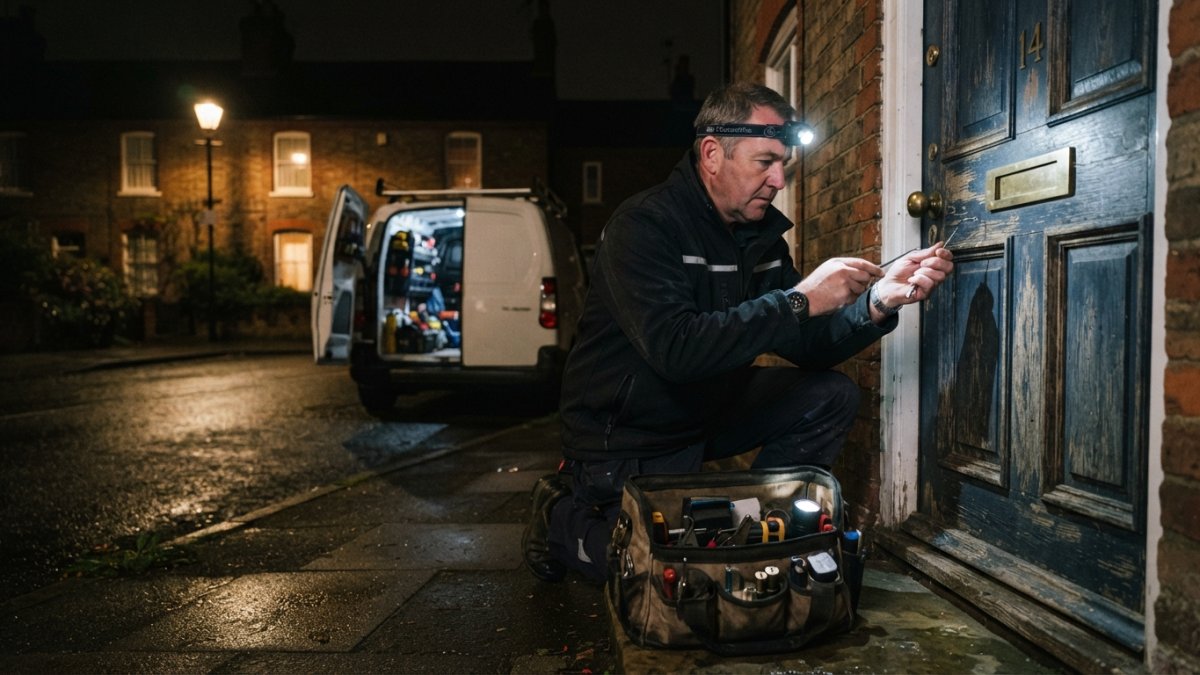
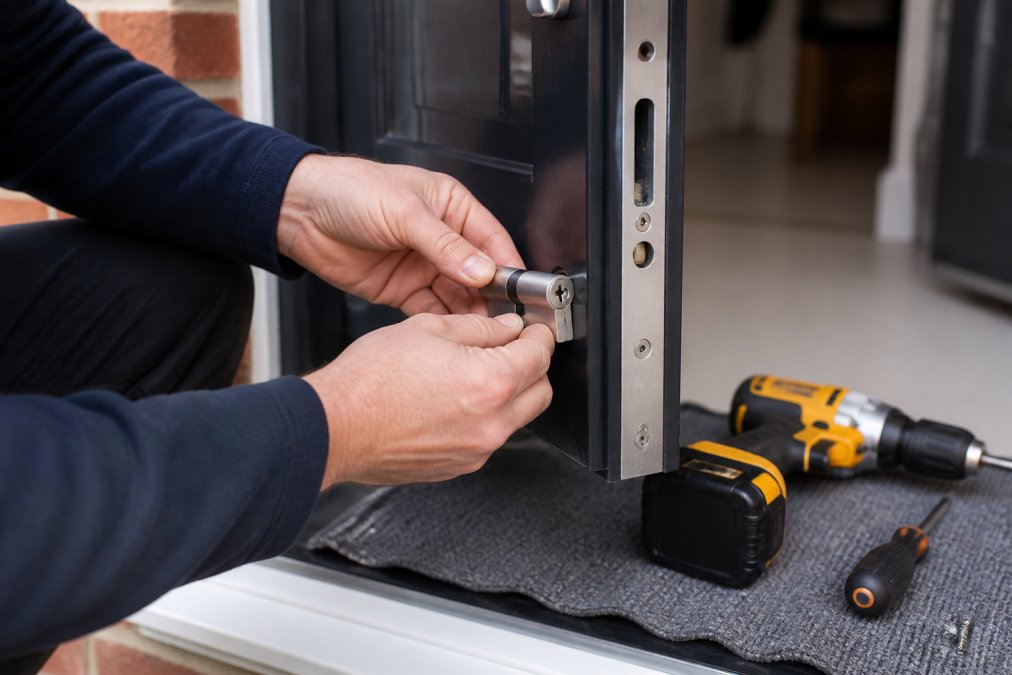
A locksmith removes the existing deadbolt, measures the door thickness and backset to confirm fit, installs the new latch mechanism flush with the door edge, fits the escutcheons, and tests the lock multiple times before handing over keys and app credentials.
Straightforward installation takes 45-90 minutes; warped frames, oversized holes, or thick doors add 30-45 minutes. A professional will check your frame and strike plate and recommend reinforcement if needed.
Labour Costs and What They Cover
Professional fitting labour ranges from £80-£150 for retrofit locks and £120-£200 for full replacements. Frame reinforcement, additional drilling, or seized hardware adds £50-£100. Emergency call-outs incur a 25-50% surcharge.
Ask whether quotes include testing, app setup, and a callback within the first week. A 12-month guarantee on parts and labour is standard.
DIY Installation: When It Works and When It Fails
Retrofit smart locks like the August are DIY-friendly: remove the thumb-turn, fit the motor assembly, and screw the cover plate back (20-30 minutes). Common mistakes include misaligning the motor (causing slip or jam) and over-tightening screws (cracking housing). Worn deadbolts may cause random lockouts.
Full deadbolt replacements are riskier for DIY. Off-centre drilling causes binding; wrong strike plate height leaves security gaps. Many insurers deny claims if locks are fitted by unqualified people, so professional fitting (£120-£200) is cheap insurance.
What to Expect After Installation
Test your smart lock daily in the first week: with the door open, closed, and locked. Check app connectivity and remote locking. If the lock is slow or fails to unlock, contact your installer immediately. Install firmware updates while the locksmith is on site.
Smart deadbolts run on 4-8 AA or AAA batteries for 6-12 months. Set a reminder to check battery status three months before replacement. A dead battery is not an emergency if you have a mechanical key override.
At N&G Locksmiths Service Ltd, we provide upfront pricing and a 12-month guarantee on parts and fitting.
TS007 3-Star Cylinder Locks: The Mechanical Security Standard
TS007 3-star cylinder locks are the benchmark for mechanical security in the UK, offering proven resistance against drilling, picking, and the increasingly common "snap" attack. The standard, developed by the Master Locksmiths Association and supported by the UK government's Secured by Design initiative, grades cylinders from 1 to 3 stars based on their ability to withstand physical attack. A 3-star cylinder, combined with a 1-star door handle or lock case, meets the highest TS007 rating.
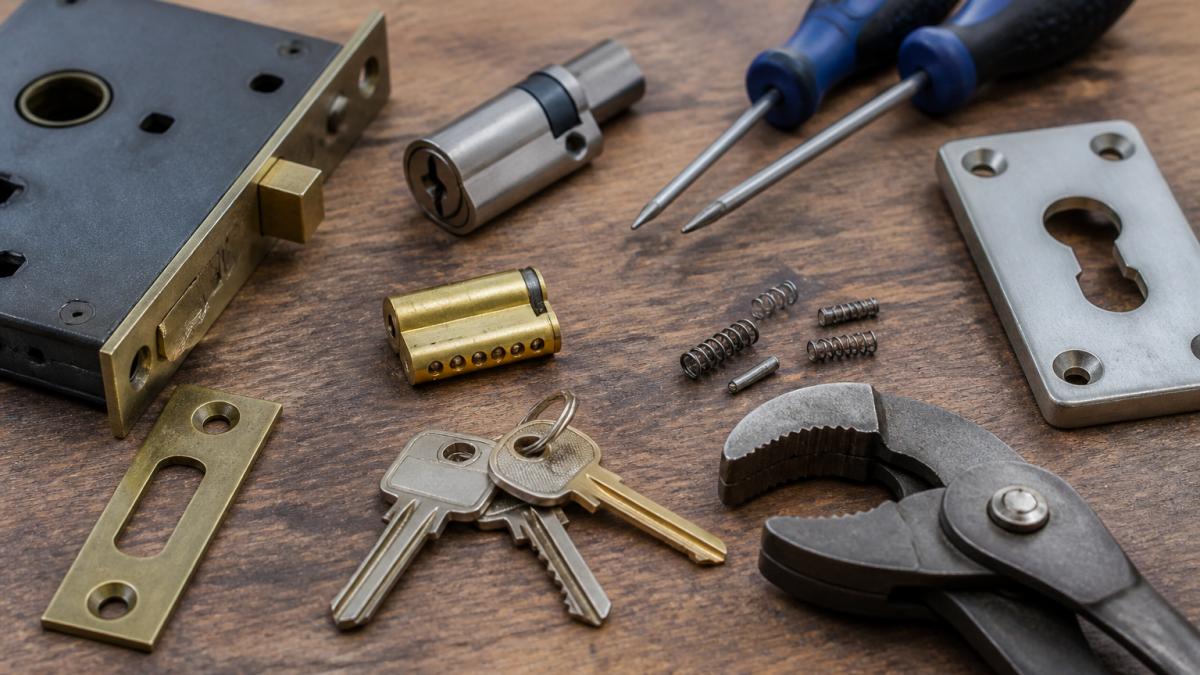
A standard euro cylinder can be snapped in seconds with mole grips. A 3-star cylinder breaks in a controlled way that prevents this, sacrificing the outer section while keeping the mechanism engaged.
The Mul-T-Lock MT5+ exemplifies this category with its patented telescopic pin tumbler mechanism and magnetic key card for duplication control. The trade-off: no smart connectivity, remote access, or access logs. Choose this if you prioritise raw physical resistance.
Smart Deadbolts: Remote Access and Biometric Authentication
Smart deadbolts offer remote access, entry logs, and eliminate lost-key risk. The best 2026 options integrate biometric authentication (fingerprint or facial recognition) with keypads and app control.
The Schlage Encode Plus offers Grade 1 security and built-in Wi-Fi (no hub needed) plus Apple Home Key support. The Lockly Visage adds 3D facial recognition for hands-free entry, though it requires precise installation.
For renters or those keeping existing keys, the August Wi-Fi Smart Lock retrofits over your current deadbolt, keeping the exterior look and original key functional. Trade-off: shorter battery life than dedicated smart deadbolts.
High-Security Mechanical Locks: Drill Resistance and Key Control
High-security mechanical locks offer maximum physical security without batteries or wireless signals, using hardened steel and patented keyways to prevent unauthorised duplication.
The Medeco M4 uses hardened steel inserts to resist drilling and patented keys requiring an authorised dealer for copies. The Schlage B-Series offers Grade 1 certification and a reinforced strike plate with screws anchoring deep into the frame.
These locks suit high-risk scenarios or fit-and-forget solutions. Downside: no remote access, temporary codes, or remote guest entry. A hybrid approach works well: mechanical deadbolt for the main entrance, keypad lock for a side door.
Best Alternatives to Standard House Keys for Security
Keyless entry systems, biometric scanners, and app-based access remove the physical key, addressing lost keys and unauthorised copying.
- Keypad deadbolts like the Veise offer temporary codes for guests and one-touch locking without smart connectivity.
- Biometric locks provide fast, hands-free access; the Lockly Visage's 3D facial recognition is hard to fool but requires precise installation.
- App-based smart locks like the Yale Assure Lock 2 offer remote locking and access logs, though some require a separate Wi-Fi bridge.
All these alternatives eliminate the mechanical key, removing anxiety about hidden spares or copied keys. For tenants, retrofit options upgrade security without permanently altering the landlord's hardware.
Physical Security vs. Cyber Security: Finding Your Balance
A smart lock that is easy to hack is no better than a mechanical lock that is easy to pick. The physical layer covers drill resistance, hardened strike plates, and door frame. The cyber layer covers encryption, two-factor authentication, firmware updates, and Wi-Fi security.
Understanding Cyber Threats to Smart Locks
Smart locks face several digital threats. Wi-Fi interception is the first: unencrypted or weakly encrypted connections allow attackers to intercept unlock signals. Most modern locks use AES-128 or AES-256 encryption, but older or budget models may not. Check the manufacturer's documentation for military-grade encryption.
The second threat is firmware vulnerabilities. A smart lock's firmware is the software that runs on the device itself. If the manufacturer discovers a security flaw, for example, a bug that allows an attacker to bypass the PIN code, they release a firmware update to patch it. If you do not install the update, your lock remains vulnerable. According to guidance from the National Cyber Security Centre, any internet-connected device should be kept updated to patch known vulnerabilities. The problem is that many homeowners never check for updates, or they ignore the notification because the update requires a brief period when the lock is offline. Over time, an unpatched lock accumulates known vulnerabilities that attackers can exploit.
Account compromise is the third threat. If someone gains access to your app account, they can unlock remotely. Two-factor authentication (2FA) is critical: a lock requiring both password and a one-time code is far harder to compromise. Check for 2FA support before buying.
Bluetooth relay attacks are the fourth threat. Attackers with relay devices can extend Bluetooth range, tricking locks into thinking your phone is nearby when you are miles away. Wi-Fi locks with secure hubs are more resistant because they require account authentication, not just proximity.
Practical Cyber Security Measures
To protect your smart lock from digital attack:
-
Use a strong, unique password for your app account. Use a password manager to generate a 16-character random password.
-
Enable two-factor authentication if supported.
-
Check for firmware updates monthly. Install updates immediately; they take 5-10 minutes.
-
Review access logs weekly for unrecognised entries. If found, change your password and contact the manufacturer.
-
Use a secure Wi-Fi network with WPA3 encryption and a strong password. Upgrade old routers; a Wi-Fi 6 router with WPA3 costs £80-£150.
-
Disable remote access if you do not use it, reducing your attack surface.
Physical Security: The Foundation That Most People Neglect
Physical security is often more critical than cyber security because it is harder to exploit. A burglar does not need to hack your lock if they can kick the door in. Many homeowners overlook the door frame. A Grade 1 lock is pointless if the frame splinters on the first kick. Door Armor kits reinforce the jamb and hinge area, addressing kick-in attacks. This upgrade costs £80-£150 fitted and materially improves resistance.
A standard strike plate uses short screws penetrating only 12 mm; a determined kick can splinter the frame. A reinforced strike plate uses longer screws anchoring deep into the frame's structural timber. Upgrade the strike plate when fitting a new lock (£20-£40 extra) for one of the highest-return security investments.
Hollow-core doors offer little resistance to kicks. Replace them with solid-core or solid-wood doors (£300-£800 fitted) for transformed security. If replacement is not feasible, fit an interior door brace or security bar (£30-£60).
Layering Physical and Cyber Security
Layer both: a TS007 3-star cylinder for the mechanical core, a smart deadbolt with two-factor authentication for convenience and monitoring, a reinforced strike plate, and a secure Wi-Fi network. This combination addresses physical and digital threats without over-engineering.
In high-risk areas, prioritise physical reinforcement first: upgrade the strike plate, reinforce the frame, and fit a 3-star cylinder. Then add a smart lock. In lower-risk areas, a smart deadbolt alone may suffice if it has Grade 1 rating and you keep firmware updated.
How to Choose the Right Lock Upgrade for Your Home
Choose the right upgrade by answering three questions: what door do you have, who needs access, and what threat are you guarding against?
Identify your door type: uPVC doors use euro cylinders (upgrade to TS007 3-star); wooden doors with mortice locks suit high-security or smart deadbolt retrofits. Consider who needs access: regular visitors, tradespeople, or cleaners benefit from smart locks with temporary codes. Assess your risk: ground-floor flats or homes with rear access need physical reinforcement first.
| Your Situation | Recommended Upgrade | Why It Works |
|---|---|---|
| uPVC door, current lock is basic | TS007 3-star cylinder | Stops snap attacks, meets insurance |
| Want keyless access, own your home | Smart deadbolt (Schlage Encode Plus) | Remote access, Grade 1 security |
| Rent, cannot change exterior hardware | Retrofit smart lock (August) | Keeps existing key, adds app control |
| High-risk area, maximum protection | Medeco M4 + Door Armor kit | Drill resistance plus kick-in protection |
Retrofit smart locks are DIY-friendly. Full deadbolt replacements and high-security cylinders benefit from professional fitting for alignment and insurance approval. A certified locksmith can assess your door and recommend the right upgrade.
At N&G Locksmiths Service Ltd, we fit all the lock categories covered in this guide. Our certified professionals provide upfront pricing, a 12-month guarantee on workmanship, and a 30-minute response time for emergencies, so you get both the right hardware and the confidence that it is installed correctly.
Conclusion
Upgrading your home's security is about closing the specific weaknesses your door presents: fitting a TS007 3-star cylinder to stop snap attacks, adding a smart deadbolt for remote control, or reinforcing the frame against kick-ins. The best upgrades balance mechanical strength with sensible digital features.
If you are unsure which upgrade fits your door, N&G Locksmiths Service Ltd can help. We offer 24/7 emergency service with no call-out fee, certified professionals, and a 12-month guarantee on all work.
Frequently Asked Questions
What makes the best residential security lock upgrades different from standard deadbolts?
The best residential security lock upgrades combine multiple layers of protection. High-security options feature drill-resistant cylinders, anti-pick pins, and hardened steel components that resist forced entry. Smart locks add encryption, two-factor authentication, and remote monitoring. Standard deadbolts lack these reinforcements. When choosing upgrades, consider whether you need mechanical strength alone, smart features for convenience, or a hybrid approach that addresses both physical security and cyber security threats.
How much does smart lock installation cost in the UK, and do I need a professional?
Smart lock installation costs vary depending on the model and whether you choose professional fitting. Many smart locks retrofit onto existing deadbolts without requiring door modification, making DIY installation possible for confident homeowners. However, professional installation ensures proper alignment, secure mounting, and correct integration with your smart home ecosystem. Visit N&G Locksmiths Service Ltd's pricing page for current costs and to discuss whether your specific door requires professional fitting. Our certified professionals can advise on the best approach for your property.
Are TS007 3-star cylinder locks really necessary for home security?
TS007 3-star cylinder locks are a recognised security standard that significantly improves resistance to lock picking, bumping, and drilling compared to basic cylinders. Many insurers recommend or require them for home insurance cover. If your current locks lack this standard, upgrading to TS007 3-star cylinders strengthens your physical security without the cost of full smart lock systems. They're particularly valuable for rental properties and homes where smart technology isn't needed, offering reliable mechanical protection and key control.
What are the best alternatives to standard house keys for security?
Beyond traditional keys, your options include keypad entry with temporary codes for guests, biometric locks using fingerprints or facial recognition, smart locks with app-based access and audit trails, and hybrid systems combining mechanical high-security cylinders with keyless entry. Each offers different benefits: keypads provide guest access without key copies, biometric systems eliminate lost key risks, and smart locks enable remote monitoring. The best choice depends on your lifestyle, whether you rent or own, and how much convenience versus mechanical security you prioritise.
This article was written using GrandRanker
Frequently Asked Questions
Q: What makes the best residential security lock upgrades different from standard deadbolts?
A: The best residential security lock upgrades combine multiple layers of protection. High-security options feature drill-resistant cylinders, anti-pick pins, and hardened steel components that resist forced entry. Smart locks add encryption, two-factor authentication, and remote monitoring. Standard deadbolts lack these reinforcements. When choosing upgrades, consider whether you need mechanical strength alone, smart features for convenience, or a hybrid approach that addresses both physical security and cyber security threats.
Q: How much does smart lock installation cost in the UK, and do I need a professional?
A: Smart lock installation costs vary depending on the model and whether you choose professional fitting. Many smart locks retrofit onto existing deadbolts without requiring door modification, making DIY installation possible for confident homeowners. However, professional installation ensures proper alignment, secure mounting, and correct integration with your smart home ecosystem. Visit N&G Locksmiths Service Ltd's pricing page for current costs and to discuss whether your specific door requires professional fitting. Our certified professionals can advise on the best approach for your property.
Q: Are TS007 3-star cylinder locks really necessary for home security?
A: TS007 3-star cylinder locks are a recognised security standard that significantly improves resistance to lock picking, bumping, and drilling compared to basic cylinders. Many insurers recommend or require them for home insurance cover. If your current locks lack this standard, upgrading to TS007 3-star cylinders strengthens your physical security without the cost of full smart lock systems. They're particularly valuable for rental properties and homes where smart technology isn't needed, offering reliable mechanical protection and key control.
Q: What are the best alternatives to standard house keys for security?
A: Beyond traditional keys, your options include keypad entry with temporary codes for guests, biometric locks using fingerprints or facial recognition, smart locks with app-based access and audit trails, and hybrid systems combining mechanical high-security cylinders with keyless entry. Each offers different benefits: keypads provide guest access without key copies, biometric systems eliminate lost key risks, and smart locks enable remote monitoring. The best choice depends on your lifestyle, whether you rent or own, and how much convenience versus mechanical security you prioritise.