 how-to
Signs of Faulty Door Lock Mechanisms: A Complete Guide
Table of Contents
- What Are the Most Common Signs of Faulty Door Lock Mechanisms
- Stiff Keys and Difficulty Turning the Lock
- How to Lubricate Door Lock Mechanisms Safely
- Misaligned Door Latches and Strike Plates
- Door Handle Feels Loose When Lifting
- uPVC Door Lock Mechanism Issues and Solutions
- Jammed Locks: How to Troubleshoot and Fix
- When to Repair vs. Replace: DIY or Professional Help
- Security Risks of Ignoring Faulty Door Lock Mechanisms
- uPVC Door Lock Mechanism Replacement Cost and Timeline
- Frequently Asked Questions
Last Updated: September 25, 2026
What Are the Most Common Signs of Faulty Door Lock Mechanisms
A faulty door lock mechanism shows itself in predictable ways. Your key sticks. The handle wobbles. The door won't latch properly. These aren't minor inconveniences, they're security warnings.
Most homeowners ignore early warning signs, hoping the problem will resolve itself. It never does, the lock deteriorates further, making your home vulnerable to forced entry.
The most common signs appear in this order:
- Key resistance or stiffness when turning
- Handle feels loose or moves when you lift it
- Door latch doesn't catch properly
- Visible rust or corrosion around the lock cylinder
- Intermittent locking (sometimes it works, sometimes it doesn't)
- Audible grinding or clicking sounds inside the mechanism
- Strike plate misalignment (visible gap between door and frame)
Understanding these signs helps you act before total failure occurs. A lock that's just becoming stiff can often be fixed with lubrication. A lock that's completely jammed usually needs replacement. The difference between a quick repair and an expensive emergency call-out often comes down to timing.
Stiff Keys and Difficulty Turning the Lock
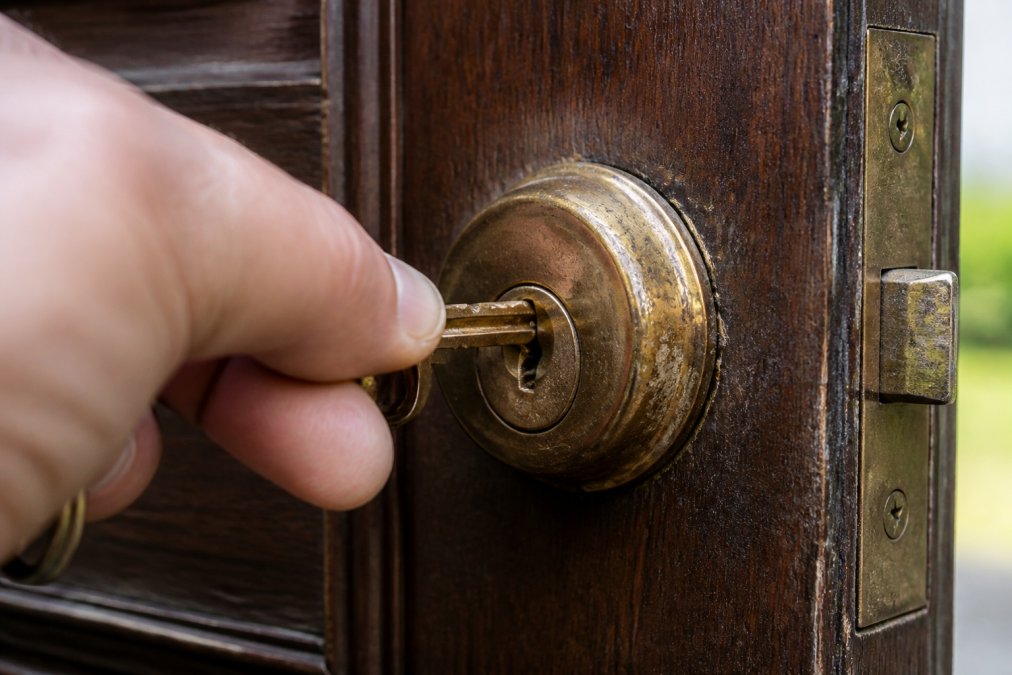
When your key resists turning, dirt, dust, and debris have accumulated inside the cylinder, or metal parts have corroded slightly, creating friction.
A stiff key is one of the earliest warning signs of a failing lock. Each time you force a stiff key, you damage the internal springs and pins.
The fix depends on severity:
- Light stiffness: Lubrication often solves it completely
- Moderate stiffness: Lubrication plus professional cleaning
- Severe stiffness: The lock may need replacement if internal damage is too advanced
Oil-based products attract dirt and create sticky paste inside the lock. Use only graphite powder or PTFE-based lock lubricants, which don't harden over time.
How to Lubricate Door Lock Mechanisms Safely
Proper lubrication can extend a lock's life by years and takes less than five minutes.
What you'll need:
- Graphite powder or PTFE lock lubricant (not oil)
- Small applicator bottle or spray can
- Clean cloth or paper towel
- Your key
Steps:
- Insert your key into the lock without turning it.
- Apply lubricant directly into the keyway using short bursts (spray) or a small amount (powder).
- Work the key gently in and out for 10-15 seconds to distribute lubricant.
- Wipe away excess with a clean cloth.
- Test the lock several times.
Frequency: Lubricate locks every 6-12 months, or whenever you notice increased resistance.
For uPVC locks, lubrication is less effective because stiffness usually indicates worn gearbox components, not friction, requiring replacement.
Misaligned Door Latches and Strike Plates
Door latch misalignment is one of the most common causes of lock failure. It occurs gradually as doors settle, frames shift, and seasonal temperature changes cause wood to expand and contract.
Visual signs of misalignment:
- Visible gap between the door and frame when closed
- Latch doesn't retract fully into the strike plate
- Door rattles or moves when you push on it
- You have to lift or lower the door handle to make it latch
The latch should slide smoothly into the strike plate opening without resistance.
Simple fixes for minor misalignment:
- Tighten all hinges (loose hinges cause door sag)
- Loosen the strike plate and adjust it up, down, or sideways
- Retighten and test the latch
When professional help is needed:
- Frame damage or warping (requires carpentry)
- Hinge replacement (hinges may be worn beyond adjustment)
- Door planing (if the door itself has swollen)
Misalignment stresses the lock mechanism and wears internal components faster. Fix alignment early to prevent lock failure.
Door Handle Feels Loose When Lifting
A wobbly door handle indicates wear in the handle mechanism or spindle. This movement prevents the lock from engaging properly and worsens over time.
Check handle tightness: Hold the handle firmly and try to move it side to side, lift it upward, and push down with force. Any movement beyond minimal play indicates looseness.
Quick fixes: Tighten visible screws or bolts. Check for hidden fasteners under small caps or covers. If the handle is integral to the door, the spindle is likely worn.
When replacement is necessary:
If tightening doesn't help, the internal spindle or handle mechanism has worn beyond adjustment. Replacement is straightforward and inexpensive, far cheaper than waiting until the lock fails completely.
A loose handle creates a security risk by enabling forced entry. Tightening or replacing it improves both function and security.
uPVC Door Lock Mechanism Issues and Solutions
uPVC locks use a gearbox system with multiple locking points rather than a single bolt. Common problems include sticky gearbox, broken gears, failed springs, worn spindle, and intermittent locking (usually indicating worn gears).
Lubrication helps less with uPVC locks because problems are usually mechanical wear, not friction.
Troubleshooting steps: Try gentle PTFE lubrication, check if the handle operates smoothly, listen for grinding or clicking sounds, and test the lock multiple times to determine if failure is consistent or intermittent.
When to replace: If the gearbox is broken, replacement is the only solution. Most uPVC doors use standard lock sizes, and installation takes under an hour.
Jammed Locks: How to Troubleshoot and Fix
A completely jammed lock won't accept the key or turn at all. Causes include debris blocking the cylinder, broken internal components, frozen mechanism, forced entry damage, or rust.
Troubleshooting a jammed lock: Try the key gently without forcing. Apply PTFE lubricant and let it sit 2-3 minutes. Wiggle the key gently with small movements. If nothing works after 5 minutes, stop to avoid breaking the key inside.
When to call a professional:
- Key is stuck in the lock
- Lock won't accept the key at all
- You hear grinding or cracking sounds
- The lock has been forced or damaged
- You've tried lubrication without success
A professional locksmith has tools to remove jammed locks without damaging the door. Attempting to force a jammed lock yourself risks breaking the key inside, which complicates removal.
In freezing weather, moisture inside the lock can freeze. Apply gentle heat with a hairdryer on low. If the lock jams again once thawed, internal damage is likely and replacement is necessary.
When to Repair vs. Replace: DIY or Professional Help
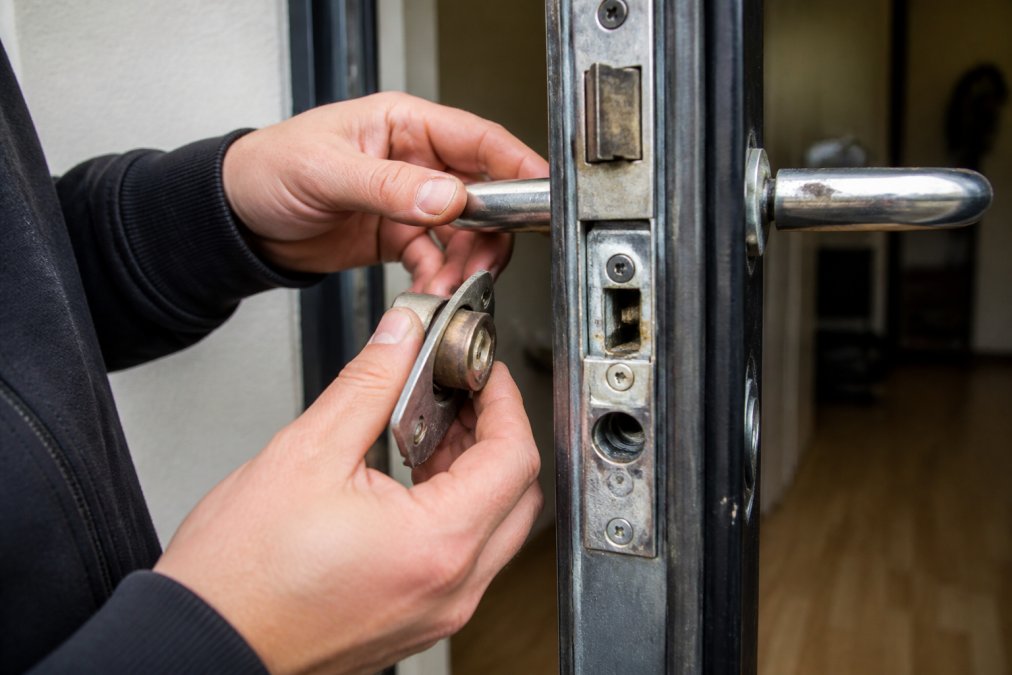
A repair is safe to attempt yourself only if the fault is external (loose screws, strike plate position, visible wear) and doesn't require disassembling the lock mechanism. If any repair requires opening the lock body or removing internal components, stop. Internal work risks damaging the mechanism and compromising security.
DIY repairs worth attempting: Tightening loose handles or hinges, lubricating minor stiffness, adjusting strike plate alignment, and replacing worn handle components (if separate with visible fasteners). Stop if tightening doesn't solve wobbling, stiffness persists after one lubrication, the latch still doesn't catch, or you need to disassemble the lock body.
When to call a professional immediately: Jammed locks, broken gearbox, internal component failure, frozen locks unresponsive to gentle heat, key stuck inside, forced or damaged locks, or any repair you're unsure about. Uncertainty is a warning sign, a wrong move costs more than professional service.
A partially disassembled lock may appear to work but fail to engage fully, a security failure worse than a visibly broken lock. If a lock feels different after repair (smoother, looser, or less responsive), have a professional inspect it before relying on it for security.
N&G Locksmiths Service Ltd charges no call-out fee, so assessment costs nothing if you decide not to proceed.
When replacement is cheaper than repair: Gearbox failure (repair impossible), multiple internal components broken, locks older than 15 years (may fail again within months), or security upgrades (modern locks with anti-snap cylinders cost less than extensive repairs).
Schedule replacement or complex repairs at your convenience, not in an emergency. Planned service during normal hours costs less. Get a quote before work begins with no obligation.
Security Risks of Ignoring Faulty Door Lock Mechanisms
A faulty lock is a direct security vulnerability. A wobbly handle signals a worn spindle and enables lock snapping, an intruder applies downward force to the handle while twisting the cylinder, causing it to snap inside the lock body. Lock snapping takes seconds and leaves minimal visible damage. Tighten or replace the handle immediately to remove this vulnerability.
Misaligned latches and door bypass:
When the latch doesn't fully engage in the strike plate, the door is technically unlocked even though it appears closed. An intruder can push the door open without picking or forcing the lock. This is not a lock failure, it's a door security failure. The lock works fine, but the door doesn't actually lock.
Misalignment also creates a gap between the door and frame. This gap allows an intruder to insert a thin tool (a shim or credit card) to manipulate the latch from outside. A properly aligned latch sits flush in the strike plate, making shimming impossible.
Misalignment should be corrected immediately. It's one of the easiest security vulnerabilities to exploit and one of the cheapest to fix.
Worn springs and partial engagement:
If the lock's spring mechanism is failing, the lock may not engage fully. The bolt retracts when you turn the key, but doesn't extend all the way when you lock the door. The door appears locked, but the bolt is only partially extended. An intruder can force the door open by pushing hard on the frame, the partial bolt offers minimal resistance.
This fault is dangerous because it's invisible. You turn the key, hear the click, and assume the door is locked. It's not. Insurance companies may deny claims when a lock was partially engaged because the homeowner failed to maintain the lock properly.
Broken gearboxes and multiple-point failure:
uPVC doors use multi-point locks with bolts at the top, middle, and bottom of the door. If the gearbox fails, all three bolts fail simultaneously. The door is completely unsecured. A broken gearbox is a total security failure, not a partial one.
A broken gearbox also signals that the lock has been under stress for some time. Other components (hinges, frame) may also be compromised. The entire door assembly may need inspection.
Jammed locks and forced entry:
A completely jammed lock cannot be opened with a key. An intruder will force it. A jammed lock offers no resistance to forced entry because the mechanism is already non-functional. The intruder simply breaks the cylinder and manipulates the internal components.
A jammed lock also creates a lockout risk for you. If you're locked out of your own home, you may be tempted to force entry yourself, damaging the door in the process. This is expensive and leaves your home unsecured until repairs are made.
Stiff keys and worn cylinders:
A stiff key indicates internal wear in the cylinder. Worn cylinders are vulnerable to picking and bumping techniques. A worn cylinder has loose tolerances, the pins move more freely than they should, making it easier for an intruder to manipulate them without the correct key.
Stiff keys also indicate that the cylinder is under stress. Continued use will cause internal components to break, leading to a jammed lock and total security failure.
Insurance implications:
Insurance companies require that locks be maintained in working order. If your home is burgled and the lock was visibly faulty (loose handle, misaligned latch, stiff key), your claim may be denied. The insurer will argue that you failed to maintain basic security.
Maintaining functional locks is often a policy requirement. Some policies require locks to meet specific standards. A faulty lock may not meet these standards, potentially affecting your coverage.
Keep records of lock maintenance and repairs. If a claim is ever disputed, documentation shows you took security seriously and maintained the lock properly.
Real-world impact:
Forced entry typically targets the weakest point. A faulty lock is an obvious weakness. Burglars test multiple doors quickly, a lock that yields easily is chosen first. A home with a visibly loose handle or misaligned latch is more likely to be targeted than a home with a tight, well-maintained lock.
A faulty lock also signals to an intruder that the homeowner may not be security-conscious. If one lock is neglected, others may be too. A home with multiple faulty locks is a high-value target.
Addressing lock problems immediately:
Fixing a faulty lock immediately protects your property, satisfies insurance requirements, and removes the security weakness that makes your home a target. A loose handle takes 5 minutes to tighten. A misaligned latch takes 10 minutes to adjust. A stiff lock takes 5 minutes to lubricate. These small actions prevent security failures and emergency lockouts.
uPVC Door Lock Mechanism Replacement Cost and Timeline
When replacement is necessary, understanding the process and timeline helps you plan.
Replacement timeline:
- Assessment: 5-10 minutes (locksmith determines if repair or replacement is needed)
- Lock removal: 10-15 minutes
- Installation: 15-25 minutes
- Testing and adjustment: 5-10 minutes
- Total time: 45-60 minutes for most residential locks
What's involved:
- Remove the old lock from the door
- Check the door frame and latch alignment
- Install the new lock mechanism
- Adjust strike plate if needed
- Test the lock multiple times
- Verify alignment and smooth operation
For uPVC locks specifically, the process is straightforward because most uPVC doors use standard lock sizes. The locksmith can typically complete the job in one visit without additional work.
Quality matters:
Choosing a quality lock matters more than the replacement cost. A cheap lock will fail again within months. A quality lock from a reputable manufacturer lasts 10+ years with minimal maintenance.
N&G Locksmiths Service Ltd installs quality locks with a 12-month guarantee. This guarantee covers defects in the lock and workmanship. If the lock fails within 12 months due to manufacturing defect or improper installation, it's replaced free of charge.
Planning for replacement:
Schedule replacement at your convenience, don't wait for an emergency. Emergency lockouts happen at 2 AM on Sundays when you're most stressed and most vulnerable. Planned replacement during normal hours costs less and gives you time to arrange access.
The no call-out fee from N&G Locksmiths Service Ltd means you pay only for materials and labour. Get a quote before work begins, no surprises when the invoice arrives.
Faulty door lock mechanisms don't improve on their own. A stiff key becomes a jammed lock. A loose handle becomes a security risk. Addressing these signs early prevents emergency lockouts and keeps your home secure.
N&G Locksmiths Service Ltd responds within 30 minutes to assess and repair faulty locks. Our certified professionals diagnose the problem accurately and recommend repair or replacement based on what actually needs to happen, not what generates the biggest invoice. With no call-out fee and a 12-month guarantee on all work, you get professional security solutions without hidden costs or surprises. Call now for a same-day assessment.
Frequently Asked Questions
What are the early warning signs of a failing uPVC door lock?
Early warning signs include stiff or sticky key insertion, the handle becoming loose or floppy, difficulty turning the key smoothly, and intermittent locking where the door doesn't lock on the first attempt. If you notice the locking strip or gearbox making grinding sounds, or the cylinder feels gritty when you turn the key, these indicate wear in the lock mechanism. Addressing these signs promptly prevents complete lock failure and maintains your security.
How can I tell if my door lock mechanism needs replacing or just lubricating?
If the lock is stiff but turns smoothly once you apply force, lubrication often solves the problem. However, if the key feels stuck, won't turn fully, or the handle moves without engaging the locking points, the mechanism likely needs replacement. Broken gearbox symptoms like grinding noises or the handle not returning to position after locking indicate internal damage beyond lubrication. A professional locksmith can diagnose the issue accurately.
Is it safe to use a door with a stiff locking mechanism?
A stiff lock is not safe long-term. While you may still lock the door, the mechanism is under strain and can fail suddenly, leaving you locked out or your property unsecured. Stiffness often signals corrosion, worn springs, or misalignment, all issues that worsen over time. Addressing stiff locks within days rather than weeks prevents emergency lockouts and maintains the security integrity of your door.
What should I do if my door handle becomes loose or floppy?
A loose handle usually indicates worn spindles or internal springs within the lock mechanism. First, check if the handle screws are tight and tighten them if needed. If tightening doesn't resolve the wobble, the internal mechanism requires replacement. A floppy handle compromises security because the locking points may not engage fully. Professional repair or replacement ensures the handle functions correctly and your door locks securely.