 how-to
How to Secure uPVC Doors: A Complete 2026 Guide
Table of Contents
- How to Secure uPVC Doors: What You'll Need Before You Start
- Step 1: Identify a Weak uPVC Door and the Signs Your Door Locks Need Replacing
- Step 2: Upgrade to Anti-Snap Cylinder Locks
- Step 3: Fit Sash Jammers for uPVC Doors
- Step 4: Reinforce the Frame and Hinges
- Step 5: Install Cylinder Guards and Handle Upgrades
- Step 6: Check PAS 24 Certification and Insurance Compliance
- Step 7: Maintain Your Multi-Point Locking System
- Smart Home Integration for uPVC Door Security
- Common Mistakes to Avoid When Securing uPVC Doors
- Frequently Asked Questions
Last Updated: September 18, 2026
How to Secure uPVC Doors: What You'll Need Before You Start
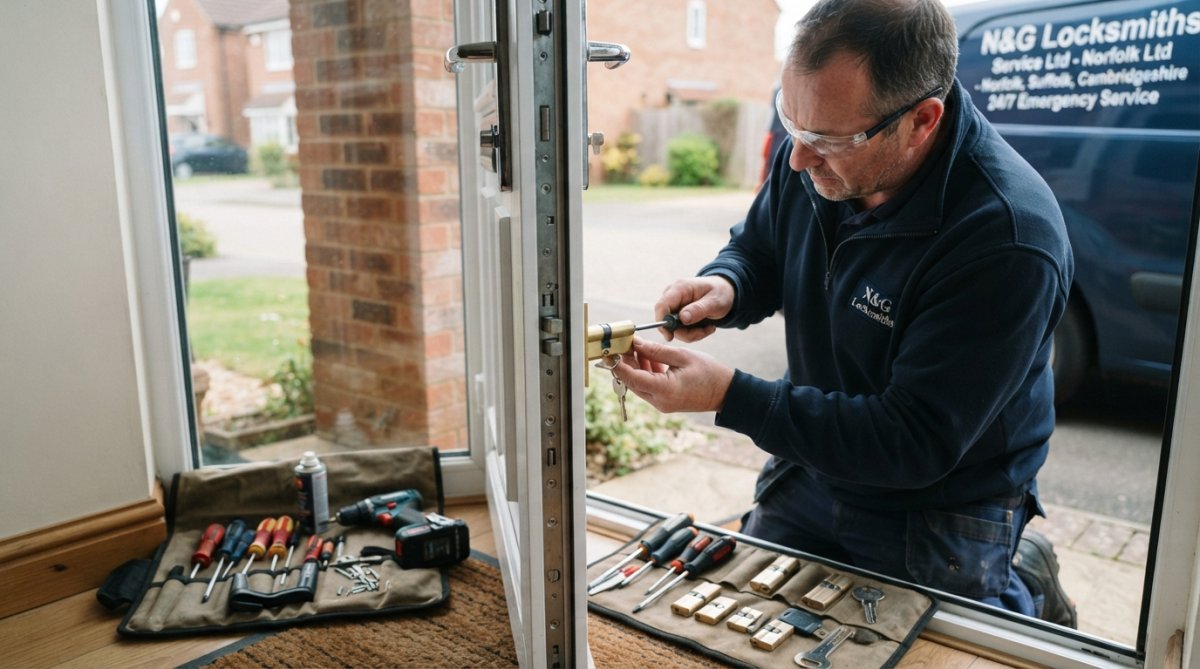
Most uPVC doors leave the factory with a single weak point, and it is almost never the frame. It is the lock cylinder. Learning how to secure uPVC doors properly means fixing that weak point first, then reinforcing everything around it. At N&G Locksmiths Service Ltd, we attend properties across Norfolk, Suffolk and Cambridgeshire where a door looked solid but opened in seconds.
So before you buy anything, gather a few basics and set aside an afternoon.
What you'll need:
- A tape measure and a cross-head screwdriver
- Your current key, to check the cylinder type
- A torch, for checking hinges and frames
- Replacement hardware (covered in the steps below)
- A note of your home insurance policy wording
The 7 steps below take most people two to three hours in total. None of them need specialist tools.
Step 1: Identify a Weak uPVC Door and the Signs Your Door Locks Need Replacing
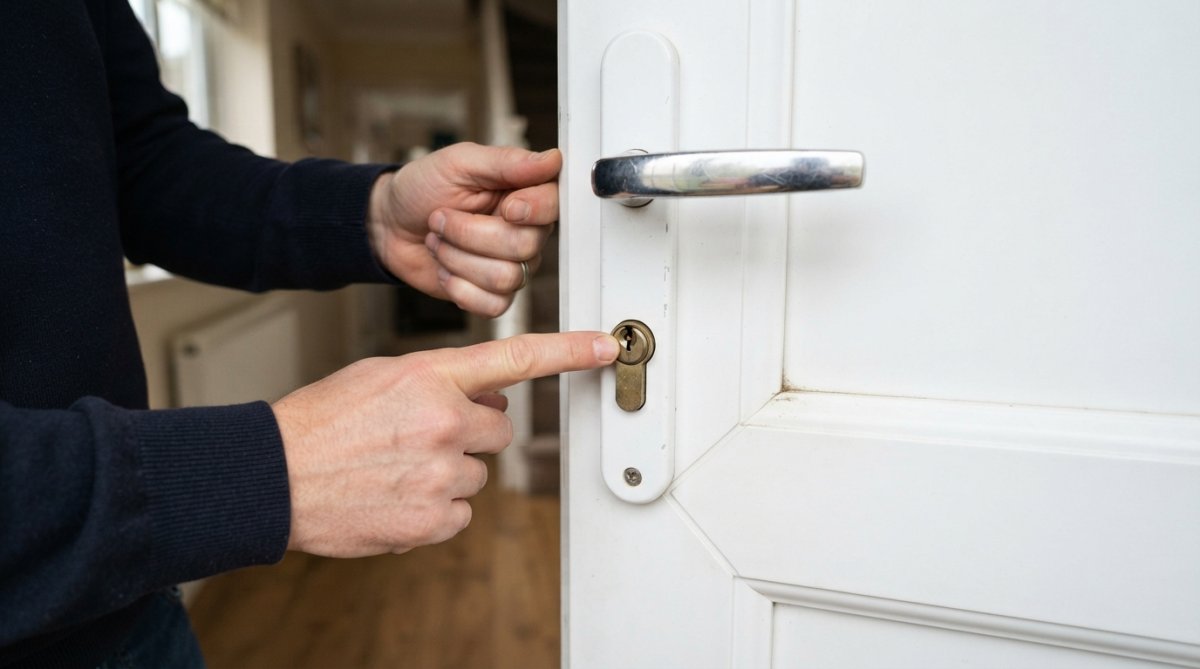
Start by checking whether your door is actually vulnerable. The signs your door locks need replacing are usually visible without any tools. Look for a cylinder that sticks out past the handle backplate, a handle that feels loose, or a door that needs lifting to lock.
Visual Checklist: Spotting a Vulnerable Door
Work through this list and note anything that applies:
- Cylinder protrudes more than 3mm from the handle backplate
- No visible kitemark or 3-star marking on the cylinder face
- Door drops or catches when you close it
- Handle wobbles when you push down
- Gaps visible between the door edge and frame
- Hinges show rust or loose screws
- Door has no sash jammers fitted
If two or more boxes are ticked, your door needs work. A common mistake is assuming a heavy door is a secure door. Weight says nothing about the locking points.
Step 2: Upgrade to Anti-Snap Cylinder Locks
Anti-snap cylinder locks are the single most effective upgrade for a uPVC door. These cylinders are built to break cleanly at a weak point if attacked, leaving the lock intact and the door still secure.
Standard euro profile lock cylinders snap in seconds with a pair of grips. Once the cylinder breaks, the thief reaches in and turns the mechanism by hand.
Understanding 3-Star and BS-Rated Cylinders
Look for a 3-star security rating, which tests the cylinder against snapping, drilling, picking and bumping. A BS-rated cylinder carries the British Standard kitemark and meets the same criteria.
Anti-snap cylinder locks should be fitted so the cylinder sits flush with the handle, no more than 3mm proud. Measure from the centre screw hole to each face of the door and order the correct size.
Fitting takes about 20 minutes: remove the retaining screw on the door edge, pull the old cylinder out, slide the new one in, and refit the screw.
Step 3: Fit Sash Jammers for uPVC Doors
Sash jammers for uPVC doors stop the door being forced open even if the lock is defeated. They are small metal brackets that clamp the door to the frame when closed, and they work on a simple principle: they convert a lever attack into a straight pull, which the door and frame are far better at resisting.
Fit one at the top and one at the bottom of the door, on the hinge side. Each jammer screws into the frame and hooks over a plate on the door. When the door shuts, the bracket locks the two together. A common pattern is to fit the top jammer just below the top hinge and the bottom jammer just above the bottom hinge, so the two work together to resist a crowbar inserted at the hinge edge.
How Sash Jammers Actually Work
A sash jammer is a two-part fitting. The frame-mounted bracket has a slot or hook; the door-mounted plate has a corresponding stud or lip. When the door closes, the two engage. If someone tries to lever the door away from the frame, the jammer resists the movement in the same direction the multi-point hooks are already resisting it, so the load is shared rather than concentrated on one point.
This is why jammers are most effective when paired with a working multi-point lock, not used as a substitute for one. If your multi-point mechanism is misaligned or the hooks are not engaging, jammers alone will not save the door.
Positioning and Trade-Offs
Position them so the door still closes cleanly. A jammer set too tight will stop the door latching and wear the seal; set too loose and it will not engage at all. The correct fit is when the door closes with light pressure and the jammer engages with a positive click, but the door seal is not compressed beyond its normal range.
On some uPVC doors, especially those with a rebated edge or a deep weather seal, there may not be enough clearance for a standard jammer. In that case, a slimline jammer or a hinge-bolt upgrade is the better route. Check clearance before drilling.
Most sets cost very little and take 30 minutes to fit with a drill and screwdriver. This is one of the highest-value upgrades you can make, but only if the door is already aligned and the multi-point lock is working. If the door drops or catches, fix that first, a jammer on a misaligned door will bind, wear, and eventually fail.
When to Choose Hinge Bolts Instead
If your door has a rebated edge, a very tight seal, or a frame that is already reinforced with steel, hinge bolts may be the better choice. Hinge bolts interlock the door to the frame at the hinge points and are less dependent on clearance. Many locksmiths fit both, jammers on the lock side and hinge bolts on the hinge side, for a complete edge-to-edge upgrade.
Step 4: Reinforce the Frame and Hinges
A strong lock on a weak frame is useless. Door frame integrity matters as much as the cylinder. Check the frame for rot, cracks or soft spots, especially around the lock and hinge points.
Hinge bolts are the fix for the hinge side. These interlock the door to the frame when closed, so the door cannot be lifted off its hinges. Fit one bolt above and one below each hinge.
For the frame itself, steel inserts or a reinforced strike plate spread the load if someone kicks the door. Stainless steel hardware resists rust and lasts longer than plated alternatives.
Check door alignment while you are there. A door that has dropped puts strain on the multi-point locking system and stops the hooks engaging fully.
Step 5: Install Cylinder Guards and Handle Upgrades
A cylinder guard is a metal collar that sits over the cylinder and blocks grips from reaching it. The importance of cylinder guards is simple: they remove the use a thief needs to snap the lock.
Fit the guard so the cylinder sits inside it, not proud of it. If your cylinder sticks out, replace it with a shorter one first, then fit the guard.
A high-security handle set adds a second layer. Look for handles with a built-in lock or a key-operated plate that covers the cylinder. Solid stainless steel handles resist being wrenched off.
Both upgrades take under an hour and pair well with the anti-snap cylinder from Step 2.
Step 6: Check PAS 24 Certification and Insurance Compliance
PAS 24 certification is the standard that proves a door set meets minimum security performance. It tests the whole assembly, door leaf, frame, hinges, lock cylinder, handles and any glazing, not just the lock. Doors carrying PAS 24 have passed simulated forced entry attempts using tools a burglar would realistically carry, including crowbars, chisels and cutting tools.
What PAS 24 Actually Tests
PAS 24 is a publicly available specification developed with input from industry and testing bodies. It covers:
- Resistance to physical attack on the door leaf and frame
- Performance of the locking mechanism under load
- Security of the cylinder against snapping, drilling and picking
- Integrity of hinges and hardware under attack
- Glazing security where the door contains glass
A door can carry PAS 24 as a complete doorset, or a component can be tested to the relevant standard and fitted to a door that already meets PAS 24. This is why swapping a certified cylinder for an uncertified one can void the rating, the doorset was tested as a system, and changing one part can take it outside the tested specification.
How Insurers Assess Compliance
Insurance compliance is where most homeowners get caught out. Many policies require certified locks on external doors, and some specify a minimum standard. The wording varies widely between insurers, and the requirement is often buried in the policy schedule rather than the main booklet.
A common pattern is that the insurer requires:
- A lock that meets a recognised standard, such as PAS 24 or a British Standard kitemark on the cylinder
- Evidence of the standard fitted at the time of the policy, if a claim is made
- Notification if you change the locking hardware after the policy starts
Some policies specify a minimum number of locking points on a multi-point door, or require a particular cylinder rating. Others simply state that external doors must be "secured by a key-operated lock", which is far less demanding but still worth checking.
What to Check and Keep
Check your policy wording before you buy hardware. Look for the security section, the schedule, and any endorsements. If the wording is unclear, ask the insurer in writing what standard they require and whether a specific cylinder rating is needed.
If you rent, your landlord may have obligations too. Keep a record of any locks you change and pass receipts to the landlord or letting agent. In some tenancies, changing the lock without permission can breach the agreement, even if the change improves security.
The Gap Most Guides Miss
Most articles on uPVC door security cover hardware upgrades but stop short of explaining how those upgrades interact with insurance. The practical reality is that a 3-star anti-snap cylinder and a PAS 24 doorset are not just security improvements, they are often the difference between a claim being paid and being refused. Before you buy, match the hardware to the policy wording, not just to the door.
Step 7: Maintain Your Multi-Point Locking System
A multi-point locking system needs servicing once or twice a year to keep working. Dirt, wear and misalignment are the main causes of failure, not breakage.
Maintenance takes 15 minutes:
- Spray silicone lubricant into each locking point
- Wipe the cylinder face and keyway clean
- Tighten handle screws and hinge screws
- Check the door still closes with light pressure
- Test every key in the cylinder
Avoid oil-based products. They attract grit and gum up the mechanism over time. If the handle becomes stiff or the key sticks, call a locksmith before it fails completely.
Smart Home Integration for uPVC Door Security
Smart locks can work with uPVC doors, but only if the door has the right cylinder. Most smart cylinders replace the existing euro profile lock and keep the multi-point mechanism working as normal.
Check two things before buying. First, that the smart cylinder is the correct length for your door. Second, that it keeps the door's PAS 24 rating, because swapping a certified cylinder for an uncertified one can void both the rating and your insurance cover.
Smart locks add convenience: keyless entry, temporary codes for visitors, and alerts when the door opens. They do not replace physical security. Pair a smart cylinder with an anti-snap rating and a cylinder guard for the best result.
Common Mistakes to Avoid When Securing uPVC Doors
The most common mistakes all come down to fitting the right part the wrong way.
- Fitting an anti-snap cylinder that still protrudes past the handle
- Using a sash jammer that stops the door latching properly
- Ignoring door alignment, which strains the locking mechanism
- Choosing a cheap cylinder with no 3-star or BS rating
- Skipping maintenance until the lock fails in winter
Another mistake is buying hardware online without measuring. Cylinders come in many lengths, and the wrong size leaves a gap or jams the door.
If any step feels beyond your tools or confidence, a certified locksmith can complete the full upgrade in one visit. N&G Locksmiths Service Ltd fits anti-snap cylinders, sash jammers and cylinder guards with a 12-month guarantee on all work, and we carry no call-out fee. For a security upgrade across Norfolk, Suffolk or Cambridgeshire, our team can assess your doors and fit the right hardware the same day. Every job is backed by fully licensed, insured professionals and a 5/5 customer rating.
Frequently Asked Questions
What type of lock is most secure for a uPVC door?
A 3-star anti-snap cylinder lock combined with a full multi-point locking system offers the highest level of security for a uPVC door. Look for a BS-rated cylinder that meets the TS007 standard. This type of lock is designed to resist snapping, drilling, and bumping attacks, which are common methods used in forced entry. Pairing this with a cylinder guard adds another layer of protection.
How do I know if my uPVC door lock is anti-snap?
Check the face of the cylinder for a 3-star kitemark or the letters 'TS007'. Anti-snap cylinders are designed to break away cleanly at a specific point if attacked, leaving a sacrificial section that still protects the locking mechanism. If your cylinder has no markings or looks like a standard euro profile lock, it is likely vulnerable to lock snapping and should be replaced.
Are sash jammers effective for uPVC door security?
Yes, sash jammers are a simple and effective way to add security to uPVC doors. They are fitted to the frame and drop into a slot on the door to prevent it from being forced open. They work best as a secondary measure alongside a strong multi-point lock. For the best protection, fit one at the top and one at the bottom of the door on the hinge side.
Can you fit bolts to uPVC doors?
Yes, you can fit bolts to uPVC doors, but they must be surface-mounted and through-fixed into the reinforcing steel inside the frame. Standard tower bolts are not suitable as they can be easily forced. Look for dedicated uPVC door bolts or hinge bolts that are designed for the material. A locksmith can install these correctly to ensure they provide real security without damaging the door's integrity.
Your uPVC door is only as strong as its weakest component, and for most homes that component is the cylinder. Work through the seven steps above and you close the gaps that burglars look for first. If you would rather hand the job to a certified professional, N&G Locksmiths Service Ltd offers 24/7 emergency service, a 30-minute response time, no call-out fee and a 12-month guarantee on every lock we fit. Call now to book a security upgrade and get complete peace of mind.