 how-to
How to Verify Locksmith Credentials: A Step-by-Step Guide
Table of Contents
- Why Verifying Locksmith Credentials Matters
- Check for State-Issued Licensing and Registration
- Verify Master Locksmiths Association Approved Status
- Confirm DBS Checked Locksmith Background Verification
- Validate Locksmith Public Liability Insurance
- Request Proof of Identity and Professional Credentials
- Check Online Reviews and Reputation
- Spot Red Flags Before Hiring
- Get a Written Quote and Verify the Physical Address
- Conclusion
- Frequently Asked Questions
Last Updated: September 18, 2026
Why Verifying Locksmith Credentials Matters
When you're locked out of your home, car, or business, your first instinct is to call for help immediately, but before you do, you should verify locksmith credentials. That urgency is exactly what makes credential verification critical. A locksmith with proper credentials protects your property, your security, and your peace of mind. Without checking, you risk hiring someone unqualified, uninsured, or worse, someone with criminal intent.
Fraudulent locksmiths exploit emergency situations. They arrive quickly, charge exorbitant fees, and sometimes damage locks or doors in the process. Worse, they may compromise your security by copying keys or accessing sensitive areas. A legitimate service provider carries state-issued licensing, professional accreditation, liability insurance, and a clean background check. These aren't optional extras, they're the foundation of trustworthy service.
At N&G Locksmiths Service Ltd, we understand why customers ask these questions before hiring. Our certified professionals carry full credentials because we believe transparency builds trust. Below, we'll show you exactly how to verify locksmith credentials before you hand over your keys or your money.
Check for State-Issued Licensing and Registration
The first step is confirming your locksmith holds valid credentials appropriate for the work you need. However, licensing requirements vary significantly depending on whether the work is residential, commercial, or automotive, a distinction most guides ignore.
Residential locksmith credentials:
For standard residential lockouts and lock repairs:
- Visit your local council's business licensing database or the relevant trade association website
- Search for the locksmith's name and business trading name
- Confirm the license is current (not expired)
- Note the license number and issue date
- Cross-check the business registration with Companies House if it's a registered company
- Verify they hold a Level 2 or Level 3 locksmith qualification (City & Guilds or equivalent)
Residential work typically requires general locksmith certification but not specialist accreditation. Most locksmiths operating in the residential market hold these basic credentials.
Commercial locksmith credentials:
For commercial access control, high-security locks, or security system installation, the credential bar is higher:
- Confirm the locksmith holds a Level 3 diploma in locksmithing or higher
- Verify they have specific training in access control systems (e.g., electronic locks, keypad systems, biometric readers)
- Check whether they hold manufacturer certification for systems they install (e.g., ASSA ABLOY, Yale, Mul-T-Lock)
- Confirm they carry professional indemnity insurance of at least £1 million (commercial work carries higher liability risk)
- Ask whether they've completed a Data Protection Impact Assessment if they're handling access logs or biometric data
Commercial locksmiths often hold additional certifications in security system design and installation. If you're upgrading a business security system, ask for evidence of these specialist qualifications.
Automotive locksmith credentials:
Automotive locksmith work (car lockouts, key replacement, immobiliser programming) requires different expertise:
- Confirm they hold automotive-specific locksmith training or certification
- Verify they have access to manufacturer key-cutting and programming equipment
- Check whether they're registered with the Institute of the Motor Industry (IMI) or equivalent automotive trade body
- Ask about their experience with the specific vehicle make/model (modern vehicles have complex immobiliser systems)
- Confirm they carry public liability insurance that explicitly covers automotive work
Automotive locksmiths need different tools and knowledge than residential locksmiths. A residential specialist may not be qualified to reprogram your car's immobiliser safely.
How to verify credentials across all types:
Ask the locksmith directly for their license number and qualifications before they arrive. A professional will provide them without hesitation. If they refuse or become evasive, hang up and call someone else. Legitimate locksmiths are proud of their credentials and share them readily.
When verifying credentials, match them to the job type. A residential locksmith with Level 2 certification is fine for a standard lockout. A commercial security upgrade requires Level 3 certification plus manufacturer training. An automotive immobiliser reprogramming requires automotive-specific credentials. Legitimate locksmiths will be transparent about what they're qualified to do and what they're not.
Verify Master Locksmiths Association Approved Status
The Master Locksmiths Association (MLA) is the primary professional accreditation body for locksmiths. Membership signals that a locksmith meets industry standards, maintains professional insurance, and adheres to a code of conduct.
To check MLA approved status:
- Visit the Master Locksmiths Association official directory
- Search for the locksmith's name or business name
- Confirm their membership tier (full member, associate, or apprentice)
- Check the membership expiry date
- Look for any disciplinary notes or complaints
MLA membership doesn't guarantee perfection, but it does mean the locksmith has been vetted and is accountable to a professional body. If a locksmith claims MLA membership but doesn't appear in the directory, they're lying. This alone is a red flag.
Many locksmiths display the MLA logo on their vehicles, uniforms, and websites. However, logos can be copied. Always verify directly with the MLA database rather than trusting the logo alone.
Confirm DBS Checked Locksmith Background Verification
A DBS (Disclosure and Barring Service) check verifies that the locksmith has no serious criminal record. This is especially important if they'll have access to your home, business, or vehicle during vulnerable moments.
To verify DBS status:
- Ask the locksmith to show you their DBS certificate before work begins
- Check the certificate's issue date (DBS checks are valid for 3 years)
- Note the reference number and certificate number
- Ask whether they've signed up for the DBS Update Service (allows instant verification)
- If they claim to have a DBS check but can't produce the certificate, they don't have one
Not all locksmiths are legally required to have a DBS check, but professional ones do anyway. It's a mark of integrity. If a locksmith refuses to show you their DBS certificate, question why they're hiding it.
The DBS certificate should show "Standard" or "Enhanced" level depending on the work. For residential and commercial access, an Enhanced DBS is preferable because it includes local police information.
Validate Locksmith Public Liability Insurance
Public liability insurance protects you if the locksmith damages your property during the job. Without it, you're responsible for repairs. This is non-negotiable for professional locksmiths. However, most guides mention insurance without explaining how to verify it or what coverage actually matters.
To verify locksmith public liability insurance:
- Request a copy of the insurance certificate before work begins
- Check the policy holder name (should match the business name exactly)
- Confirm the cover amount (typically £1-6 million for residential locksmiths; commercial access control work may require £10 million+)
- Note the policy expiry date
- Identify the insurance provider and policy number
- Contact the insurer directly to verify the policy is active using the policy number
Digital verification of insurance policies is now standard practice. Rather than accepting a screenshot or email copy, ask your locksmith for their policy number and verify it yourself:
- Many insurers (including those underwriting locksmith professional indemnity) offer instant online verification portals
- Call the insurer's claims line and quote the policy number, they can confirm active coverage in seconds
- Ask whether the policy covers "locksmith services" specifically; some general liability policies exclude locksmith work
- Check whether the policy includes "professional indemnity" (covers your losses if the locksmith's negligence causes damage) or only "public liability" (covers third-party injury or property damage)
Understanding coverage types matters:
- Public Liability: Covers injury to third parties or damage to their property. Essential but not sufficient alone.
- Professional Indemnity: Covers losses arising from the locksmith's professional negligence, e.g., they damage your lock mechanism and it fails later. This is critical for residential and commercial work.
- Tools and Equipment Cover: Protects the locksmith's equipment; doesn't protect you directly but indicates a professional operation.
For residential lockouts, public liability of £1-2 million is standard. For commercial access control systems or high-security installations, ask whether the locksmith carries professional indemnity insurance of at least £1 million. If they're installing or modifying security systems, professional indemnity is essential.
A legitimate locksmith carries insurance because they know accidents happen. If they refuse to show proof of insurance, won't provide a policy number, or can't explain their coverage, they're either uninsured or hiding something. Either way, don't hire them.
Request Proof of Identity and Professional Credentials
Before a locksmith enters your property, ask for physical proof of identity and professional credentials. This simple step prevents imposters and gives you confidence you're working with a real professional.
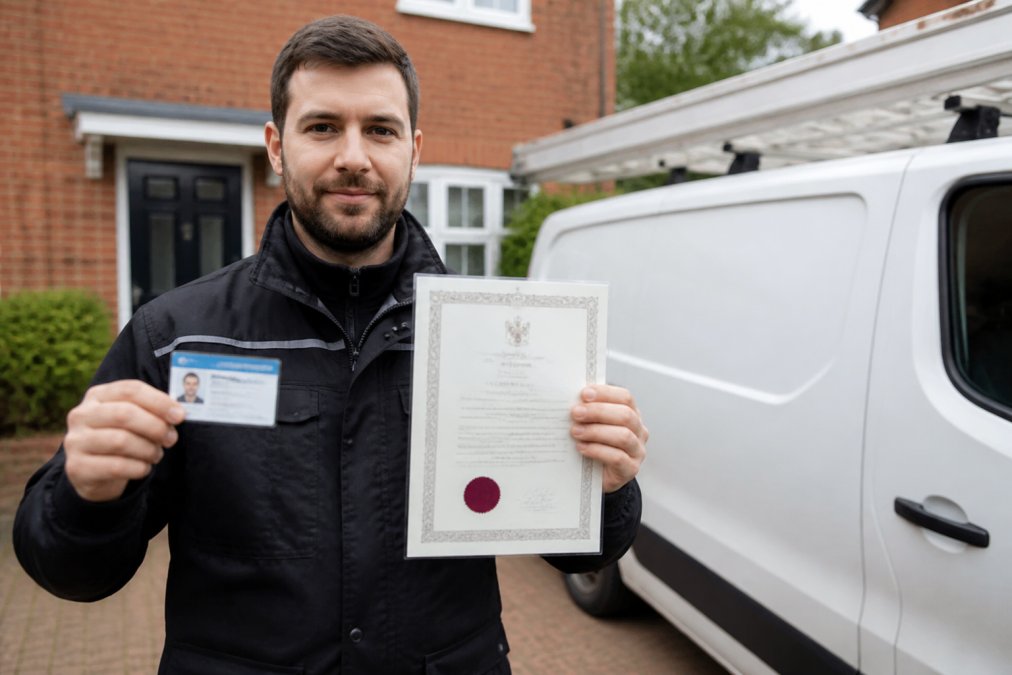
To verify identity and credentials:
- Ask for a photo ID (driving license, passport, or company ID badge)
- Request their locksmith certification or qualification documents
- Confirm the name on the ID matches the name on the booking
- Take a photo of their ID for your records
- Ask about their training and years of experience
Legitimate locksmiths carry service vehicles with company branding, uniforms with their name or company logo, and professional identification. If someone arrives in unmarked clothing with no ID, they're not a professional.
A verified technician will have completed formal locksmithing training, often through apprenticeships or trade qualifications. Ask where they trained and how long they've been in the industry. Professional locksmiths are proud of their background and share details freely.
Check Online Reviews and Reputation
Online reputation reflects real customer experience. Before hiring, check what previous customers say about the locksmith's work quality, pricing transparency, and professionalism.
To assess online reputation:
- Search Google, Trustpilot, or industry-specific review sites
- Look for patterns in feedback (not just one or two reviews)
- Check the locksmith's response to negative reviews
- Search for the business name plus "scam" or "complaint"
- Ask the locksmith for references you can contact directly
A locksmith with consistently high ratings (4.5+ stars) and hundreds of reviews is more trustworthy than one with no online presence. However, a brand new business with no reviews yet isn't automatically suspicious, they may simply have just started.
Pay attention to review content, not just ratings. Positive reviews mentioning specific outcomes ("arrived in 30 minutes, fixed the lock without damage") are more credible than generic praise ("great service"). Negative reviews citing high charges or property damage are red flags.
Spot Red Flags Before Hiring
Certain warning signs indicate a fraudulent or unprofessional locksmith. Learn to recognise these red flags and avoid hiring them.
Common red flags include:
- Refuses to provide a written quote before starting work
- Won't show proof of licensing, insurance, or credentials
- Claims to be "just in the area" and offers unsolicited services
- Quotes a price that seems suspiciously low
- Demands cash only (no card or bank transfer option)
- Has no verifiable business address or phone number
- Won't provide references or has no online presence
- Becomes aggressive when you ask questions
- Uses high-pressure sales tactics ("I can only help you right now")
If a locksmith displays any of these behaviours, trust your instinct and call someone else. There are plenty of legitimate professionals available. One warning sign is concerning. Two or more means walk away immediately.
Fraudulent locksmiths often operate from temporary phone numbers, use vague business names, and avoid any form of documentation. They rely on your emergency situation to bypass normal caution. Don't let urgency override your safety.
Get a Written Quote and Verify the Physical Address
Before a locksmith touches your lock, get everything in writing. A written quote protects you from surprise charges and gives you proof of what you agreed to.
To secure a written quote:
- Ask for an on-site assessment (legitimate locksmiths do this for free)
- Request a detailed written quote including labour, parts, and any call-out fees
- Confirm whether the quote includes VAT
- Ask about payment methods (card, bank transfer, cash)
- Get the quote in writing (email, text, or printed document)
- Verify the business's physical address matches their website
A professional locksmith will visit your location, assess the lock, and provide an accurate quote. They won't quote over the phone without seeing the job. If they do, they're guessing and may charge more when they arrive.
Verify the business address by checking it on Google Maps. Does it show a real locksmith business? Can you find reviews from that location? A legitimate company has a verifiable physical address. A PO box or virtual office address is less trustworthy.
Conclusion
Verifying locksmith credentials protects your property, security, and wallet. The eight steps above take 15 minutes but save you from costly mistakes and security breaches. Check for state-issued licensing, Master Locksmiths Association approval, DBS checks, and public liability insurance. Request proof of identity, review online reputation, spot red flags, and always get a written quote.
When you need a locksmith you can trust, N&G Locksmiths Service Ltd delivers certified professionals with full credentials, public liability insurance, and a 12-month guarantee on all work. Our team responds within 30 minutes with no call-out fee, transparent pricing, and quality workmanship backed by real accountability. Call N&G Locksmiths Service Ltd today for emergency lockout assistance or security upgrades across Norfolk, Suffolk, and Cambridgeshire.
Frequently Asked Questions
How do I know a locksmith will actually arrive in 30 minutes? Legitimate locksmiths publish response time commitments because they can meet them. N&G Locksmiths Service Ltd guarantees 30-minute response times because we've built our team and dispatch system to deliver. Ask any locksmith for their average response time and check customer reviews to confirm they meet it. If they can't back up their claims with customer feedback, they're overpromising.
What's the catch with "no call-out fee"? A no call-out fee means you're not charged just for the locksmith to show up. However, you pay for the actual work (labour and parts). Some locksmiths hide this by charging inflated rates once they arrive. The catch is avoided by getting a written quote before work begins. N&G Locksmiths Service Ltd provides upfront pricing so there are no surprises.
Can you really come out at 2 AM on a Sunday? Yes. Professional 24/7 locksmiths operate around the clock, including weekends and bank holidays. If a locksmith claims 24/7 availability but can't confirm emergency Sunday service, they're not truly 24/7.
How do I know you're properly insured and certified before you arrive? Ask for proof before they arrive. Request their DBS certificate, public liability insurance certificate, and professional credentials via email or text. Verify these independently using the methods described above. Don't let anyone into your home without this confirmation.
What happens if the lock fails after you fix it? Is the 12-month guarantee real? A legitimate 12-month guarantee means the locksmith will return and fix the problem at no charge if their work fails within 12 months. Ask for this guarantee in writing. N&G Locksmiths Service Ltd backs all work with a 12-month guarantee because we stand behind our quality. If a locksmith won't offer this, question why they lack confidence in their own work.
How can I verify you're legitimate during an emergency when I'm stressed? Take 2 minutes to verify the essentials: check their online reviews, confirm their business address on Google Maps, and ask for their license number. You can verify licensing and insurance while they're on the way. These quick checks take minimal time and give you confidence before they arrive.
Frequently Asked Questions
How do I know if a locksmith is legitimate before they arrive?
Verify locksmith credentials by checking for state-issued licensing, Master Locksmiths Association approval, and DBS clearance. Ask for their business registration number, request proof of public liability insurance, and search for online reviews. Legitimate locksmiths provide written quotes upfront and operate from a verifiable physical address. Always ask for identification when they arrive.
What does a DBS checked locksmith mean, and why does it matter?
A DBS (Disclosure and Barring Service) checked locksmith has undergone background verification to ensure they have no criminal convictions that would make them unsuitable for work in homes and businesses. This is essential for residential and commercial access work, as it gives you confidence that the person entering your property has been vetted by official authorities. Always ask to see their DBS certificate before work begins.
Why is locksmith public liability insurance important?
Locksmith public liability insurance protects you if the locksmith damages your property during work, such as scratching a door or damaging a lock mechanism. This insurance covers repair or replacement costs, so you're not left paying out of pocket. Request proof of current insurance before hiring and verify the policy directly with the insurer if possible.
What are the biggest red flags to watch for when hiring a locksmith?
Red flags include refusing to provide a written quote, insisting on cash-only payment, lacking professional identification or uniform, having no online presence or reviews, quoting prices significantly lower than competitors, and claiming they cannot verify their credentials. Avoid locksmiths who pressure you or lack a verifiable business address and phone number.