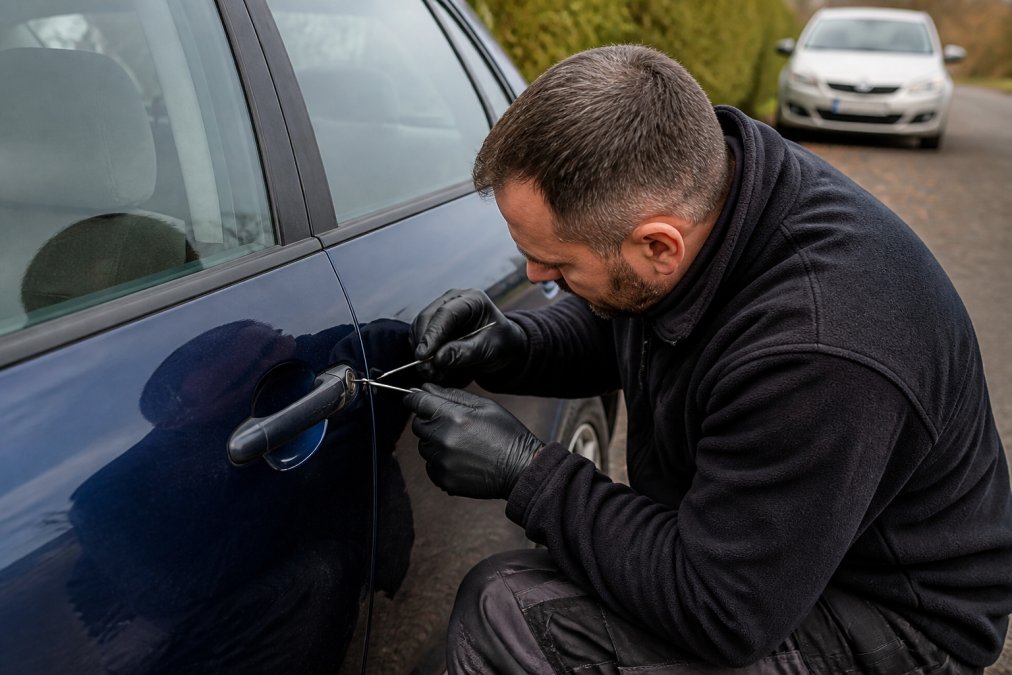
 how-to
How to Open a Locked Car Door: Safe Steps | 2026 Guide
Table of Contents
- What You'll Need Before You Start
- Step-by-Step: How to Open a Locked Car Door
- What to Do If Keys Are Locked in Car
- Modern Keyless Entry and Smart Fob Troubleshooting
- Safety Precautions During DIY Attempts
- Emergency Locksmith Response Time Expectations
- Car Lockout Service Cost: What Affects the Price
- Legal and Liability Implications of DIY Entry
- Preventing Future Lockouts
- Frequently Asked Questions
Last Updated: September 15, 2026
What You'll Need Before You Start
Locking your keys inside the car is one of the most common motoring mishaps, and it usually happens at the worst possible moment. Knowing how to open locked car doors safely starts with having the right approach before you touch anything. This guide from N&G Locksmiths Service Ltd walks through the safe methods, the ones to avoid, and when to hand the job to a professional.
A few basic items make a genuine difference. Gather these before you attempt anything:
- A spare key, if one is accessible at home or with a family member
- A plastic window wedge or a firm plastic card
- A long-reach tool, or a length of stiff wire as a last resort
- A shoelace or thin cord for older manual locks
- A torch if it's dark, and a phone to call for help
The single biggest mistake is forcing the door frame. Metal bends and glass cracks under pressure, and both repairs cost far more than a call-out.
Step-by-Step: How to Open a Locked Car Door
The safest sequence is to check every entry point first, then try the least invasive method before escalating. Work through the steps below in order.
Check Every Door and the Boot First
Before any tool comes out, walk around the vehicle and test all four doors plus the boot. A door left unlocked, or a boot that opens on a separate release, solves the problem in seconds.
On many models the boot release works independently of the central locking, so a locked cabin does not always mean a locked boot. If you can reach through, the rear seat fold-down can give you access to the cabin.
Try the Shoelace Method for Manual Locks
The shoelace method only works on older vehicles with a vertical pull-up lock button. Tie a slip knot in the middle of a long shoelace, work it down between the window and the weather stripping, and loop it around the lock button. Pull both ends to tighten and lift.
Modern cars with flush, electronic, or recessed locks will not respond to this technique. If the button does not protrude, move on.
Use a Wedge and Long-Reach Tool Carefully
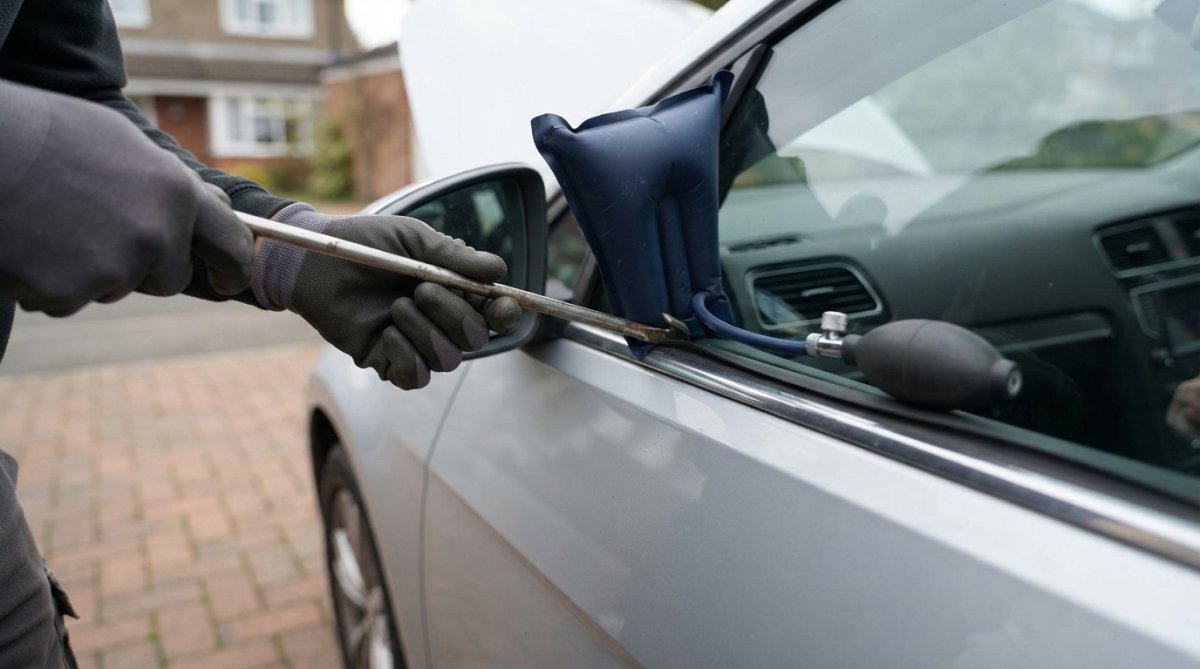
A window wedge creates a small gap at the top corner of the door. Insert the wedge gently, then slide a long-reach tool through the gap to hook the interior door handle or lock rod. Apply slow, steady pressure rather than sharp tugs.
This method demands patience. The locking mechanism is delicate, and a heavy hand can snap the rod or damage the door handle assembly.
What to Do If Keys Are Locked in Car
If you need to open locked car doors and no spare is reachable, your options narrow to three: a professional auto locksmith, roadside assistance, or emergency services as a last resort. A qualified auto locksmith is almost always the fastest and least damaging route.
Roadside assistance providers can help, but response times vary widely and some policies exclude lockouts. Check your breakdown cover before assuming it applies.
Calling emergency services for a lockout is not appropriate unless a person or animal is trapped inside in dangerous conditions. For a straightforward lockout, contact a dedicated auto locksmith.
Modern Keyless Entry and Smart Fob Troubleshooting
Keyless entry systems fail in ways that older locks never did, and the fix is often simpler than expected. A key fob that appears dead is frequently a flat battery rather than a broken system.
Try these checks before assuming the worst:
- Hold the fob against the start button or a marked sensor point to trigger the immobiliser override
- Replace the fob battery, a common and cheap fix
- Check for a hidden mechanical key blade inside the fob for a physical door lock
- Move away from strong signal interference, such as near a phone mast or large metal structure
Many keyless systems also have a concealed physical keyhole behind a plastic cover on the door handle. Pop the cover off and use the blade.
Safety Precautions During DIY Attempts
Personal safety matters as much as protecting the vehicle. Never attempt entry on a busy road without moving to a safe position first, and never leave the engine running or a child unattended while you work.
Keep these points in mind:
- Work in a well-lit, safe location away from traffic
- Never smash a window unless there is a genuine emergency
- Avoid tools that could shatter glass or injure your hands
- Do not force the door frame, as the repair cost outweighs a call-out
If at any point the method feels risky, stop. Damage prevention is cheaper than repair.
Emergency Locksmith Response Time Expectations
Response time is the question every stranded driver asks first. A reputable emergency locksmith typically aims to reach you within around 30 minutes in urban and suburban areas, though rural locations and peak times can extend that.
At N&G Locksmiths Service Ltd, our 24/7 emergency service targets a 30-minute response, with no call-out fee and a 12-month guarantee on our work. That means you know what to expect before we arrive.
Response times depend on your location, traffic, and the time of day. A 2 AM Sunday call is covered the same as a weekday afternoon.
Car Lockout Service Cost: What Affects the Price
Car lockout service cost depends on the vehicle, the lock type, and the time of the call, not on a flat rate. Keyless and immobiliser-equipped cars take longer to open safely than older manual locks, and that affects the price.
Factors that move the figure up or down:
| Factor | Effect on Cost | Why It Matters |
|---|---|---|
| Vehicle age and lock type | Higher for modern keyless | More complex entry, programming needed |
| Time of day | Higher for late-night calls | Out-of-hours attendance |
| Location | Higher for rural areas | Longer travel distance |
| Damage already caused | Higher overall | Repairs added to the call-out |
N&G Locksmiths Service Ltd publishes pricing on its website with no hidden fees, so you can see the cost before you commit. Always confirm the total before work begins.
Legal and Liability Implications of DIY Entry
Most guides skip this entirely, but attempting to open a locked car raises legal, insurance, and warranty questions that can cost more than the lockout itself. This is the part of the topic where doing it wrong has consequences beyond a scratched door.
Proving you are entitled to open the vehicle
If you own the car, you can generally attempt entry yourself. The complication arises when you do not own it, or cannot prove you do. A locksmith will ask for proof of ownership, typically the V5C registration document, or photo ID matching the registered keeper, before touching the vehicle (Vehicle registration: New and used vehicles). Anyone helping you should do the same.
If you are locked out of a vehicle you are borrowing, renting, or driving for work, get the owner's or fleet manager's authorisation before you or anyone else attempts entry. Attempting to open a vehicle you cannot demonstrate a right to access can, in the wrong circumstances, be treated as interference with a vehicle, and the burden falls on you to explain it.
Insurance: what a DIY attempt can cost you
This is the gap most drivers only discover after the fact. If you damage your own vehicle during a DIY entry attempt, your insurer may treat the resulting repair as negligent damage rather than an insured event (abi.org.uk). Policies vary, but the common pattern is that damage caused by improper or forced entry is excluded or only partially covered, and it can affect your no-claims discount if a claim is made.
Before you pick up a tool, check two things in your policy documents:
- Whether lockout assistance is included as a benefit, and what the call-out limit is
- Whether the policy excludes damage from forced or improper entry
If your breakdown cover includes home start or roadside assistance, a lockout call-out is often the cheaper route than a repair you fund yourself. Use the cover you are already paying for.
Manufacturer warranty and modern vehicles
On a vehicle still under a manufacturer warranty, damage caused by a non-approved entry method is not a warranty matter, the manufacturer will not cover a bent frame, a torn seal, or a damaged lock actuator because you tried to open it yourself (Consumer Rights Act 2015). More significantly, on modern vehicles with electronic locking, a clumsy attempt can disturb the immobiliser or the body control module. Repairs to those systems are diagnostic-heavy and expensive, and they sit firmly outside warranty cover.
Rental and lease vehicles
If the vehicle is leased or rented, the contract almost always places liability for damage on you, regardless of who caused it. Check the rental agreement before attempting anything, and contact the rental company's roadside line first, many include lockout assistance as standard, and using it keeps you within the terms of the agreement.
The practical rule
If you own the vehicle outright, have checked your policy, and are using a non-destructive method, a careful DIY attempt is reasonable. If any of those conditions is not met, you cannot prove ownership, the vehicle is rented or leased, it is under warranty, or it has electronic locking, the legal and financial exposure points to a professional call-out.
Preventing Future Lockouts
The cheapest lockout is the one that never happens. A few habits and a small investment cut the risk dramatically.
- Carry a spare key in a separate place from your main set
- Keep a spare key fob battery in the glovebox
- Use a key safe or leave a spare with a trusted person
- Check your breakdown cover includes lockout assistance
- Never leave keys inside the car, even for a moment
For added peace of mind, a professional can cut and program a spare key so a lockout never leaves you stranded.
Frequently Asked Questions
How do I unlock my car door if the keys are locked inside?
First, check every door and the boot in case one is unlocked. If not, try the shoelace method for manual locks or use a wedge and long-reach tool if you have them. For keyless entry cars, a spare key fob or a call to an emergency locksmith is safest. Avoid coat hangers or forcing the door frame, as these can damage weather stripping or the unlocking mechanism.
How long does an emergency locksmith take to arrive?
Response times vary by location and time of day. A 24/7 service like N&G Locksmiths Service Ltd aims for a 30-minute response, with no call-out fee. At peak times or in rural areas, expect longer. Always confirm the estimated arrival time when you call and ask for the technician's name and vehicle details.
Does my car insurance cover emergency lockout services?
Some comprehensive policies include lockout cover as an add-on or standard benefit, but many do not. Check your policy documents or call your insurer before assuming you are covered. If you are not covered, a professional car lockout service cost depends on the vehicle type, lock complexity and time of day. Ask for a quote upfront to avoid surprises.
Should I attempt to open a locked car door myself?
DIY methods can work on older cars with manual locks, but they carry risks. Wedges can bend the door frame, long-reach tools can scratch paint or damage wiring, and forcing a lock may break the unlocking mechanism. On modern vehicles with immobilisers and keyless entry, DIY attempts often cause costly damage. If you are unsure, call a professional locksmith.
A lockout is stressful, but it does not have to be costly or damaging. When the safe methods above do not work, or you want to avoid risking your vehicle, N&G Locksmiths Service Ltd is ready with 24/7 emergency service, no call-out fee, a 30-minute response target, and a 12-month guarantee on every job. Our certified, fully insured team covers Norfolk, Suffolk, and Cambridgeshire with upfront pricing and no hidden fees. Call now and get back on the road with complete peace of mind.