 how-to
How to Change Locks After Moving House (2026 Guide)
Table of Contents
- Why You Must Change Locks After Moving House
- DIY vs Professional Locksmith: What to Consider
- How to Measure a Euro Cylinder for uPVC Doors
- Step-by-Step: How to Change Locks After Moving House
- The Cost of Locksmith to Change Locks Explained
- Choosing the Best High Security Door Locks
- Common Mistakes to Avoid When Changing Locks
- Final Security Checks for Your New Home
- Frequently Asked Questions
Last Updated: September 9, 2026
Why You Must Change Locks After Moving House
Changing locks after moving house is one of the first security tasks every new homeowner should complete, ideally before moving any furniture in. When you receive the keys from the previous owner or agent, you have no reliable way of knowing how many copies exist. Spare keys may sit with former occupants, contractors, cleaners, or family friends who visited over the years.
The security risk is not theoretical. guidance from the Master Locksmiths Association consistently advises that new occupants change cylinders and lock barrels immediately upon property completion, since key control is impossible to verify. This guide from N&G Locksmiths Service Ltd walks through the entire process, from measuring your existing hardware to fitting replacements, so you can secure your home with confidence.
Beyond peace of mind, new locks protect your insurance position. Most home insurance policies in the UK require that entry point security, including door locks, meet reasonable standards (abi.org.uk). If a claim follows a break-in and the insurer determines the locks were outdated or faulty, your payout may be affected. Swapping to a British Standard lock removes that doubt.
DIY vs Professional Locksmith: What to Consider
The decision between fitting locks yourself and calling a professional comes down to your skill level, the lock type, and the door material. A straightforward euro cylinder swap on a standard uPVC door is achievable for many competent DIYers, requiring only a screwdriver and a tape measure. Mortice locks and multi-point locking systems are more involved and easier to get wrong.
| Option | Best For | Time Needed | Risk Level |
|---|---|---|---|
| DIY Cylinder Swap | Confident DIYers, standard uPVC doors | 15-30 minutes | Low if measured correctly |
| Professional Fitting | Multi-point systems, mortice locks, unsure measurements | 30-60 minutes | Low with certified installer |
| Emergency Call-Out | Locked out, broken key, after-hours | Immediate | N/A |
What most guides miss is that the measurement stage causes the majority of DIY failures. A cylinder that is a few millimetres too long will protrude and give burglars extra use to snap it. Too short, and the locking mechanism will not engage properly. If you have any doubt about your measurements, the cost of a professional visit is modest compared with the cost of a compromised front door.
How to Measure a Euro Cylinder for uPVC Doors
Measuring a euro cylinder correctly is the single most important step when you change locks after moving house, because an incorrect size will not fit your door mechanism. The cylinder length must match the overall thickness of your door plus the internal and external handle furniture. A simple measurement error means a wasted purchase and an insecure door in the meantime.
Tools and Steps for Accurate Measurement
You need a tape measure or a digital caliper, plus a pen and paper to record your numbers. Remove the screw that holds the cylinder in place, typically located on the edge of the door at the same height as the keyhole. With the key turned to the unlocked position, pull the cylinder free.
Measure the full length of the cylinder body from edge to edge, then measure the distance from the centre of the keyhole or cam to each end separately. These two figures, often written as 35/35 or 40/45, are what you will quote when buying a replacement. Door thickness, handle depth, and whether you have a security escutcheon all affect the final size, so do not assume standard measurements apply to your door.
Step-by-Step: How to Change Locks After Moving House
The practical process of changing locks follows the same core sequence whether you are replacing a cylinder or an entire mortice mechanism, but the details differ. Work through each stage methodically, and keep your new lock's packaging until you have confirmed the door operates smoothly. This allows for an easy return if you have mis-measured.
Replacing a Euro Cylinder
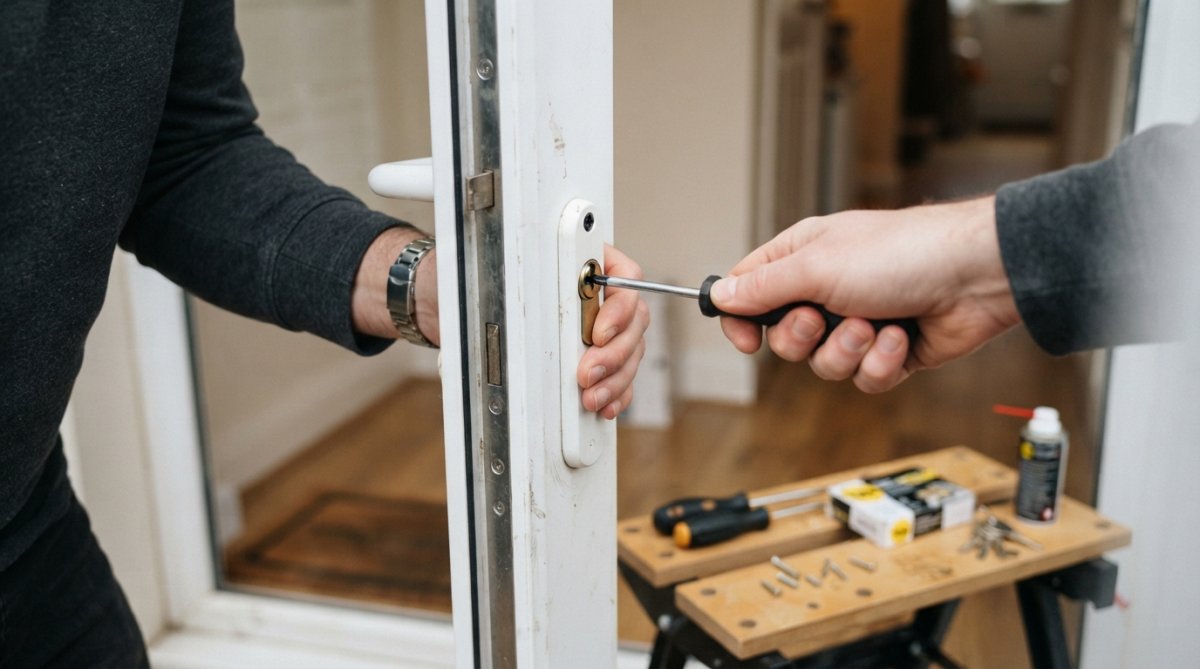
Start by loosening the single fixing screw on the edge of the door, but do not remove it entirely until you have the cylinder supported. Insert your key and turn it slightly to the unlocked position, which retracts the cam and allows the cylinder to slide out. Pull the cylinder towards you, keeping it level.
Slide the new cylinder in with the key turned to match the position of the cam. The cam should sit flush with the face of the lock body. Refit the fixing screw and tighten it gently, then test the lock from both sides using the key and the thumb-turn if fitted. The key should turn smoothly without forcing, and the handle should operate the multi-point locking system without resistance.
Swapping a Mortice Lock
Mortice locks are fitted inside a pocket cut into the edge of the door, so the process begins with removing the handles, escutcheons, and the keeper plate on the frame. Unscrew the two or more screws on the door edge that hold the lock body, then carefully withdraw the mechanism.
Compare your old mortice lock with the new one, checking the backset, which is the distance from the door edge to the centre of the keyhole, and the case depth. If these dimensions differ, the new lock will not fit the existing mortice pocket. Reassemble in reverse order, then test the deadbolt and latch operation. A stiff or misaligned lock suggests the keeper plate needs adjusting.
The Cost of Locksmith to Change Locks Explained
The cost of locksmith to change locks after moving house depends on three variables: the type of lock, the number of locks, and whether you need a standard or emergency visit. To give you a realistic budget, here is what you should expect to pay across typical UK scenarios.
Typical Price Ranges for Common Jobs
For a standard euro cylinder replacement on a uPVC door during normal working hours (Monday to Friday, 9am-5pm), most UK locksmiths charge between £45 and £90 for labour alone. The cylinder itself adds £15 to £60 depending on whether you choose a basic model or a TS 007 3-star anti-snap cylinder. A complete job, including a decent quality cylinder, typically lands between £70 and £150 per door.
For a mortice lock replacement on a timber door, labour costs are higher because the job involves removing handles, escutcheons, and the keeper plate. Expect to pay £80 to £150 for labour, plus £25 to £80 for a BS 3621-approved 5-lever mortice deadlock. Total costs for this job usually fall between £110 and £230.
If you are changing multiple locks across a property, say, a front door, back door, and a patio door, many locksmiths offer a per-lock discount. A common pricing pattern is £60 for the first lock, then £40-£50 for each additional lock, excluding hardware. Always ask for a multi-lock quote rather than multiplying a single-lock price.
Emergency and Out-of-Hours Call-Outs
Emergency call-outs, for lockouts, broken keys, or after-hours work, attract a premium. If you are moving house, avoid emergency pricing by scheduling the lock change during the day, ideally before you take possession of the property.
What the Quote Should Include
A transparent quote should itemise three things: the call-out fee (if any), the labour charge, and the cost of the lock hardware. Some locksmiths quote a single all-in price, which is fine as long as you confirm it includes the cylinder or mortice lock itself. Ask whether the hardware is British Standard certified, a quote that includes a TS 007 3-star cylinder is worth more than one that bundles a budget unbranded cylinder.
DIY vs Professional: The Real Cost Comparison
A DIY euro cylinder swap costs you the price of the cylinder alone plus your time. If you measure correctly and the door is standard, this is often the cheapest route. However, a mis-measured cylinder that you cannot return, or a snapped screw in a uPVC door, can turn a simple job into a more complex repair. A professional installation can provide peace of mind through the guarantee on workmanship and access to high-security hardware.
For an accurate, no-obligation quote for your specific doors, check the N&G Locksmiths Service Ltd pricing page for transparent rates. Always confirm the total price before work begins and ask whether the quoted figure includes the lock or just the labour.
Choosing the Best High Security Door Locks
The best high security door locks for your new home will carry the British Standard kite mark (BS 3621 for mortice locks) or the newer TS 007 3-star rating for cylinders. These certifications indicate the lock has passed rigorous testing against picking, drilling, and the physical attacks common in the UK. Anti-snap, anti-pick, and anti-bump cylinders offer layered protection against specific techniques.
For uPVC and composite doors, a 3-star euro cylinder is the benchmark. These cylinders feature a sacrificial snap line that breaks cleanly under attack, leaving the internal mechanism locked and the burglar unable to open the door. For timber doors, a 5-lever mortice deadlock meeting BS 3621 remains the standard choice, often fitted alongside a multi-point locking system for enhanced security.
Common Mistakes to Avoid When Changing Locks
The most frequent error when homeowners change locks after moving house is ordering the wrong size cylinder, which we have covered, but several other pitfalls can undermine your security upgrade. Avoid these to ensure your new locks perform as intended.
- Ignoring the cam position: The cam offset varies between manufacturers. A cam that is off-centre will misalign with the locking mechanism, causing the handle to jam.
- Over-tightening screws: Stripping the threads on a uPVC door or over-compressing the cylinder can warp the mechanism and cause premature failure.
- Choosing the cheapest option: Budget cylinders often lack anti-snap protection, leaving your new lock vulnerable to the most common attack method.
- Forgetting the internal thumb-turn: For fire safety, ensure you can open the lock from the inside without a key, so you are not trapped in an emergency.
- Skipping the keeper plate adjustment: If the door does not close and lock smoothly, the new lock may not align with the existing keeper, requiring adjustment.
Final Security Checks for Your New Home
Once you have fitted your new locks, run through a final checklist to confirm everything is secure. Test each lock from both inside and outside, ensuring the key turns smoothly and the deadbolt or multi-point hooks fully engage. Check that the door closes flush against the frame with no gaps, and that the hinges are in good condition without signs of forced entry.
Verify Your Insurance Policy Requirements
One of the most overlooked steps after a house move is checking whether your home insurance policy imposes specific lock requirements. Most UK insurers expect that all external doors have locks meeting British Standard BS 3621 (for mortice locks) or TS 007 3-star (for cylinders). Some policies go further, specifying that locks must be fitted by a certified installer or that you notify them of any security upgrades within a set period. If you make a claim after a break-in and the insurer finds the locks were not up to standard, your payout can be reduced or refused entirely. Before you finalise your move, read your policy documents and, if in doubt, call your insurer to confirm your new locks meet their criteria. Keep the receipts and packaging from your new locks as proof of the upgrade.
Address the Master Key and Spare Key Risk
A risk that most moving-house guides ignore is the possibility that the previous owner held a master key system, a single key that operates multiple locks across the property, or even across several properties they own. If the previous occupant was a landlord or property manager, they may have a master key that opens your front door even after you change the cylinder on that one door. This is why you should change every external lock, not just the front door. A back door or patio door left on the old cylinder could still be opened by a key from the previous owner's set. If you are moving into a flat or a property within a managed development, check whether a building-wide master key system exists; if so, ask the management company whether individual flat cylinders can be changed without affecting the master system, and confirm who holds the master keys.
Check for Hidden Spares and Key Tracking
Before you change the locks, do a thorough search of the property for hidden spare keys, under doormats, in plant pots, inside meter cupboards, or taped to the underside of window sills. Previous owners sometimes leave spares for cleaners or gardeners without mentioning them. After you have changed the locks, dispose of the old keys securely; do not leave them in the bin where they could be retrieved. If you have a smart lock or a keyless entry system, reset any codes or paired fobs to factory settings before setting your own passcode, as previous occupants may have saved their own codes.
Assess the Wider Entry Point Security
Consider the wider entry point security of your property. If you have moved into an older home, the door frame itself may be weak even with a new lock. A professional security assessment can identify vulnerabilities you might miss, from worn hinges to inadequate frame reinforcement. For landlords and property managers, changing locks between tenancies is not just good practice but a legal duty of care towards new tenants.
Frequently Asked Questions
Should I change the locks when moving into a new house?
Yes. You cannot know how many copies of the old keys exist. Previous owners, estate agents, builders, or contractors may still have a copy. Changing locks after moving house is a simple, affordable step that guarantees only you control access. For uPVC doors, you typically only need to swap the euro cylinder, which takes minutes. For older wooden doors with mortice locks, a locksmith can fit a new deadbolt or re-pin the existing lock for better key control.
How much does it cost to change locks on a house in the UK?
The cost of changing locks varies based on the lock type and how many you need done. For an accurate price, request a quote from a local locksmith. They can assess your doors and provide a fixed price for the job, including parts and labour.
How do I measure a euro cylinder for my door?
You need to measure the cylinder's length from the centre screw hole to the outside edge on both sides. Measure the outside section (from the screw hole to the outer face) and the inside section (from the screw hole to the inner face). Add these two figures together to get the total length, for example, 40mm outside and 40mm inside equals an 80mm cylinder. Also check the cam position and whether you need a thumb-turn on the inside. If unsure, a locksmith can measure accurately for you.
How long does it take to change a lock?
A simple euro cylinder swap on a uPVC door can take a competent DIYer about 10 to 15 minutes with just a screwdriver. A mortice lock replacement or fitting a new multi-point locking system is more involved and can take an hour or more, especially if the door needs adjustments. Hiring a professional locksmith ensures the job is done correctly and quickly, as they carry the right tools and spare parts for most door types.
Changing locks after moving house is a small task with outsized consequences for your home security and insurance compliance. Whether you choose to measure and fit a new cylinder yourself or call in a professional, the principles remain the same: verify key control, select British Standard hardware, and ensure correct installation. Get started with N&G Locksmiths Service Ltd and secure your new home today.