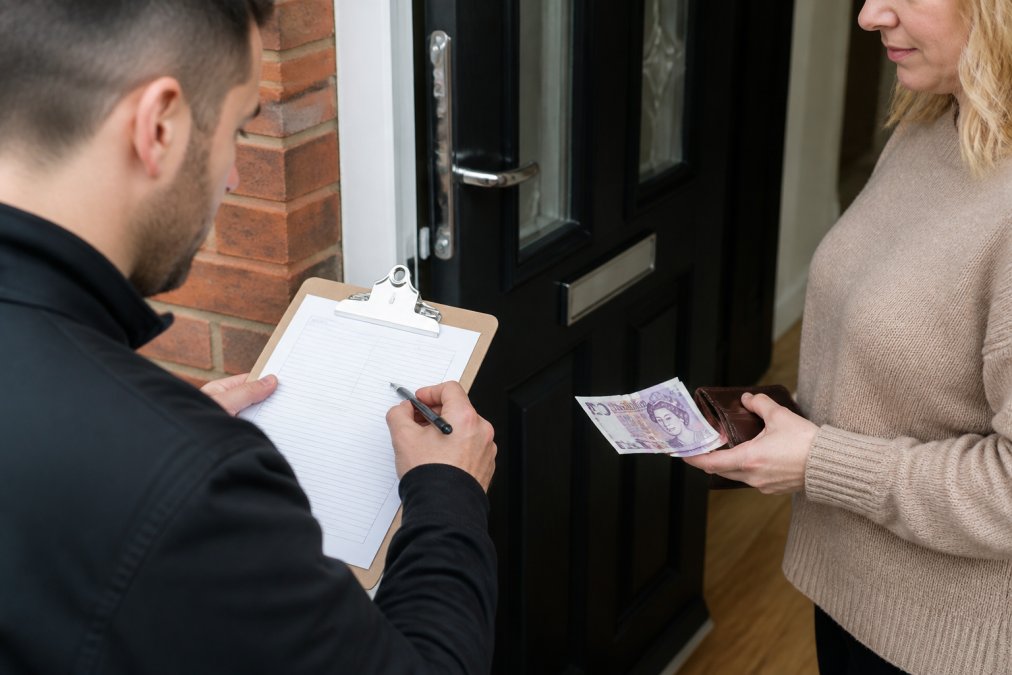
 blog
blog
Emergency Home Lockout Service Cost: 2026 Guide
Table of Contents
- What Drives Emergency Home Lockout Service Cost
- How Emergency Home Lockout Service Cost Is Calculated
- Locksmith Call Out Fee: What You Are Actually Paying For
- Emergency Locksmith Response Time Expectations and Surcharges
- Non-Destructive Entry Locksmith Cost vs Drilling Out a Lock
- Lock Replacement and Hardware: What Adds to the Bill
- Travel Expenses, Mileage and Hidden Fees to Watch For
- How to Avoid Locksmith Scams and Verify Accreditation
- Insurance, Payment and Your Post-Lockout Security Audit
- Conclusion
- Frequently Asked Questions
Last Updated: September 10, 2026
What Drives Emergency Home Lockout Service Cost
The biggest variable in emergency home lockout service cost is not the hourly rate, it is how you get back inside. A simple Yale-style cylinder costs far less than a multi-point uPVC door needing a specialist tool and 40 minutes of work. This guide from N&G Locksmiths Service Ltd breaks down every line on a locksmith invoice, so you know what a fair quote looks like before you dial.
Most homeowners assume the price is fixed. It is not. The final figure depends on the lock type, time of day, travel distance, and whether the technician can open the door non-destructively or must drill the cylinder and replace it.
Below, we show how each charge is built, which fees are legitimate, and which signal a scam.
How Emergency Home Lockout Service Cost Is Calculated
Emergency home lockout service cost is calculated from three core elements: a call-out charge, labour time on site, and any parts required. A fixed price for a standard door opening removes most of the guesswork; an hourly model shifts the risk onto you if the job runs long.
The three pricing models you will meet are:
- Flat fee: one agreed price for a defined job, such as opening a single locked door. Best for budgeting.
- Call-out plus hourly: an attendance charge, then an hourly rate for time on site. Watch the clock.
- Parts and labour: the opening fee plus the cost of any cylinder, handle or mechanism replaced.
Call-Out Fees, Hourly Rates and Flat Pricing Explained
A call-out fee covers travel and mobilising a van, tools and a qualified technician. Some firms charge a separate attendance fee on top of labour; others fold it into one figure. A flat price is the most transparent, the number quoted is the number you pay.
Hourly rates reward speed, which is why a reputable locksmith gives a fixed quote for a standard door opening. If a company insists on hourly billing for a routine lockout, ask for a capped estimate in writing before they set off.
The Parts That Change the Final Invoice
The parts list is where a bill can climb. A replacement euro cylinder is modest; a full uPVC multi-point mechanism is substantial. The lockout service cost quoted over the phone assumes the door opens cleanly, if the mechanism has failed or the key has snapped, expect parts to be added.
- Replacement cylinder lock
- Mortice lock body or sash lock
- uPVC door mechanism and gearbox
- Handles, keeps and security hardware
- Key extraction where a key has broken in the barrel
Locksmith Call Out Fee: What You Are Actually Paying For
A locksmith call out fee pays for the technician's time to reach you, the vehicle, and the professional tools on board. A genuine 24/7 operator keeps a van stocked, insured and staffed around the clock, and the call-out charge makes that possible.
What matters is whether the fee is disclosed upfront. A trustworthy locksmith will state the call-out charge and the expected labour before travelling. N&G Locksmiths Service Ltd operates with no call-out fee and upfront pricing, so the figure you are given is the figure you pay, with no hidden fees added on arrival.
Emergency Locksmith Response Time Expectations and Surcharges
Emergency locksmith response time expectations vary by location and time of day. A local operator can typically reach a standard residential address within about 30 minutes; rural postcodes and peak-hour traffic add to that (peer-reviewed research). When you call, ask for an estimated arrival time and a name, then hold them to it.
Response time is also a pricing lever: the faster you need someone, the more likely a priority or after-hours surcharge applies. A weekday-morning lock change always costs less than a middle-of-the-night emergency call.
After-Hours, Weekend and Bank Holiday Rates
After-hours, weekend and bank holiday rates are higher because the technician is working unsocial hours. Expect an evening or overnight call to carry a surcharge, with Sundays and public holidays at the top of the scale. This is normal, not a red flag.
The red flag is a surcharge that appears only at the end. A professional locksmith tells you the after-hours rate when you book. If you are quoted a daytime figure and then charged a night rate on arrival, that is a bait-and-switch.
| Pricing Scenario | When It Applies | Expected Premium |
|---|---|---|
| Standard weekday daytime | 9am to 5pm, Mon to Fri | Base rate |
| Evening call-out | After 5pm, weekdays | Moderate surcharge |
| Weekend rate | Saturday and Sunday | Higher surcharge |
| Bank holiday rate | Public holidays | Highest surcharge |
Non-Destructive Entry Locksmith Cost vs Drilling Out a Lock
Non-destructive entry is almost always cheaper than drilling. A skilled locksmith manipulates the cylinder and opens the door without damaging it, so you pay for labour only and keep your existing lock. Drilling destroys the cylinder and adds a replacement part to the bill.
Drilling is unavoidable when the lock has seized, the key has snapped inside the barrel, or the mechanism has failed internally. In those cases non-destructive methods will not work, and an honest locksmith will explain why before reaching for the drill.
- Non-destructive entry: higher skill, lower total cost, lock survives
- Drilling: faster in a failure, but you pay for a new cylinder
- Key extraction: a middle path when a key is broken but the lock still functions
Lock Replacement and Hardware: What Adds to the Bill
Lock replacement and hardware are the largest optional costs in any lockout. If your door opens cleanly, you pay for entry only. If the mechanism is worn or the lock is compromised, you may replace it on the spot, and a euro cylinder differs sharply from a full uPVC mechanism.
Replacing a lock after a lockout is often sensible, particularly if the key was lost rather than left inside, a lost key is a security risk, and a fresh cylinder restores control of who can enter. Get a fixed price for any part before work begins.
Cylinder, Mortice and uPVC Door Mechanism Costs
Cylinder, mortice and uPVC door mechanism costs sit at different points on the scale. A euro cylinder is the simplest and cheapest swap. A mortice lock takes more labour because it is set into the door edge. A uPVC multi-point mechanism is the most involved, since the gearbox and often the full strip must be replaced.
- Euro cylinder lock: quickest swap, single component
- Mortice lock: set into the door, more fitting time
- uPVC door mechanism: gearbox and multi-point strip, highest parts cost
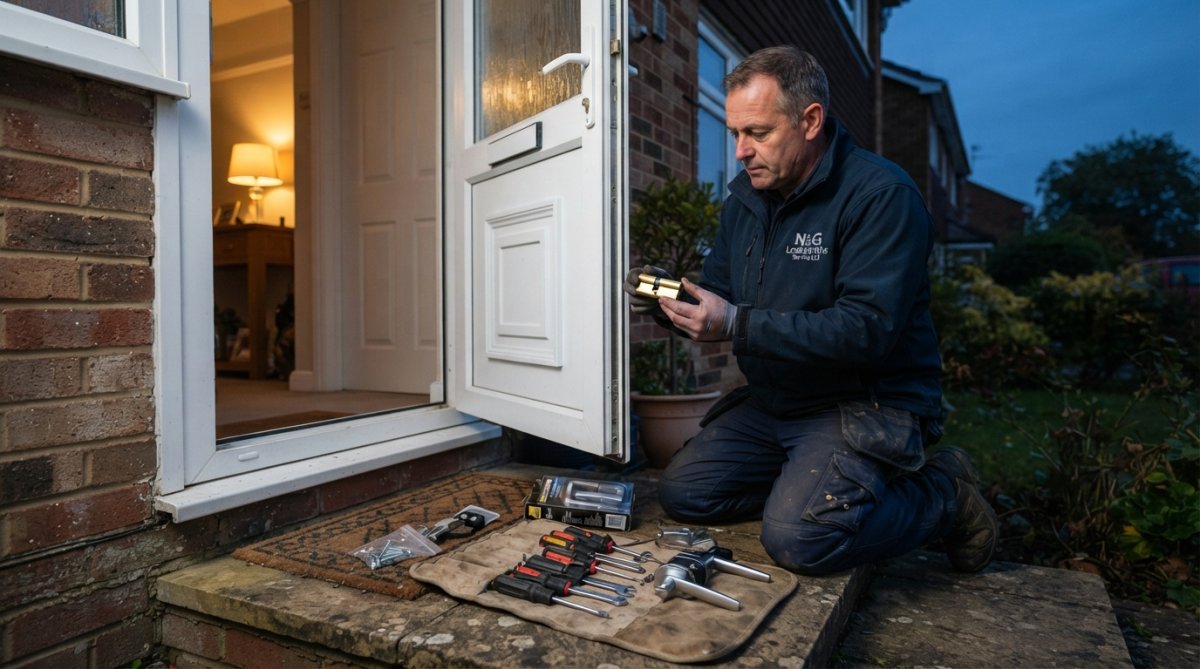
Travel Expenses, Mileage and Hidden Fees to Watch For
Travel expenses and mileage are legitimate outside a locksmith's normal coverage area, but they should be quoted before the job. A local operator covering a defined service area usually absorbs travel into the call-out charge. A firm that adds mileage after the fact is one to avoid.
How Travel and Mileage Are Normally Charged
There are three common models, and the one you are quoted tells you a lot about the firm:
- Absorbed into the call-out fee: the most common for a local operator working a defined radius. You pay one figure regardless of distance within that area.
- Free within a radius, then per mile: for example, free within 10 miles of the base, then a per-mile charge beyond that. Ask what the radius is and what the per-mile rate is.
- Flat travel charge: a single fee added to every job, regardless of distance. Transparent, but check it is not also hidden inside the call-out figure.
A genuine operator will tell you which model applies and give the total before travelling. If the answer is vague, call someone else.
Hidden Fees to Watch For
Watch for these, and ask about each one explicitly when you book:
- Mileage charged per mile beyond a stated radius that was never disclosed
- A separate "attendance" fee on top of an already-quoted call-out
- VAT added only at the end of the invoice, turning a £90 quote into £108
- Charges for "specialist tools" that should be standard kit on any van
- A parts markup that was never mentioned when the replacement was discussed
- A "priority" or "rapid response" uplift applied without being quoted upfront
- A card surcharge added at the point of payment
How to Lock In a Fair Price Before Anyone Travels
Ask for a fixed, VAT-inclusive quote before the locksmith travels. It should state:
- The total you will pay, including VAT
- What is included, call-out, labour, and any parts
- What could change the price, and by how much
- The company's name, address and contact number
- Whether the technician carries identification and public liability insurance
If the final invoice does not match the quote, you have grounds to dispute it. Under the Consumer Rights Act 2015, a price not agreed in advance must be reasonable, and services must be carried out with reasonable care and skill (legislation.gov.uk). A written quote, or one confirmed by text, is your evidence.
If the Price Changes on Arrival
If the technician quotes a higher figure than you were given, you are not obliged to proceed. Decline the work, pay nothing if no work has been done, and call another firm. If work was carried out at a price you did not agree, pay under protest, keep the itemised invoice, and complain in writing. If the business is a trade body member, escalate to that body; otherwise contact the Citizens Advice consumer service, which can refer the matter to Trading Standards.
Paying by credit card for amounts over £100 can give you protection under Section 75 of the Consumer Credit Act 1974 if the service is not as agreed (legislation.gov.uk). Debit card payments may be eligible for a chargeback through your bank, though the rules and time limits differ.
N&G Locksmiths Service Ltd operates with no call-out fee and upfront pricing, so the figure you are given is the figure you pay, with no hidden fees added on arrival.
How to Avoid Locksmith Scams and Verify Accreditation
Avoiding locksmith scams comes down to verification before you commit. Ask for the company name, a contact number, and proof of accreditation and insurance before anyone travels. A legitimate locksmith will provide these; a scam operator will deflect or pressure you to decide immediately.
Check that the business is a member of a recognised trade body and carries public liability insurance. Confirm the technician's identity on arrival before letting them in. N&G Locksmiths Service Ltd is fully licensed and insured, with certified professionals, so you can verify who is at your door before you open it.
Insurance, Payment and Your Post-Lockout Security Audit
Insurance coverage for a lockout is the question most homeowners ask only after the invoice lands. Whether you can recover the cost depends on your policy, what it lists as a covered event, and whether you can produce the paperwork the insurer asks for.
Will Your Home Insurance Pay for a Lockout?
Standard buildings and contents policies rarely list "lockout" as a named peril. They may cover the consequence of a covered event, a break-in where the cylinder was forced, or storm damage that left a door unsecured. In those cases lock replacement is usually claimable, but a straightforward lockout where you left the keys inside is normally excluded as a maintenance matter.
A common pattern is a policy that covers:
- Forced entry following a burglary, where the lock must be replaced to restore security
- Damage to the door or frame caused by a covered event such as a storm or flood
- Loss of keys where the policy explicitly lists "replacement of external door locks following key loss"
And excludes:
- A routine lockout with no damage and no lost key
- Wear-and-tear failures on an ageing mechanism
- Call-out charges where no insured peril applies
Check the policy schedule and the general exclusions before you assume you are covered. If in doubt, call the insurer's claims line and ask whether a lockout attendance is a covered event, get the answer and a reference number before the locksmith arrives.
Motor Breakdown and Card Benefits
Some motor breakdown policies include a home lockout benefit, usually as an add-on. It typically pays a fixed contribution toward a call-out, capped at a set amount, and often only for the vehicle's registered keeper. Read the small print: many exclude home lockouts entirely and cover only keys locked inside the car.
Certain credit cards and packaged bank accounts bundle "emergency home assistance". These schemes work through a nominated provider, so you must call the scheme's number first rather than choosing your own locksmith, if you call your own tradesperson, the benefit will not pay out. Check your card's benefits guide or packaged account terms for a home emergency helpline number.
What an Insurer Needs From You
If you intend to claim, the invoice is the claim. Ask the locksmith for an itemised invoice that shows:
- The company name, address and, where applicable, VAT registration number
- The date and time of attendance
- A breakdown of the call-out, labour and any parts supplied
- The lock type replaced and the part reference where one exists
- A note of whether entry was destructive or non-destructive
A single-line invoice saying "locksmith services, £X" is often rejected because the insurer cannot verify what was done. Ask for the itemised version before you pay, not after.
Payment Methods and Your Consumer Rights
Most reputable locksmiths accept card payment on site, which gives you a transaction record and, for credit card payments over £100, potential protection under Section 75 of the Consumer Credit Act 1974. Cash-only demands, especially for a figure that has changed from the quote, are a warning sign.
If you are charged more than the quoted price, you have rights under the Consumer Rights Act 2015: services must be performed with reasonable care and skill, and the price must be reasonable where it was not agreed in advance. For a disputed invoice, complain in writing, keep the itemised invoice, and use the trade body's dispute resolution route if applicable. You can also report the matter to Trading Standards through the Citizens Advice consumer service.
Post-Lockout Security Audit
Once you are back inside, spend five minutes checking the door rather than assuming the job is finished:
- Confirm the door locks and latches correctly, with no play in the handle
- Check the cylinder turns smoothly and the key is not stiff in the barrel
- Replace the lock if a key was lost rather than left inside, a lost key is a standing risk
- Test any multi-point mechanism through a full open-and-close cycle
- Confirm the door aligns with the frame and does not need lifting to lock
- Note the invoice reference and the guarantee terms in case of a later claim
A 12-month guarantee on parts and workmanship gives you recourse if something fails after the visit. N&G Locksmiths Service Ltd backs its work with a 12-month guarantee, so a faulty repair is covered rather than charged again.
Conclusion
A lockout is stressful enough without a bill that spirals once the technician is inside. The fix is simple: insist on a fixed, VAT-inclusive quote before anyone travels, verify accreditation and insurance, and ask for non-destructive entry first. That removes almost every opportunity for a hidden fee.
N&G Locksmiths Service Ltd is a family-run, 24/7 locksmith with no call-out fee, a 30-minute response target, and a 12-month guarantee on workmanship. Our certified professionals carry the tools to open most doors non-destructively and the parts to replace a cylinder or mechanism on the spot. Get started with N&G Locksmiths Service Ltd and know your price before we arrive.
Frequently Asked Questions
How much should an emergency locksmith cost?
There is no single figure because emergency home lockout service cost depends on the time of day, your location, the lock type and whether the door can be opened without damage. A daytime call-out to a standard cylinder lock sits at the lower end; nights, weekends and bank holidays add a surcharge. Ask for a fixed price quote before work begins and confirm whether the figure includes VAT, parts and travel.
Why are emergency locksmiths so expensive?
The price reflects availability rather than the time on site. A locksmith who answers at 2am keeps a van stocked, holds accreditation and insurance, and pays staff to be on standby. Emergency locksmith response time expectations of 30 to 60 minutes mean someone is always available. You are paying for that readiness, the locksmith tools carried, and the skill to open a door without destroying it.
Do you have to pay a locksmith straight away?
Most locksmiths expect payment on completion, once the door is open and you have seen the work. Card and bank transfer are common; cash is often accepted but ask first. Request a locksmith invoice showing labour, parts, travel and VAT before you pay. Reputable firms will not demand payment upfront before attending, and they will not pressure you into extra work you did not request.
Are there extra charges for out-of-hours locksmith services?
Yes. After-hours surcharge rates typically apply from early evening through to morning, with higher rates on weekends and bank holiday rates on public holidays. A locksmith call out fee may also increase outside standard hours. Ask the operator to confirm the total before they set off, so the figure you agree is the figure on the invoice when they arrive.