 blog
blog
Best Locksmiths in Suffolk Area: 2026 Guide
Table of Contents
- What Makes a Locksmith the Best Choice in Suffolk
- Signs of a Trustworthy Mobile Locksmith Service
- How to Verify a Locksmith's Credentials Before You Book
- Emergency Locksmith Call-Out Cost: What You Should Expect
- Services Offered by the Best Locksmiths in Suffolk Area
- BS3621 and UK Security Standards: What Your Locks Should Meet
- DIY Lock Maintenance Tips to Avoid Emergency Call-Outs
- Seasonal Security Advice for Suffolk Homes and Businesses
- Conclusion
- Frequently Asked Questions
Last Updated: September 21, 2026
What Makes a Locksmith the Best Choice in Suffolk
Finding the best locksmiths in suffolk area starts with one question: can they prove what they claim? A trustworthy locksmith carries visible credentials, publishes clear pricing, and arrives in a marked vehicle with identification ready. At N&G Locksmiths Service Ltd, we've built our family-run service around exactly that standard, serving homes, businesses, and drivers across the region with 24/7 emergency cover.
The locksmith trade has a trust problem. Anyone can buy a van, print a logo, and advertise as a "master locksmith" within a week. That's why the best locksmiths in suffolk area distinguish themselves through verification, not marketing spend.
Three things separate a genuinely good locksmith from a risky one:
- Verifiable credentials you can check before they arrive
- Transparent pricing quoted upfront, not invented at your door
- Local accountability that comes with a fixed service area and a real reputation to protect
Below, we'll show you exactly how to separate the two, what an emergency call-out should involve, and how to avoid paying over the odds. The key is knowing what to ask before you're locked out, not after.
Signs of a Trustworthy Mobile Locksmith Service
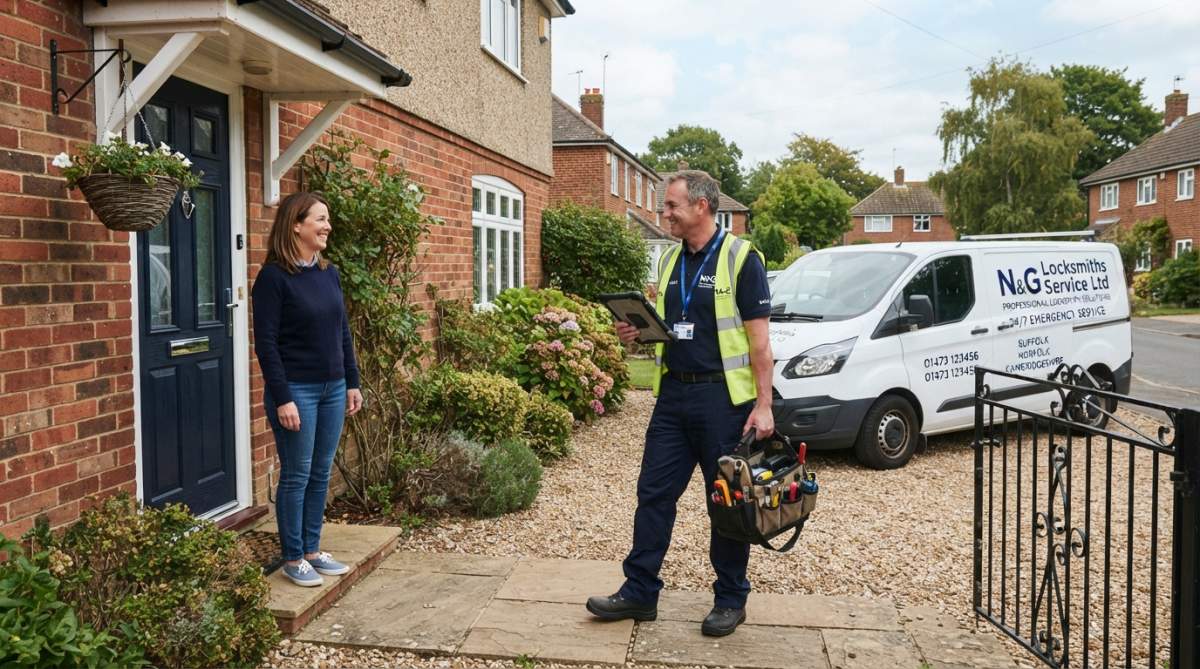
The clearest sign of a trustworthy mobile locksmith service is that they invite scrutiny. A legitimate operator will happily confirm their insurance, trade body membership, and identity before attending. One that dodges those questions is telling you something important.
Look for these markers when you call:
- A landline or business number, not just a mobile
- A branded van rather than an unmarked car
- Willingness to give a full name and company registration
- A written quote before work begins
- A fixed local address and service area
A common mistake is assuming a low quote signals a good deal. In practice, unusually cheap call-outs often precede inflated on-site charges once you're locked out and have no alternative.
Vetted, Insured, and Family-Run Operations
Family-run locksmith businesses tend to be more accountable than anonymous national call centres. A local operator depends on repeat custom and word of mouth, so reputation matters. Many customers find that a family-run team answers the phone personally, arrives when they say they will, and stands behind the work.
Insurance is the non-negotiable part. Ask for proof of public liability cover before any work starts. If a lock is damaged during a botched job, that cover is what protects you.
How to Verify a Locksmith's Credentials Before You Book
Verification takes about five minutes and prevents most locksmith problems. Ask for the company's full name, then check it against official registers before agreeing to anything.
Checking Insurance, DBS, and Trade Body Membership
Start with insurance. Request a copy of the public liability certificate, or ask for the policy number and insurer. Legitimate businesses hold this documentation and share it without hesitation.
Next, check trade body membership. Organisations such as the Master Locksmiths Association set competency and conduct standards for members, and membership can be confirmed directly with the body. A DBS check matters if the locksmith will work inside your home unsupervised, particularly for landlords and property managers arranging access.
The Master Locksmiths Association membership directory lets you confirm whether a claimed member actually appears on the register.
A simple verification checklist:
- Full company name and registration number confirmed
- Public liability insurance certificate seen
- Trade body membership checked on the official register
- DBS check confirmed for anyone entering your property
- Written quote received before work starts
- 12-month guarantee on parts and labour in writing
Emergency Locksmith Call-Out Cost: What You Should Expect
Emergency locksmith call-out cost depends on the time of day, the type of lock, and whether the job needs non-destructive entry or a full replacement. Reputable locksmiths quote before attending, so you know the figure before anyone sets off. The problem is that most directories list locksmiths without ever telling you what a fair price looks like, which leaves you guessing at the door.
Pricing should be built from a few clear components:
| Cost Component | What It Covers | When It Applies |
|---|---|---|
| Call-out charge | Travel and attendance | Every visit, unless waived |
| Labour rate | Time on site | Standard and out-of-hours rates differ |
| Parts | Locks, cylinders, keys | Only if replacement is needed |
| Out-of-hours premium | Evening, weekend, bank holiday cover | Jobs outside standard hours |
Typical Price Ranges You Should Recognise
Exact figures vary by operator, lock type and location, but the bands below reflect what most practitioners in the region quote. Treat them as a sanity check, not a fixed tariff, and always ask for the figure in writing before anyone sets off.
- Standard daytime call-out: a modest attendance fee, often waived by operators who build the cost into the labour rate
- Out-of-hours call-out: a premium on top of the standard rate, typically higher at weekends and on bank holidays
- Non-destructive entry: usually charged at the labour rate alone, because no parts are consumed
- Lock replacement: the labour rate plus the cost of the cylinder or lock body, which varies widely by security rating
- Auto key programming: priced per key and by vehicle system, and usually the most expensive single job a mobile locksmith handles
A common pattern is a low headline call-out fee paired with a high on-site labour rate. The two figures only make sense together, so ask for both.
Some businesses, including N&G Locksmiths Service Ltd, charge no call-out fee at all, which removes the most common source of dispute. The Citizens Advice guidance on resolving service disputes is worth reading if a tradesperson adds charges you never agreed to.
Questions to Ask Before You Agree to Anything
Ask three questions on the phone: is there a call-out fee, what is the hourly rate, and what happens if the lock can't be opened without damage. The answers tell you more than any review score. Add two more if the job involves parts: is the replacement lock included in the quote, and is the guarantee on parts and labour in writing.
What Drives the Price Up or Down
The single biggest variable is whether entry can be non-destructive. A lock that opens with the right technique costs labour only; a lock that has to be drilled costs labour plus a replacement cylinder, and often a second visit. Time of day is the second variable, and lock type is the third, because anti-snap and high-security cylinders take longer to work on than a basic rim lock.
If a quote seems unusually low, ask what it excludes. If it seems unusually high, ask for the breakdown. A locksmith who can explain the components is almost always the safer choice.
Services Offered by the Best Locksmiths in Suffolk Area
A full-service locksmith handles far more than lockouts. The best locksmiths in suffolk area cover residential, automotive, and commercial work, often within a single visit, and they can explain what each job actually involves rather than just listing a service name.
Residential, Auto, and Safe Opening Services
Residential work covers lock replacement, uPVC door repairs, security upgrades, and lock repair for worn or stiff mechanisms. Non-destructive entry is the goal wherever possible, preserving both the lock and the door. Common residential jobs include:
- Lockouts: entry through the existing lock using picking or bypass techniques, with no drilling where the mechanism allows
- Cylinder upgrades: swapping a basic euro cylinder for an anti-snap, anti-drill, anti-pick unit, which is the single most effective upgrade on a uPVC door
- uPVC door repairs: realigning hinges and multipoint locking gear that has dropped or jammed, often cheaper than replacing the door
- Mortice lock replacement: fitting a five-lever lock to a final exit door, which is the type most insurers expect to see
- Handle and strike plate work: tightening or replacing hardware before it wears the mechanism out of alignment
Auto locksmith services include vehicle entry, broken key extraction, key cutting, and key programming for modern transponder systems. This requires diagnostic equipment that general locksmiths often don't carry, and it is one of the few jobs where a generalist will usually refer you on rather than attempt it.
Safe opening is a specialist skill. It demands patience and the right tools rather than brute force, and a good technician will talk you through the approach before starting. The method depends on the safe: manipulation for a dial lock, drilling only as a last resort, and often a repair or reset afterwards.
Commercial and Landlord Work
Business and landlord jobs differ from domestic ones because access, compliance and record-keeping matter as much as the lock itself. Typical work includes master key systems so one key opens several doors while others stay restricted, access control for staff entrances, and emergency call-outs for premises that cannot be left unsecured overnight. Landlords arranging access for tenants should confirm the locksmith holds a current DBS check, since the technician will be working inside an occupied home.
What a Single Visit Can Cover
A mobile locksmith carrying all three disciplines saves you calling separate specialists for a house lockout, a car key problem, and a stubborn safe. In practice, the jobs that combine well are a lockout plus a cylinder upgrade, or a key extraction plus a spare key cut on the spot. Jobs that need a second visit are usually those requiring a specific part that isn't carried on the van, so ask whether the required lock is stocked before booking.
BS3621 and UK Security Standards: What Your Locks Should Meet
BS3621 is the British Standard for thief-resistant locks, and it's the benchmark your home insurance policy may reference. A lock meeting this standard resists drilling, picking, and cutting far better than a basic cylinder.
Why it matters in practice: many insurers require BS3621-rated locks on final exit doors as a condition of cover. If your locks don't meet the standard, a claim could be reduced or refused. Check your policy wording, then check your locks.
The British Standards Institution guidance on BS3621 explains what the standard tests for. In short, it covers resistance to attack, key security, and durability.
What to look for on your own doors:
- A British Standard kitemark or BS3621 marking on the lock face
- A minimum of five levers on mortice locks
- Anti-snap, anti-drill, and anti-pick cylinders on uPVC doors
- Security handles and a five-lever lock on the final exit door
DIY Lock Maintenance Tips to Avoid Emergency Call-Outs
Most emergency call-outs are preventable. Locks rarely fail without warning, and the signs are usually visible weeks in advance.
Simple maintenance that works:
- Lubricate twice a year with a graphite-based lock lubricant, never oil, which attracts grit
- Tighten loose handles and screws before they work the mechanism out of alignment
- Check the strike plate for wear and adjust if the door catches
- Test every key you own on each lock, including spares
- Watch for stiffness in cold weather, which signals a failing cylinder
A common mistake is forcing a stiff key. That bends the key and damages the pins inside the lock, turning a small maintenance job into a full replacement.
Seasonal checks matter too. Before winter, test all external locks and clear any debris from the door frame. It takes ten minutes and prevents the majority of cold-weather lockouts.
Seasonal Security Advice for Suffolk Homes and Businesses
Security needs change with the calendar, and most break-ins follow predictable seasonal patterns.
Autumn and winter: darker evenings give cover to opportunists. Use timer switches, keep entry points well lit, and check that garden gates and side doors are locked. This is peak season for lockouts too, as cold makes older mechanisms stiff.
Spring and summer: open windows and garden access create new entry points. Fit window locks on ground-floor openings and never leave keys visible through glass.
Holiday periods: empty properties are obvious targets. Ask a neighbour to collect post, use light timers, and consider a key-holding arrangement with a trusted local locksmith rather than hiding a spare key outside.
For businesses, review access control before quiet trading periods and make sure the person holding the emergency contact number actually answers it.
Conclusion
Lockouts and security scares rarely arrive at convenient times, and the wrong locksmith can turn a stressful hour into an expensive week. The fix is preparation: verify credentials before you need them, know what a fair call-out involves, and keep your locks maintained so emergencies stay rare.
N&G Locksmiths Service Ltd is a family-run business offering 24/7 emergency cover, no call-out fee, a 30-minute response time, and a 12-month guarantee on all work. Fully licensed and insured, our certified professionals handle everything from lockouts and lock replacement to auto key programming and security upgrades.
Get started with N&G Locksmiths Service Ltd and secure your property with workmanship you can verify.
Frequently Asked Questions
How do I choose a reputable locksmith?
Start by checking whether the locksmith is fully insured and holds relevant trade certifications. Look for a local, family-run business with verifiable customer reviews and a clear pricing structure. A trustworthy mobile locksmith service will offer a free quote upfront, provide a guarantee on workmanship, and never pressure you into unnecessary replacements. Ask for their credentials before they arrive and confirm they carry public liability insurance.
How much does an emergency locksmith call-out cost?
Emergency locksmith call-out cost varies depending on the time of day, your location, and the type of lock involved. Some providers charge a separate call-out fee while others, like N&G Locksmiths Service Ltd, charge no call-out fee and quote upfront. Always ask for a clear quote before booking so you know exactly what you will pay. Prices are typically higher for late-night, weekend, or bank holiday emergencies.
How do I verify if a locksmith is reputable?
Verify a locksmith's credentials by asking for their insurance certificate, checking for trade body membership, and confirming they carry a DBS check if they work alone in your home. Look for a physical business address and a landline number, not just a mobile. Read independent customer reviews and ask whether they offer a written guarantee. A legitimate locksmith will happily provide all of this before you commit.
Are there specific security standards for residential locks in the UK?
Yes. The main standard for residential door locks is BS3621, which sets requirements for resistance to drilling, picking, and forced entry. Many home insurance policies require BS3621-compliant locks on external doors. For uPVC doors, locks should meet the relevant British Standard for that door type. When upgrading home security, ask your locksmith whether the replacement lock meets BS3621 and whether it is insurance approved.