 how-to
Are 12-Month Locksmith Guarantees Reliable?
Table of Contents
- What a 12-Month Locksmith Guarantee Actually Covers
- How to Spot a Locksmith Scam Before You Hire
- Locksmith Accreditation in the UK: What Credentials Matter
- Emergency vs. Non-Emergency Guarantee Differences
- Average Cost of Lock Replacement and Guarantee Value
- Questions to Ask Before Hiring and What to Do If a Repair Fails
- Statutory Rights and Consumer Protection Beyond the Guarantee
- Frequently Asked Questions
Last Updated: September 1, 2026
What a 12-Month Locksmith Guarantee Actually Covers
A 12-month locksmith guarantee is a promise to repair or replace work at no additional cost if something goes wrong within that timeframe. However, not all guarantees cover the same things. A well-structured guarantee specifies exactly what's covered: faulty workmanship, defective parts, or both. Some exclude damage from misuse, attempted break-ins, or normal wear and tear.
When you hire a locksmith, you're typically getting two separate protections: one covering the parts (lock, cylinder, or hardware) and one covering the labour (installation or repair work). Understanding which one your guarantee protects is essential, because they rarely work the same way.
Parts vs. Labour Warranties
Parts warranties cover defects in the lock, cylinder, or security hardware itself. If a lock fails due to a manufacturing fault, the mechanism jams, or internal springs break, the parts warranty typically covers a replacement. Most quality locks carry a manufacturer's warranty of 2-5 years, which often extends beyond the locksmith's own 12-month guarantee.
Labour warranties cover the quality of installation or repair work. If the locksmith installed your lock incorrectly and it fails because of poor workmanship, the labour warranty should cover the cost of fixing it at no charge. However, labour warranties rarely extend as long as parts warranties. Many locksmiths offer 12 months on labour but only cover parts under the manufacturer's original warranty.
If a lock fails and you can't prove whether it's a parts defect or poor installation, disputes arise. A reputable locksmith will investigate at no cost.
The Legal Distinction Between Guarantee and Warranty
A warranty is a legal promise built into the sale of goods. Under the Consumer Rights Act 2015, every product sold in the UK comes with an implied warranty that it's fit for purpose and of satisfactory quality (citizensadvice.org.uk). This applies to locks and hardware. If a lock fails within a reasonable time (typically 6 months), you have the right to a refund or replacement under consumer law, regardless of what the locksmith's paperwork says.
A guarantee is a voluntary promise offered by the seller or manufacturer. It's an extra layer of protection on top of your legal rights. A locksmith's 12-month guarantee is a commercial promise, not a legal requirement.
Your statutory rights under consumer protection law are stronger than any commercial guarantee. If a locksmith's 12-month guarantee excludes something, but consumer law would protect you anyway, the law wins. For example, if a locksmith claims their guarantee doesn't cover "normal wear and tear" but a lock fails after 8 months due to a manufacturing defect, you can still claim under the Consumer Rights Act.
Consumer Rights Act 2015 guidance outlines your statutory rights when goods fail. Most people don't realise they have these protections, which means many locksmiths get away with refusing repairs that consumer law would actually require them to make.
How to Spot a Locksmith Scam Before You Hire
The locksmith industry attracts rogue traders because emergency situations create urgency and reduce scrutiny. When you're locked out, desperation clouds judgment. Scammers exploit this by inflating prices, using high-pressure tactics, or offering guarantees they never intend to honour.
Red Flags That Signal Trouble
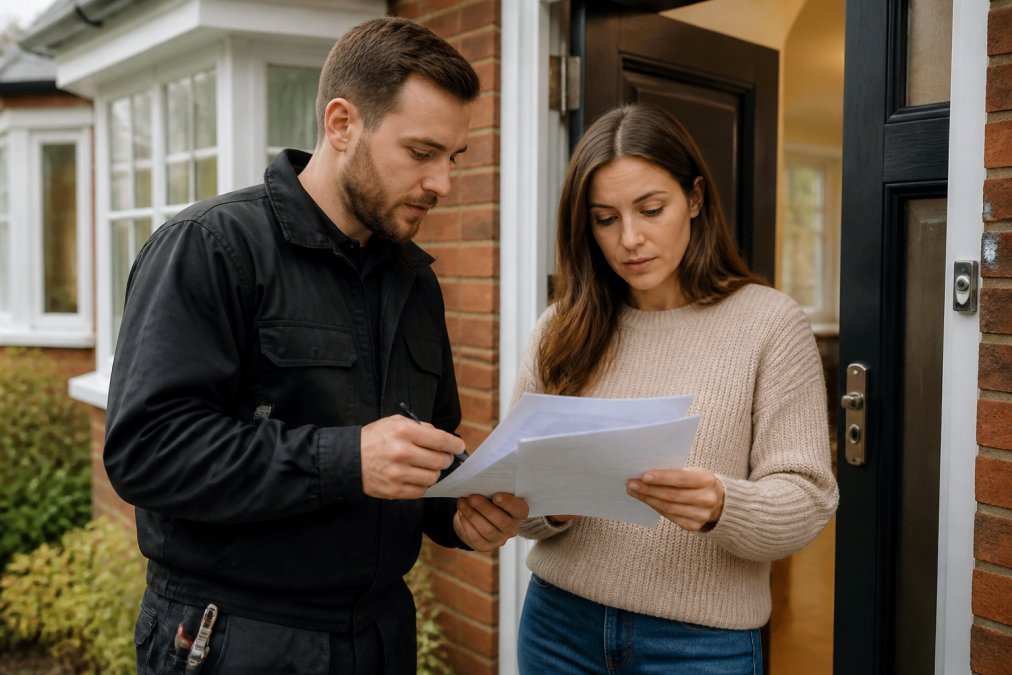
A legitimate locksmith will provide a written quote before starting work, specifying labour cost, parts cost, and call-out fees separately. If a locksmith refuses to give you a quote in writing, that's a major red flag.
Hidden fees are a classic scam. A locksmith might quote £50 for a call-out, then add £30 for "after-hours surcharge," £40 for "diagnostic fee," and £25 for "travel." Legitimate locksmiths advertise upfront pricing with no hidden call-out fees.
Pressure to pay cash immediately is another warning sign. Rogue traders demand cash on the spot because it leaves no paper trail. Legitimate locksmiths accept card payments, cheques, and bank transfers, providing receipts and invoices.
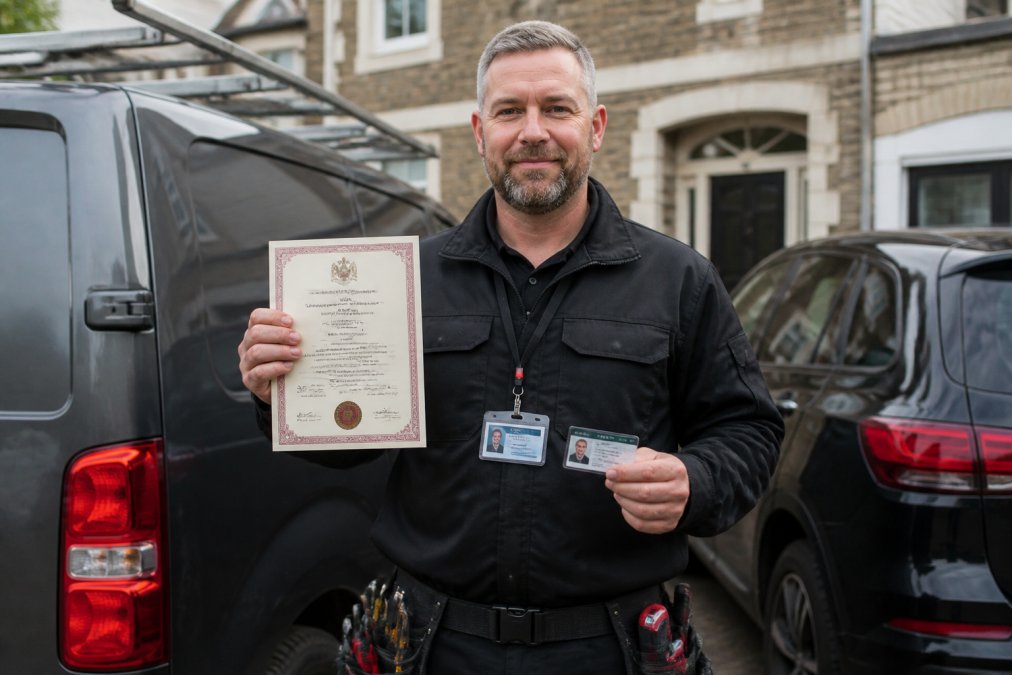
Be wary of locksmiths who arrive in unmarked vehicles or without visible identification. Professional locksmiths carry ID badges, wear branded uniforms, and drive vehicles with their business name clearly displayed.
A guarantee that sounds too good to be true probably is. "Lifetime guarantee on all work" sounds reassuring until something fails and the locksmith claims it's due to "customer misuse." Realistic guarantees are specific: "12 months on labour, manufacturer's warranty on parts," with clear exclusions.
Documenting the Guarantee in Writing
Never rely on a verbal promise. Before any work begins, insist on a written quote that includes:
- The exact work being performed
- Labour cost and parts cost, listed separately
- The guarantee period (e.g., "12 months on labour")
- What's covered (faulty workmanship, defective parts, or both)
- What's excluded (accidental damage, attempted break-ins, misuse)
- The call-back policy
- How to claim the guarantee
Once work is complete, get a receipt with the same information. Take photographs of the installed lock. Keep all documentation in a safe place.
Locksmith Accreditation in the UK: What Credentials Matter
The locksmith industry in the UK is largely unregulated, meaning anyone can call themselves a locksmith without formal training. This is why accreditation matters.
Verified Credentials and Trade Membership
The Master Locksmiths Association (MLA) is the gold standard. Members have undergone background checks, hold relevant qualifications, and agree to a code of conduct. If a locksmith displays the MLA logo, that's a strong signal they're legitimate.
The Association of British Investigators (ABI) also certifies locksmiths who meet strict standards. Membership requires proof of competence, insurance, and a clean background.
Look for locksmiths who hold National Qualifications Framework (NQF) Level 2 or 3 in locksmithing or security. These qualifications require formal training and assessment.
Insurance is non-negotiable. A legitimate locksmith carries public liability insurance and professional indemnity insurance. Always ask to see proof of insurance before they start work.
Verify credentials independently. Contact the MLA or relevant trade body directly and check whether the locksmith is listed as a member in good standing. Many rogue traders display fake credentials or claim membership they don't actually have.
Emergency vs. Non-Emergency Guarantee Differences
Emergency call-outs happen under pressure and time constraints. Because of this, emergency guarantees are often narrower. A locksmith might guarantee that the lock they install will work, but not that it's the exact model you wanted.
Non-emergency work, scheduled lock replacement or security upgrades, happens during normal business hours with time to plan. Guarantees for this work are typically broader because the locksmith has more control over the outcome.
Many locksmiths offer a 30-day call-back guarantee for emergency work: if the lock fails within 30 days due to faulty installation, they'll return and fix it free. For non-emergency work, the guarantee extends to 12 months. This tiered approach is standard and reasonable.
Emergency work also often excludes certain guarantees. If a locksmith picks a lock to get you in, they might not guarantee that the lock still works perfectly afterward, as picking can sometimes damage internal mechanisms. A legitimate locksmith will explain this upfront.
Average Cost of Lock Replacement and Guarantee Value
Lock replacement costs vary significantly depending on the type of lock, the door, and your location. A basic pin-tumbler lock for an internal door costs less than a high-security mortice lock for an external door.
The guarantee adds value only if you understand what it actually protects. A 12-month guarantee on labour is often more valuable than one on parts, because labour mistakes happen more frequently than parts failures.
When comparing quotes from different locksmiths, don't just look at the total price. Compare what's guaranteed. A locksmith charging £150 with a 12-month guarantee on labour and parts is often better value than one charging £120 with a 30-day guarantee on labour only.
Questions to Ask Before Hiring and What to Do If a Repair Fails
Before you commit to a locksmith, ask these questions:
"Can you provide a written quote before starting work?" A yes is essential.
"What's included in your 12-month guarantee?" They should specify parts, labour, or both, and list exclusions clearly.
"Are you insured?" Ask to see proof of public liability and professional indemnity insurance.
"Are you accredited?" Ask which trade body they're a member of and verify this independently.
"What's your call-back policy if something goes wrong?" They should commit to a return visit at no charge if the fault is their responsibility.
"Do you offer emergency services?" Confirm they provide 24/7 availability and ask what the after-hours rate is.
"Can I pay by card?" Cash-only locksmiths are a red flag.
Verification Steps and Call-Back Policies
If a repair fails within the guarantee period, contact the locksmith immediately and explain the problem. A professional will either arrange a return visit or ask you to bring the lock for inspection.
Document the failure with photographs and videos. Write down when the problem started. This evidence protects you if the locksmith disputes whether the failure is their responsibility.
If the locksmith refuses to honour the guarantee and it's in writing, you have a contract dispute. You can escalate the complaint to the trade body they claim membership of. The Master Locksmiths Association has a complaints procedure and can impose sanctions on members who breach their code of conduct.
If the locksmith is uncooperative, you can pursue a claim through small claims court. You'll need evidence: the original quote, receipt, photographs, and documentation of your attempts to get the locksmith to fix it.
Statutory Rights and Consumer Protection Beyond the Guarantee
Your statutory rights under consumer protection law are separate from any guarantee a locksmith offers and are often stronger.
Under the Consumer Rights Act 2015, goods must be of satisfactory quality and fit for purpose. A lock that fails within a reasonable time (typically 6 months) is presumed to be faulty. You're entitled to a repair, replacement, or refund, not just during the guarantee period, but within the timeframe the law specifies.
If a lock fails after 6 months but before 2 years, you still have consumer protection, but you must prove the fault existed when the goods were sold. After 2 years, consumer protection expires. This is why a 12-month guarantee is valuable.
You also have rights if a locksmith's workmanship is faulty. Under the Supply of Goods and Services Act 1982, services must be carried out with reasonable care and skill. If a locksmith installs a lock incorrectly, that's a breach of this Act, regardless of what their guarantee says.
Consumer Rights Act 2015 and your rights provides detailed guidance on what these protections cover. Many people don't realise how strong their statutory rights are, which allows locksmiths to get away with refusing warranty claims that consumer law would actually require them to honour.
Choosing a locksmith affects your home's security and peace of mind. A 12-month guarantee is only valuable if it's clear, in writing, and backed by a locksmith who has the credentials and insurance to stand behind their work. Before you hire, verify accreditation, get everything in writing, and understand what's actually covered. If something goes wrong, your statutory rights often protect you even beyond the guarantee period. At N&G Locksmiths Service Ltd, we're transparent about what our 12-month guarantee covers, we provide written quotes, and we stand behind every installation. When you need a locksmith, you deserve certainty, not surprises.
| Question | What to Look For | Why It Matters |
|---|---|---|
| Written Quote? | Yes, before work starts | Protects you from hidden fees and disputes |
| Guarantee Coverage? | Specify parts, labour, or both | Clarifies what's actually protected |
| Accreditation? | MLA, ABI, or NQF Level 2/3 | Proves competence and professional standards |
| Insurance? | Public liability + professional indemnity | Protects you if damage occurs |
| Payment Methods? | Card, cheque, bank transfer | Cash-only is a red flag |
| Call-Back Policy? | Free return visit if fault is theirs | Ensures problems are fixed at no extra cost |
Frequently Asked Questions
How do I know if a locksmith guarantee is genuine?
A genuine locksmith guarantee should be provided in writing with specific terms, the locksmith's contact details, and clear coverage details. Verify the locksmith holds accreditation from a recognised trade body such as the Master Locksmiths Association or similar. Ask for an invoice that details the work completed and guarantee period. Legitimate locksmiths provide written quotes before work begins and honour their guarantees with documented call-back policies.
Does a locksmith guarantee cover parts, labour, or both?
This varies by provider and should be stated clearly in your written agreement. Many guarantees cover faulty workmanship and parts defects separately. Parts guarantees typically cover hardware failures, whilst labour warranties cover poor installation or service. Always ask your locksmith to specify what's covered before they start work. A 12-month guarantee often covers both if the work is completed to professional standards, but emergency call-outs may have different terms than standard installations.
What should I do if a locksmith repair fails within the guarantee period?
Contact the locksmith immediately with your invoice and guarantee documentation. Reputable locksmiths have call-back policies and will revisit to resolve the issue at no additional cost. If they refuse or become difficult to reach, document everything in writing and escalate to your local trading standards office or Citizens Advice Consumer Service. Under consumer protection law, you have statutory rights to remedies for faulty workmanship, which exist independently of any guarantee offered.
How can I verify a locksmith's credentials before they arrive?
Ask for their trade accreditation details and check membership with bodies like the Master Locksmiths Association or the National Association of Certified Locksmiths. Request their business registration number and insurance details before they attend. Legitimate locksmiths provide this information willingly and can be verified online. Avoid locksmiths who cannot provide credentials, refuse to give a written quote, or pressure you to pay cash without documentation.
This article was written using GrandRanker